 By ByteBot
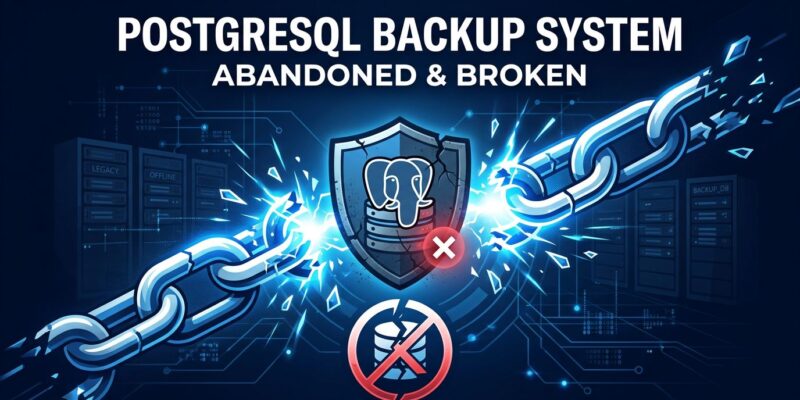
David Steele archived pgBackRest today after thirteen years maintaining PostgreSQL’s most trusted backup tool. The reason isn’t lack of users or technical debt—it’s simpler and more damning: he can’t afford to keep working for free. Thousands of production PostgreSQL systems now depend on abandoned software because the economics of open source just broke down in real time.
The Maintainer’s Dilemma
Steele built pgBackRest into the gold standard for PostgreSQL backups—parallel processing, incremental backups, cloud integration, encryption, the works. Production teams relied on it for mission-critical database recovery. For most of those thirteen years, he had corporate sponsorship through Crunchy Data, where he worked as Principal Architect. Then Snowflake acquired Crunchy Data for $250 million in June 2025, and that support evaporated.
So Steele looked for independent sponsorship. He needed enough funding to make pgBackRest viable—not millions, just enough to justify the “fair amount of time” required for maintenance, bug fixes, pull request reviews, and issue support. His efforts, he wrote, “fell far short of what is needed.” Translation: companies happily using pgBackRest in production weren’t interested in paying to keep it alive. He needs to make a living. Roles related to pgBackRest are limited. The math is brutal: pay rent or maintain free infrastructure. Survival wins.
What Just Broke
pgBackRest wasn’t some niche side project. It handled backup and restore for PostgreSQL—top three database globally—at enterprise scale. Multi-terabyte databases, point-in-time recovery, parallel compression with lz4 and zstd, WAL archiving to S3 and Azure and GCS. Organizations running critical PostgreSQL workloads counted on it. Now they’re stuck with software that won’t see another bug fix or security patch, and future PostgreSQL versions might break compatibility entirely.
The migration path isn’t clean. Barman works for centralized enterprise setups, WAL-G fits cloud-native architectures, but neither matches pgBackRest’s feature set or maturity. Production teams are scrambling to evaluate alternatives, plan migrations, and hope nothing breaks before they finish. This is what happens when critical infrastructure depends on one person’s economic survival.
The Snowflake Question
Here’s where it gets interesting: Snowflake paid $250 million for Crunchy Data, a company whose PostgreSQL products relied on pgBackRest. They got the revenue, the customer base, and presumably the technical benefits of a tool baked into those products. What they apparently didn’t get was any obligation to keep funding it. Maybe it wasn’t in the deal terms. Maybe Snowflake had other plans. Maybe $250 million buys a company but not its open source dependencies.
The Hacker News thread (342 points, 173 comments) is full of people asking the obvious question: shouldn’t companies using open source tools in production have some responsibility to sponsor them? And the equally obvious answer: legally, no. Ethically? That’s where it gets messy. Open source licenses don’t require payment, but they also don’t prevent maintainers from walking away when they can’t afford groceries.
This Isn’t New, It’s Just Louder
pgBackRest is one symptom of a systemic crisis that’s been building for years. Eighty-six percent of open source developers aren’t paid for their work. Nearly half of npm packages with over a million monthly downloads are maintained by single individuals. The average open source maintainer works forty hours a week earning zero income from it. In January 2026, the curl maintainer got buried under twenty AI-generated security reports—all false positives, all useless noise.
Some people are trying to fix this. GitHub’s CEO, HashiCorp’s founder, and Supabase’s founder just launched the Open Source Endowment, raising over $750,000 to create a self-sustaining fund for critical projects. The idea is sound: replace sporadic corporate donations and burned-out volunteers with permanent financial foundations. Whether it scales fast enough to prevent more pgBackRests from collapsing is an open question.
What This Tells Us
The volunteer maintainer model worked when open source was a hobby ecosystem. It breaks when that hobby code becomes critical infrastructure supporting billion-dollar businesses. pgBackRest’s collapse isn’t a failure of technology or adoption—it’s proof that the economics don’t work. You can’t build the internet’s foundation on unpaid labor and expect it to stay standing when maintainers choose paying rent over merging pull requests.
PostgreSQL users now have to migrate backup tools. That’s the immediate crisis. The bigger one is every other production system depending on single-maintainer projects where one person’s economic situation determines whether critical software lives or dies. Steele gave thirteen years to pgBackRest. The fact that wasn’t enough to make it sustainable should scare everyone relying on open source infrastructure—which is basically everyone.