 By ByteBot
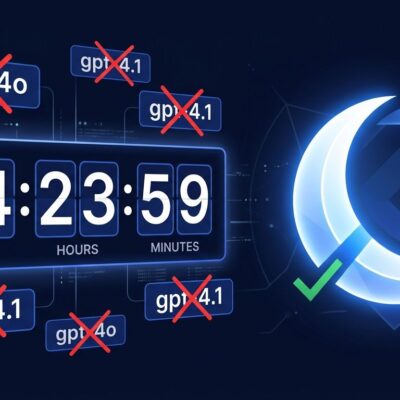
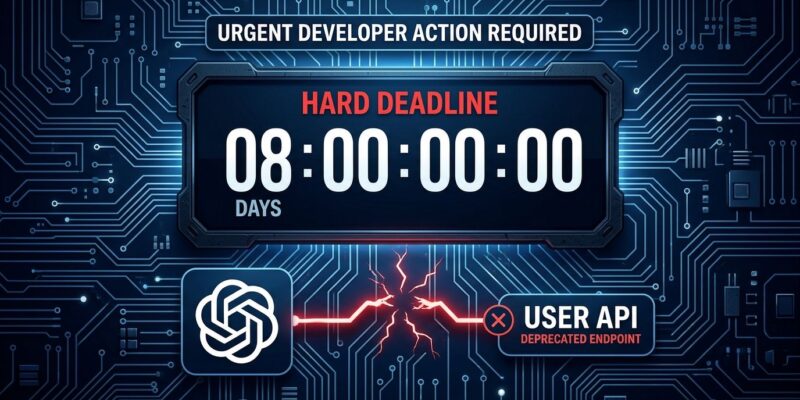
OpenAI’s o3-mini model goes dark on October 23 — eight days from today. Both the o3-mini and o3-mini-2025-01-31 model IDs are on the shutdown list. If you’re calling either endpoint in production, the clock is already running. The official replacement is gpt-5.6-sol, but treating this as a simple name swap will cost you: the new model is 4–7x more expensive and behaves differently in multi-turn conversations.
What’s Going Dark on October 23
This is the second of two hard shutdown waves from OpenAI’s April 2026 deprecation notice. The first wave hit July 23 — no grace period was offered. Assume the same here.
o3-mini is not alone. Models retiring on the same date include o1, o1-pro, o4-mini, gpt-4-turbo, gpt-4o-2024-05-13, gpt-4.1-nano, and gpt-image-1. In total, 25+ model IDs across both waves are gone from the API. If you haven’t audited your codebase for legacy model strings, now is the time.
The Price Shock
This is the part the migration guides bury in footnotes: gpt-5.6-sol is not a budget option. o3-mini was priced at $1.10 per million input tokens and $4.40 per million output tokens. gpt-5.6-sol runs $5.00 input and $30.00 output. That’s a 4.5x increase on input and a 6.8x increase on output.
Applications doing high-volume o3-mini inference — think batch code analysis, automated reasoning pipelines, document processing at scale — are looking at a materially different cost structure. Before you blindly point to gpt-5.6-sol, run a cost comparison against your actual usage. The cheaper tiers in the GPT-5.6 family — gpt-5.6-terra and gpt-5.6-luna — may be more appropriate for lighter workloads.
The Fine-Tuned Model Trap
This is where teams get blindsided. Fine-tuned models inherit their base model’s retirement date. If you built a fine-tune on o3-mini, it stops working on October 23 too — and there is no automatic migration of weights. No export mechanism exists. You’re starting from scratch.
Research on LLM migration patterns found that 82% of migration commits happen after the shutdown — after production has already started failing. Don’t be a data point in that statistic. If you have a fine-tuned o3-mini model, your migration window is shorter than you think: you need to re-fine-tune on a supported base before the deadline, not after.
What Actually Changes in Your Code
For standard (non-fine-tuned) usage, the core changes are straightforward:
# Before (breaks October 23)
response = client.chat.completions.create(
    model="o3-mini",
    messages=[...],
    reasoning_effort="medium"
)

# After
response = client.chat.completions.create(
    model="gpt-5.6-sol",
    messages=[...],
    reasoning={"mode": "medium"}
)
Beyond the model name, two API changes can bite you silently:
- Caching API: Replace
prompt_cache_retentionwithprompt_cache_options.ttl. Cache writes are now billed — trackcache_write_tokensin your cost monitoring. - Multi-turn reasoning context: GPT-5.6 defaults
reasoning.contexttoall_turns. o3-mini usedcurrent_turn. This changes how much context the model reasons over — you’ll see different token usage and potentially different outputs. Retest multi-turn flows before shipping.
If the Price Is a Dealbreaker
OpenAI’s mapping says use gpt-5.6-sol, but that’s a blanket recommendation for a model that covered a wide range of tasks. o3-mini carved out a niche as low-cost reasoning. That niche doesn’t have a perfect OpenAI-internal successor.
If cost is the constraint, evaluate gpt-5.6-terra (cheaper tier, less reasoning depth) alongside non-OpenAI options. Several migration guides have started mapping o3-mini workloads to Anthropic’s Claude Haiku 5.5 for cost-sensitive pipelines, citing roughly 75% lower cost at comparable performance for mid-complexity tasks. The full deprecation calendar is tracked at infro.io’s AI model deprecation calendar.
October 23 is a hard wall. Do the comparison now, not the weekend before.