 By ByteBot
OpenAI has quietly purchased tens of thousands of Mac mini and Mac Studio units to train its computer-use AI agents — and the fallout has landed squarely on developers trying to buy the same hardware for local AI inference. Mac mini configurations with 64GB of RAM are now showing 16 to 18 week delivery estimates. Mac Studio wait times climbed from two weeks to nearly two months. Apple CEO Tim Cook confirmed on the company’s latest earnings call that supply could remain constrained for “several months.” The company even rushed a Mac mini and Mac Studio refresh on August 25 — weeks ahead of its usual autumn schedule — just to keep up with demand it never saw coming.
Why OpenAI Wants Mac Hardware
This isn’t about running ChatGPT. OpenAI is using these machines for a specific, underappreciated workload: training computer-use AI agents. These are systems that operate a computer the way a person would — clicking through interfaces, editing files, executing multi-step tasks — and they need to do it millions of times to learn. That kind of reinforcement learning loop is memory-bound and parallelism-light. It’s the opposite of the transformer pre-training that runs on leased clusters of Nvidia H200s.
Apple Silicon fits this workload unusually well. The unified memory architecture means the CPU, GPU, and Neural Engine all draw from the same pool — no data handoff, no bottleneck. On a Mac Studio M5 Ultra, that pool reaches 512GB at 1.2 TB/s bandwidth. For a workload that needs to load a model once and iterate fast, that architecture is genuinely well-suited. Add compact size, low power draw, and tight macOS integration — if you’re training an agent to operate macOS, running it on actual macOS makes practical sense — and the Mac mini stops looking like a desktop and starts looking like an AI infrastructure node.
Anthropic reached the same conclusion. Rather than buying hardware outright, it rents Mac minis through Amazon Web Services at $1.08 to $1.23 per hour on-demand. Two of the largest AI labs in the world have independently decided that Apple Silicon is their preferred substrate for this class of work.
Apple Was Not Ready for This
Apple’s problem is that it had no plan for any of this. According to reporting covered by Tom’s Hardware, the company had no engineering team dedicated to business customers, no staff focused on developer relations, and no enterprise AI strategy. When enterprise customers requested access to Private Cloud Compute for their own AI workloads, Apple turned them down and directed them to third-party partners. Apple is now an accidental AI infrastructure company, and it shows. The August 25 refresh was reactive, not strategic. Mac revenue hit $10.4 billion last quarter — up 29% year-over-year — but the supply chain can’t keep pace.
What Developers Can Do Right Now
If you need Apple Silicon for local AI inference and can’t wait months, you have options — none of them perfect.
- AWS Mac instances: Same M-series hardware, available now. On-demand pricing runs $1.08 to $1.23 per hour — roughly $780 to $930 per month for a continuously running instance. Good for prototyping. Note: AWS enforces a 24-hour minimum allocation.
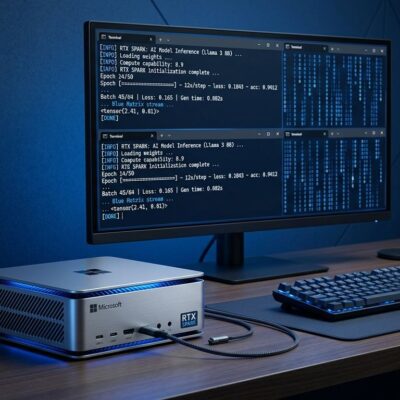
- Nvidia DGX Spark ($4,699): Runs 128GB memory, handles 70B+ models that exceed the Mac mini’s 32GB ceiling. CUDA-first. The catch: ASUS and MSI burned through their entire first allocation and are waiting on more. Also in shortage, also more expensive.
- AMD Ryzen AI Halo Mini-PC ($3,999): Windows-based, competitive specs, AMD’s direct DGX Spark alternative. Available and priced below the Nvidia option if you don’t need CUDA.
- Mac mini M6 pre-order: Ships September 22. Base configs at $899 should be accessible; high-RAM configurations will still face delays. At 32GB unified memory, it comfortably runs 27B-class models — sufficient for most coding agent and inference workloads.
The Bigger Problem
This is what happens when AI infrastructure and consumer hardware share the same supply chain. The Mac mini was never designed to be a rack unit. OpenAI and Anthropic treating it as one is technically clever and operationally disruptive. Developers who have relied on “just buy a Mac mini” as a local AI recommendation now have a four-month asterisk attached to that sentence.
The compute story for local AI used to be simple. A $899 Mac mini, Ollama, and your model of choice — done. That simplicity is now competing with enterprise procurement at scale. A company valued in the hundreds of billions is buying hardware from the same Apple Store page you are. The solution for now — rent one from AWS — works, but it’s a workaround, not an answer. Watch for dedicated AI inference hardware supply to become a serious developer infrastructure concern in the months ahead.