 By
By The odd/even mental model that every Node.js developer absorbed somewhere between their first npm install and their first job has officially been retired. Node.js 27 — arriving as an Alpha in October 2026 and as a full Current release in April 2027 — will be LTS by default. Every major version from here on gets the full support window. Node.js 26, which shipped this past April, is the last release under the decade-old two-majors-per-year cadence.
What Actually Changed
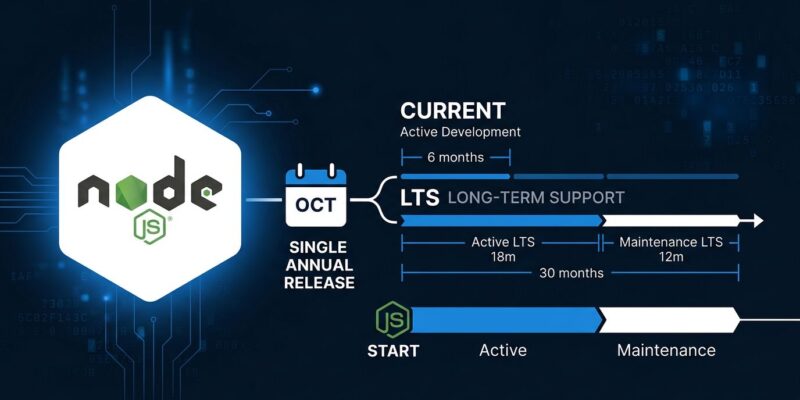
The core shift is structural. Under the old model, odd-numbered versions (19, 21, 23, 25) had six-month lifespans, were skipped by most organizations, and required maintenance effort the volunteer-driven release team could barely afford. Even versions became LTS; odd versions were largely ignored. Starting with Node 27, that distinction disappears. One major release per year, every April, and every release earns LTS status with a 36-month support window.
The version numbering also gets cleaner. Node 26 shipped in 2026 — that alignment was coincidental. From Node 27 forward, it is intentional: the version number matches the year of the Current release. Node 27 ships in April 2027. Node 28 ships in April 2028. "What version are we on?" and "What year is it?" become the same question.
| Old Model | New Model | |
|---|---|---|
| Releases per year | 2 (even + odd) | 1 (April) |
| LTS releases | Even versions only | All versions |
| Odd versions | 6-month lifespan | Gone |
| Support window | 30 months | 36 months |
| Alpha channel | No | Yes (6 months pre-release) |
What This Means for You
If you only upgrade to LTS versions: The Node.js team’s own words are the right summary here — "little changes beyond version numbering." You were already skipping odd releases. Now there is nothing to skip. Stay on Node 26 LTS (entering LTS in October 2026, supported until April 2029) and upgrade to Node 27 when it stabilizes as LTS in October 2027.
If you track Current releases: You will see one major version per year instead of two. Less churn between majors, slower feature cadence. Whether that is a loss depends on whether you were actually using those odd-version features that shipped and then disappeared.
If you maintain npm packages: This is the group with the most immediate action item. The new model introduces a six-month Alpha channel before each Current release. Alpha builds are signed, tagged, and run through CITGM — the Canary in the Gold Mine testing suite that smoke-tests top npm packages against upcoming Node.js versions. The project’s message on this is unambiguous: if you only test against LTS, you will discover breakage at the same time your users do. Wire in node@27-alpha to your CI matrix before October 2026 when the first Alpha drops.
If you run Node.js in enterprise environments: The upgrade narrative just got simpler. One version per year, all LTS, version number matches the year. The institutional "skip the odd ones" policy that teams have enforced for a decade is now irrelevant — and you can remove it from your internal documentation.
Why the Project Did This
The honest answer is maintainer exhaustion. Node.js TSC member Rafael Gonzaga opened the proposal in July 2025 after the release team hit a wall maintaining security backports across four or five concurrent release lines simultaneously. James Snell, who helped design the original 2015 cadence, acknowledged it was "based entirely on corporate adoption cycles that were relevant at that time." A decade later, the ecosystem had moved on. Most developers were already skipping odd releases, yet maintainers were still spending effort keeping those lines alive.
This is the right call. Odd releases consumed real volunteer hours for versions most organizations never deployed. Consolidating to one annual major reduces the backporting surface, lets the release team focus quality efforts on fewer lines, and delivers a support model that actually matches how enterprises plan infrastructure upgrades. The Node.js project is choosing its own sustainability — which is ultimately better for everyone who depends on it.
Key Dates to Know
- October 2026: Node.js 26 becomes LTS. Node.js 27 Alpha begins. Start your Alpha CI testing now.
- April 2027: Node.js 27.0.0 Current release — the first under the new annual model.
- October 2027: Node.js 27 becomes LTS.
- April 2029: Node.js 26 reaches end of life.
The Node.js releases page keeps the full schedule current. The official announcement has the full reasoning, and Socket’s breakdown goes deeper on the Alpha channel mechanics. If you maintain packages on npm, read that last one before October. The AWS SDK for JavaScript already aligned its lifecycle to the Node.js LTS schedule — other major ecosystem packages will follow.