 By
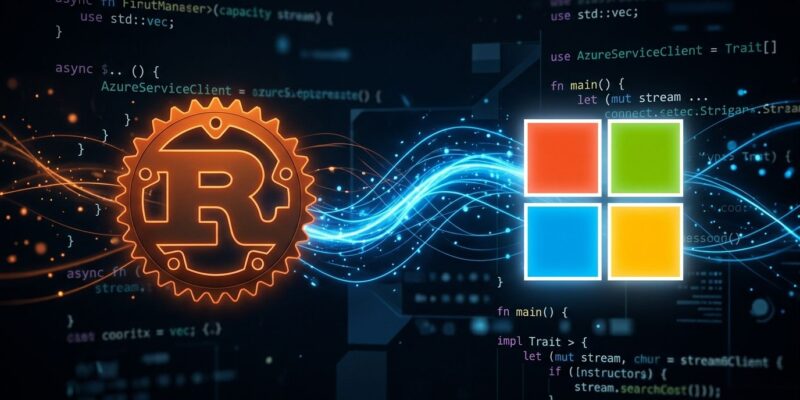
By Microsoft formally classified Rust as a tier-1 language on September 11 — the same engineering designation held by C++, C#, and TypeScript. That is not a blog post or a press release. Tier-1 means SDL compliance, a secured toolchain supply chain, and a paved production path inside one of the largest engineering organizations on the planet. The driver, stated plainly by Azure CTO Mark Russinovich: roughly 70 percent of Windows CVEs trace back to memory safety failures that Rust eliminates at compile time.
What Tier-1 Actually Means
The term sounds good, but “tier-1 language at Microsoft” has a specific definition. It means Rust now gets the same engineering infrastructure as C++ and C#: secure supply-chain builds of the compiler and standard library, integration with production pipelines and quality workflows, first-class developer tooling (rust-analyzer, debugger support, VS Code integration), and — critically — compliance with Microsoft’s Security Development Lifecycle requirements.
That last item was the blocker. Microsoft’s SDL is a mandatory security gate for any language shipping in Microsoft products. Every language on the tier-1 list has a verified, auditable toolchain. Rust did not, until now. Individual teams could use Rust, but they had to argue their own compliance case from scratch. That friction is gone.
The Technical Enabler: rustc_codegen_utc
The announcement points to a specific piece of infrastructure: rustc_codegen_utc. It is an alternative code generation backend for rustc — in the same family as rustc_codegen_llvm and rustc_codegen_gcc — that connects the Rust compiler to MSVC’s “UTC” backend. The same backend that compiles C++ at Microsoft.
That connection gives Rust binaries access to the same binary hardening, hotpatch support, cross-language inlining, SPGO (sample-based profile-guided optimization), and unified debugging and profiling that C++ already has on Windows. You can call Rust from C++ and C++ from Rust in the same binary, with both sides sharing hardening and tooling. The backend has been production-ready since early 2026, self-hosted since Rust 1.90, and running in over 100 Microsoft repositories today.
Azure SDK for Rust: Now Stable
The Azure SDK for Rust reached general availability in May 2026. Eight stable 1.0.0 crates are on crates.io: azure_core, azure_identity, Key Vault (secrets, keys, certificates), Blob Storage, Queue Storage, and an OpenTelemetry tracing integration. The SDK includes automatic retries on transient failures, challenge-based authentication for sovereign cloud environments, and HTTP logging that sanitizes secrets by default.
The practical onboarding path: install Rust via winget install Rustlang.Rustup, add rust-analyzer to VS Code, run cargo new, pull in the windows crate for native Windows API access, then add the Azure SDK crates. Teams report roughly 20 minutes from cargo new to a working Azure API call.
[dependencies]
azure_core = "1.0"
azure_identity = "1.0"
azure_storage_blobs = "1.0"
tokio = { version = "1", features = ["full"] }
Event Hubs support missed this release and is slated for the next stable wave. Cosmos DB is in active development.
What This Is Not
Tier-1 does not mean Microsoft is rewriting Windows or Office in Rust. C++ is still tier-1. C# is still the application-layer default. This designation is about giving teams working on security-sensitive, performance-critical, systems-level code a supported path to use Rust without building their own compliance scaffolding from scratch.
The borrow checker has not gotten easier. Tier-1 means “supported,” not “beginner-friendly.” If your team has no Rust experience, this is a signal to start learning — not a green light to rewrite a production service on Monday. The Register’s coverage captures the industry reaction well: measured optimism, not a stampede.
What to Do Now
If you are already writing Rust on Windows or Azure, the Azure SDK GA and SDL compliance path remove the last practical barriers. If you have been watching from the sidelines, the case for investing in Rust skills inside Microsoft-ecosystem teams just got materially stronger. The tier-1 designation means Microsoft will contribute upstream, improve shared tooling, and establish patterns others can reference for their own compliance needs.
For most teams, new security-sensitive services or components are worth evaluating in Rust. Existing C++ code that is not actively causing memory-safety CVEs does not need an emergency rewrite. The window to start building Rust experience is now, though — the moment when teams need it tends to arrive faster than the moment when they felt ready.