 By
By Meta just dropped an open-weight 30B model built specifically for multi-step AI agents — and it runs entirely on your laptop. Muse Glimmer, released August 10 under Apache 2.0, fits on a single consumer GPU, handles function calling and tool use without phoning home, and came with day-zero Ollama support. For developers tired of paying per-token for agent tasks that don’t need frontier intelligence, this changes the math.
What Is Muse Glimmer?
Muse Glimmer is a 29.6-billion-parameter model distilled from Meta’s closed Muse Spark. It’s multimodal (text and images), supports 131,072 tokens of context, and is licensed under Apache 2.0 — meaning commercial use, fine-tuning, and redistribution are all on the table. Meta built it from the ground up for agentic workloads: function calling, multi-step tool use, long sessions, and LLM-as-judge evaluation.
The feature that stands out isn’t raw capability — it’s failure recovery. When a tool call fails or returns garbage, Muse Glimmer diagnoses the error and retries. Most models at this size just stop. That matters a lot in real agent workflows where one bad API response shouldn’t kill a five-step task.
How to Run It
Ollama is the fastest path to a working setup:
# Standard (Linux/Windows/Mac with 18GB+ VRAM or RAM)
ollama run muse-glimmer

# Apple Silicon (MLX-optimized)
ollama run muse-glimmer:30b-mlx
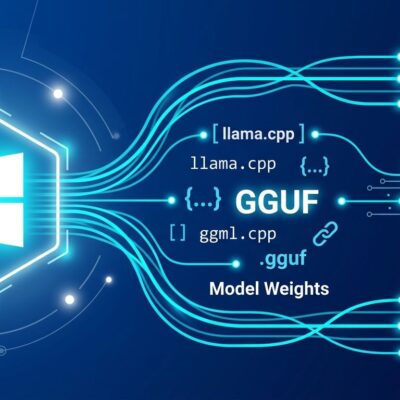
The standard tag pulls the Q4 quantized version at around 18GB. On Apple Silicon, the MLX variant uses about 21GB of unified memory and runs noticeably faster. If you want to go manual, Q4_K_M GGUF files are available from bartowski and unsloth on Hugging Face — that’s 17.3GB and the recommended option for llama.cpp deployments.
Hardware reality: a single RTX 4090 (24GB VRAM) handled the Q4_K_M build with a full 130K-token context at 19.3GB total. If you’re below that — an RTX 4080 or 3090, or a Mac with 24GB unified memory — you’ll need to reduce context length or drop to a smaller quantization. The model was clearly designed with the 24GB tier as the target.
For scale deployments, vLLM and SGLang both shipped day-zero support. If local hardware isn’t an option, the model is available through Together AI, Fireworks AI, NVIDIA NIM, and five providers on OpenRouter.
What the Benchmarks Actually Mean
Muse Glimmer’s published numbers are strong: 94.7% on AIME 2026, 76% on SWE-bench Verified, 75.5% on MCP-Atlas. It beats Gemma4-31B and Qwen3.6-27B across seven agentic benchmarks. That’s worth noting.
But it loses to Qwen3.6-35B-A3B on Terminal-Bench 2.1 and OSWorld-Verified — the computer-use evaluations. If your agent needs to drive a desktop GUI or navigate complex terminal workflows, Qwen still has the edge. Glimmer’s strengths are function calling, code generation, and reasoning chains — the classic “LLM orchestrating APIs” pattern.
The honest take: this isn’t the smartest 30B model you can run. It’s the most complete local agent package in that size class.
Local vs. Cloud: When Does Glimmer Win?
Here’s the actual decision framework:
| Factor | Muse Glimmer (local) | GPT-4o-mini / Haiku (cloud) |
|---|---|---|
| Cost at scale | One-time hardware | Per-token ongoing |
| Data privacy | On-device, zero egress | Sent to provider |
| Latency | Local (hardware-dependent) | Network + queue |
| Intelligence ceiling | 30B local | Frontier models available |
| Context | 131K tokens | Varies |
| Setup | ollama run muse-glimmer | API key in env |
The strongest case for Glimmer is privacy-sensitive workloads. If your agent handles documents you can’t send to OpenAI — contracts, medical records, internal code — running a capable model locally is now practical without compromising on agent functionality.
A pattern gaining traction in the developer community: use an orchestrator to route tasks. High-reasoning or low-sensitivity steps go to Claude or GPT. Steps involving sensitive data go to Muse Glimmer running on your own hardware. You get frontier-level output where you need it and data control where it matters.
What’s Coming Next
Zuckerberg confirmed that Muse Spark 1.2 — the full-sized model — will also be open-sourced in the coming weeks. Glimmer is essentially the preview. If that lands and the weights are as capable as the closed version suggests, the open-weight 30B-plus tier is about to get a lot more interesting.
Bottom Line
Muse Glimmer is the first local AI model that’s been purpose-built for agent work rather than retrofitted. The Ollama setup takes two minutes, the hardware bar is a single modern GPU, and Apache 2.0 means you can build production products on top of it without licensing conversations. If you’re building agents and haven’t tested it yet, that’s the weekend project.