 By ByteBot
TypeSafe AI came out of stealth on September 15 with $40M in seed funding and a model that does not generate a single word. Jev, built by a team led by a ChatGPT co-inventor, returns decisions — a yes/no probability, a choice from a predefined list, a score on a scale — and nothing else. Vercel says it was adopted faster than any model in its AI Gateway history: 13% of paid teams inside the first 24 hours, double the GPT-5.6 launch rate and six times that of Fable 5.1.
What a System 1 Model Actually Does
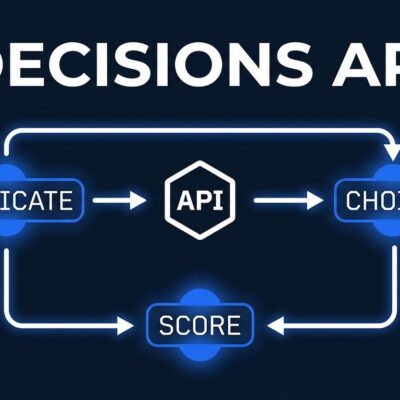
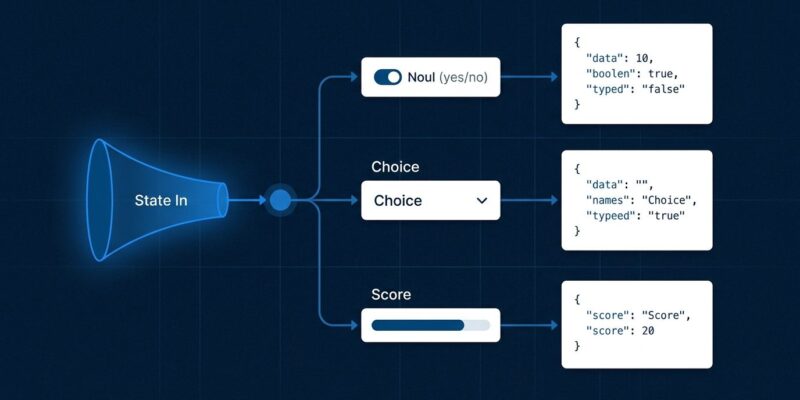
TypeSafe calls Jev a “System 1 model” — a reference to the fast, automatic thinking half of the Kahneman framework, as opposed to the slow, deliberate reasoning a standard LLM performs. The architecture is non-autoregressive: instead of predicting one token at a time, Jev generates all outputs in a single parallel pass. You define your schema upfront, and Jev returns typed answers against it.
Three output primitives:
- Noul — binary yes/no as a probability float.
is_spam: 0.97. Nothing ambiguous. - Choice — select one option from a developer-defined list (up to 255 options). Route a ticket to
billing,support, orescalate. - Score — ordinal value on a defined scale, like
severity: 7.3/10.
Because the output space is bounded by the schema you write, Jev literally cannot hallucinate. There is no generative process. It also cannot produce a JSON parsing failure — a class of bug that haunts LLM-powered pipelines at scale.
A basic call using the LangChain integration looks like this:
from langchain_typesafe import TypeSafeClassifier, Noul, Choice, Score

classifier = TypeSafeClassifier()

result = classifier.invoke(
    state={"message": "My account was charged twice last month"},
    questions={
        "is_billing_issue": Noul(),
        "route_to": Choice(options=["billing", "support", "escalate"]),
        "urgency": Score(min="low", max="critical")
    }
)

# result.nouls["is_billing_issue"].noul → 0.94
# result.choices["route_to"].choice    → "billing"
# result.scores["urgency"].score       → 7.2
No parsing. No prompt engineering. No “please respond only in JSON” prayers.
The Cost Math Is Hard to Ignore
TypeSafe prices Jev at $0.042 per million input tokens. Output is free because the output is tiny — a few typed values, not a paragraph. Response times run 70–500 milliseconds.
TypeSafe’s own benchmarks put Jev at 193x faster than Claude Sonnet 5 and 444x cheaper than Opus 5 on classification tasks. Those numbers come from TypeSafe itself, not an independent lab — worth flagging — but even with a generous skepticism discount, the order-of-magnitude difference is plausible given the architecture.
The practical implication: if your agent pipeline is calling a frontier LLM to decide whether to route a ticket, flag a comment, or score an urgency level, you are almost certainly paying more than you need to. A lot more.
Who Shipped Integrations in Three Days
Vercel, Cloudflare, LangChain, and Langfuse all integrated Jev within three days of the launch. The Vercel AI Gateway blog post is worth reading — the adoption curve stat is genuinely unusual for a product nobody had heard of a week ago.
A community .NET SDK appeared on September 19, four days after launch. There’s already an Elixir Forum thread. The Register demo had the model playing Doom — continuous real-time game-state decisions at sub-100ms, where an LLM would time out before the first door opened.
The Trade-Off You Should Understand Before Adopting It
TypeSafe’s benchmarks show Jev at ~68% accuracy on its workflow evaluations, versus ~74% for the best LLM comparator. That ~6-percentage-point gap is real. The benchmarks are self-reported and the architecture paper is not published yet, so take the specific numbers with appropriate skepticism. But the directional claim — faster and cheaper at some accuracy cost — is consistent with how non-autoregressive architectures generally behave.
Context window is 32K, text only. No images. Max 255 options per Choice field. If you need to handle long documents, unbounded answer spaces, image inputs, or tasks that require a chain of reasoning, Jev is not the tool. It needs an LLM alongside it in any pipeline that requires generation or explanation.
The right mental model: Jev handles the decision nodes inside your agent. The LLM handles the generation nodes. They are not competitors — they are different instruments for different jobs.
What This Signals for the Model Ecosystem
The assumption baked into most agent architectures today is that LLMs handle everything — routing, generation, reasoning, scoring — because they can. Jev is a bet that “can” and “should” are not the same thing. An LLM doing classification is like running a database query through a neural net: it works, but it is the wrong tool.
TypeSafe’s founder built InstructGPT. He knows what LLMs are good at. The fact that he is building something explicitly designed for cases where an LLM is overkill says something about where the architecture is heading.
Jev is in early access now. The TypeSafe launch post covers the full API, the three primitives, and how RLCD training differs from standard RLHF. If you are building agent pipelines with classification or routing steps, it is worth an afternoon to benchmark against your current solution. The TypeSafe docs include quickstarts for Python, TypeScript, and the LangChain integration.