 By ByteBot
IBM Bob 2.0 shipped in July and most developers have barely noticed. That is worth fixing. While the rest of the AI coding assistant market argues over which single model autocompletes best, IBM built something structurally different: an IDE that routes each task to whichever LLM is cheapest and most capable for that specific operation. Eighty thousand IBM employees have been using it since June 2025. The average reported productivity gain is 45%.
What Bob Actually Does
Bob is an agentic development environment, not a code completion plugin. It covers the full software development lifecycle — planning, design, coding, testing, deployment, and operations — through three specialized modes:
- Agent mode — implements changes, refactors code, runs commands
- Ask mode — answers questions about the codebase without modifying files
- Plan mode — designs and maps out implementations before a single line is touched
Underneath these modes is a three-tier architecture: the agent handles reasoning and generation, a harness layer manages authentication, logging, and telemetry, and clients expose the experience through a VS Code extension and the BobShell CLI. BobShell is the interesting part — it generates self-documenting process traces that enterprise compliance teams can audit.
What Changed in 2.0
The July 2026 release is a meaningful upgrade. The headline additions:
- Subagents — Bob spawns specialized agents for complex subtasks in parallel. Ask it how authentication works across a large codebase and it breaks the investigation into concurrent workstreams instead of working through it sequentially.
- 270k token context window — up from 200k, which matters when refactoring a service with dozens of interdependent files.
- Parallel native tool calling — multiple file reads, searches, and terminal commands execute simultaneously instead of sequentially.
- Agent Steering — redirect a running agent task without cancelling it. A persistent message queue lets you reprioritize without losing work in progress.
- Centralized MCP server management — add, configure, and remove MCP servers from a settings panel instead of editing JSON manually.
The Multi-Model Routing Engine
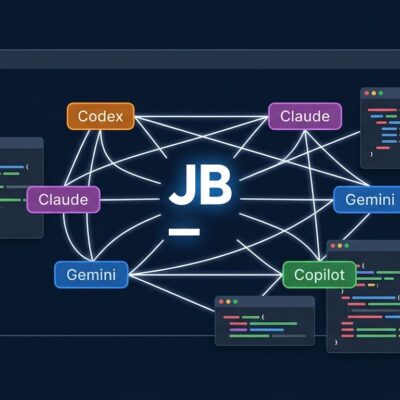
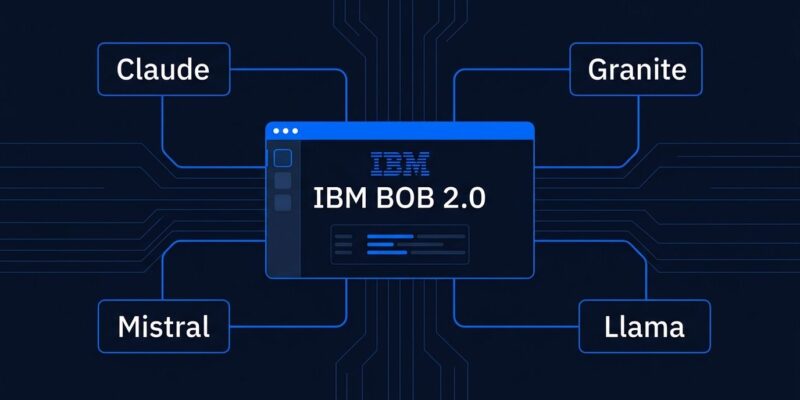
This is what sets Bob apart. Most AI coding tools send every request to one primary model. Bob routes each operation to a different LLM based on real-time assessment of accuracy, latency, and cost:
- IBM Granite SLMs — low-cost, IBM-tuned tasks; simpler completions and structured output
- Anthropic Claude — complex reasoning, multi-step planning, nuanced code analysis
- Mistral open-source models — open-source-licensed workloads, European data residency contexts
- Meta Llama — positioned for on-premises deployment (not yet available)
The routing is automatic. You do not configure it per task. IBM’s system makes the call based on criteria the company has not publicly disclosed — and that is worth flagging. IBM has not published per-task model attribution, the exact routing logic, or fallback sequences. You pay Bobcoins and get results. For teams in regulated industries where model provenance matters for audit, that is an open question IBM needs to address in a future release.
Who It Is For (And Who It Is Not)
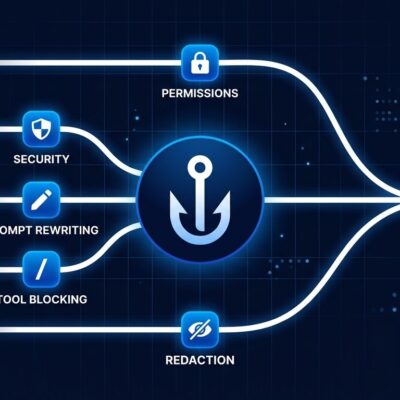
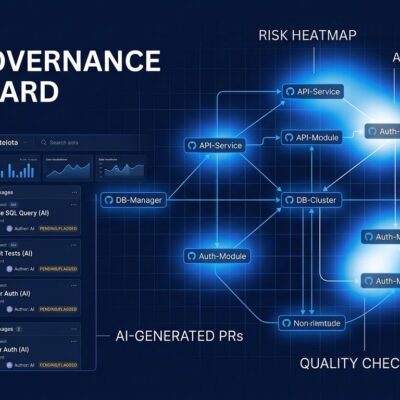
Developer community reaction has broken cleanly along one fault line: enterprise versus indie. Enterprise teams appreciate the built-in governance — approval checkpoints, real-time policy enforcement, prompt normalization, and BobShell audit trails. Teams at financial institutions and healthcare organizations that cannot route code through GitHub Copilot without a legal review first have a real alternative here.
Indie developers and startup engineers tend to be less enthusiastic. Common criticisms: clunky initial onboarding, all code must be downloaded locally (no cloud-resident codebase support yet), and Claude Code simply feels faster and more hacker-friendly. Both assessments are accurate. They describe different products for different contexts.
The productivity numbers — 45% average across surveyed users, 70% for the IBM Instana team, a 30-day Java migration collapsed to three days at Blue Pearl — come from IBM-reported data on IBM employees. The sample is large enough (80,000 users) that dismissing them entirely is hard, but independent validation would strengthen the case considerably.
Pricing
Bob uses a Bobcoin consumption model. Each plan includes a monthly allocation; overages cost roughly $0.50 per coin:
- Pro — $20/month, 50 Bobcoins, 30-day free trial available at bob.ibm.com
- Pro+ — $60/month, 180 Bobcoins
- Ultra — $200/month, 1,000 Bobcoins
- Enterprise — approximately $500/month with SSO, team quota management, and usage reporting
- Java Modernization premium — $20/month add-on; IBM i premium — $40/month
This puts Bob at the same individual price point as Cursor Pro and above GitHub Copilot Pro. The consumption-based model is more honest than flat-rate subscriptions: you see what each model call costs. Both GitHub Copilot and Cursor are moving in this direction anyway because flat-rate pricing stops working at agentic usage volumes.
The Broader Signal
IBM Bob’s multi-model routing is an early signal of where enterprise IDE development is heading. Model quality is converging — GPT-6, Claude 5.5, and Gemini 4 Argon are all within range of each other on standard benchmarks. When models commoditize, the differentiator becomes the routing layer: who gets the right model on the right task at the right cost. IBM is betting its enterprise relationships on that premise.
If you work on compliance-heavy systems or manage engineering at IBM-adjacent infrastructure, Bob 2.0 is worth a serious evaluation. The 30-day trial starts at bob.ibm.com. IBM Bob Developer Day is October 14 — a virtual event covering the 2.0 release in depth. IBM TechXchange in Atlanta (October 26-29) will likely surface the on-premises deployment roadmap.