 By
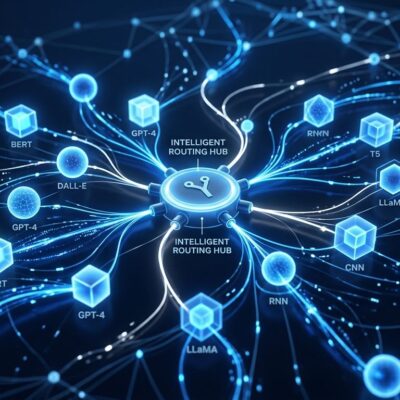
By If you've spent any time building AI-powered features on top of generative video or image models, you know the tax: five API keys, five billing dashboards, five slightly different async patterns, and a rate limit that bites you in production with zero warning. Higgsfield just opened a developer API that collapses all of that into one endpoint. As of September 16, a single API key unlocks access to 50+ frontier generative models — Kling, Seedance, Wan, MiniMax, LTX, Recraft, Ideogram, Grok families — alongside Higgsfield's own Soul 2, Soul Cinema, DoP, and Marketing Studio Image. One key. One billing balance. One async lifecycle pattern, regardless of which model you call.
This matters more than another model launch because the fragmentation problem has been the real blocker for teams building on generative AI. Picking the best model is easy. Maintaining integrations with six different vendors is the actual work — and it compounds every time the ecosystem adds a new frontier model, which in 2026 is roughly every three weeks.
How the Higgsfield API Works
Authentication is a single Bearer token. Every generation request follows the same async lifecycle: submit a POST to the model endpoint and receive a request_id immediately; the generation runs in the background. From there you either poll the status endpoint or pass a webhook URL to receive a callback on completion. The Python SDK on PyPI (higgsfield-client) handles the polling loop and status type-checking:
import asyncio
import higgsfield_client

async def generate():
    ctrl = await higgsfield_client.submit_async(
        'bytedance/seedream/v4/text-to-image',
        arguments={
            'prompt': 'Cinematic shot of a mountain at sunrise',
            'resolution': '2K',
            'aspect_ratio': '16:9',
        },
        webhook_url='https://yourapp.com/webhooks/higgsfield'
    )
    async for status in ctrl.poll_request_status():
        if isinstance(status, higgsfield_client.Completed):
            break
    result = await ctrl.get()
    print(result['images'][0]['url'])
Swapping Seedance for Kling 3.0 means changing one string: the model identifier. Your auth header, polling loop, and webhook handling stay identical. That's the real product here — not any single model, but the unified pattern that makes all of them interchangeable from your code's perspective.
What's in the Model Catalog
The catalog covers the major model families that matter for production use cases. For video: Seedance 2.5 handles UGC-style talking clips and audio-synced content, Kling 3.0 is the cinematic choice, Wan 2.6 excels at restyling existing footage, and LTX brings fast generation for iteration-heavy workflows. For images: Recraft for design work, Ideogram when you need legible text inside the image, Grok image families, and Higgsfield's own Soul Cinema model — which generates film-still-quality images with natural grain and cinematic depth.
The breadth isn't just variety for its own sake — it's insurance. If one vendor throttles access or raises prices, you swap a model ID string, not your entire integration.
Pricing: You Know the Cost Before You Generate
Every model's price is published in the catalog before you make a single request. You top up a balance, pay per generation, and the balance stops at zero automatically — no credit expiry, no forced usage windows. Current reference rates: Kling 3.0 runs approximately $0.60 per standard clip or $1.12 for a 10-second generation; Seedance 2.5 with audio comes in around $3.23; MiniMax lands near $1.10 for comparable output. Volume discounts apply automatically as usage scales, and new accounts receive a 15% discount across all models by default, with up to 50% available on four selected models after verifying a business email and adding a $15 initial balance.
Who Should Use the Higgsfield API
If you're shipping a product that uses a single model from a single vendor and plan to stay that way, the direct API is the better cost option. But if you're building a pipeline that needs to route between models based on task type, compare quality across providers, or stay flexible as the model landscape shifts every few weeks, the integration simplicity here is worth more than any per-call pricing difference. Startups building creative tools, agencies running AI-powered production workflows, and platform teams maintaining generative features for multiple clients are the natural fit.
Getting Started
Sign up at open.higgsfield.ai, add a payment method, and generate your API key in the console — save it immediately, as the full key is shown only once. The full API reference is at docs.higgsfield.ai and the Python SDK is on GitHub. Every model page includes sample code and, notably, ready-made setup prompts for Claude Code, Cursor, and ChatGPT Codex — a signal that this launch is targeting developers who are already deep in AI-assisted workflows.
Higgsfield's API is less about accessing Higgsfield's own models and more about ending the multi-vendor integration tax that has quietly been the biggest adoption blocker for generative AI in production. One key, consistent behavior, transparent pricing, no subscription. If your stack touches generative media at all, it's worth an afternoon to evaluate.