 By ByteBot
Gutenberg 24.0 shipped September 16 with three improvements that close gaps developers have been filing issues about for years. The post title finally appears in the visual revision diff. The Gallery block gets a real CSS grid with per-breakpoint column controls. The Site Title block can now scale to fill its container without a line of custom CSS. None of these are flashy. All of them eliminate workarounds that WordPress developers have been cobbling together since the block editor launched.
Visual Revisions: The Post Title Was Always the Blind Spot
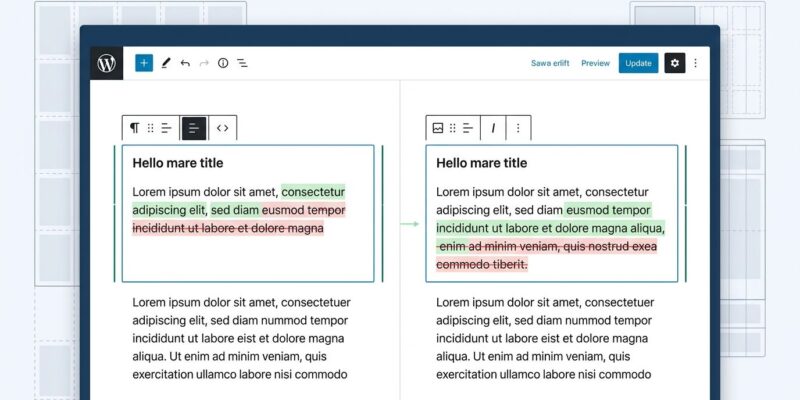
Visual revisions shipped in Gutenberg 22.6 as part of WordPress 7.0, and the feature is genuinely good: green underlines for additions, red strikethrough for deletions, yellow outlines for attribute changes. Editorial teams finally had something resembling tracked changes inside WordPress. There was one glaring omission: the post title sat completely outside the diff. If someone renamed a post alongside body edits, you had no way to see that rename in the revision view. You had to hunt for it separately.
Gutenberg 24.0 fixes this. The post title now participates in the visual diff like any other block. A title change shows up as a red-strikethrough old title and a green new title, right there beside the paragraph and heading changes. Gutenberg 23.8 added shareable revision URLs and a code diff view; 24.0 closes the last obvious content gap. Custom fields and ACF metadata still sit outside the system — but for teams using standard WordPress fields, the revision story is finally coherent.
Gallery Block: Flex Was Never Enough
The Gallery block’s flex-only layout has been one of the most common reasons WordPress developers added a third-party gallery plugin. You could not control column count per breakpoint without writing CSS. You could not swap in a proper grid layout through the inspector. The workarounds ranged from theme overrides to full plugin replacements, and all of them added maintenance overhead.
Version 24.0 ships a Grid variation for the Gallery block. Switch it on from the block inspector and the flex layout is replaced by a configurable CSS grid. Column count is now settable per viewport — wide screen, desktop, tablet — directly in the inspector panel. Crop behavior follows the same per-breakpoint logic. A photography portfolio showing four columns on desktop and two on mobile no longer requires a custom stylesheet or a separate plugin. It requires a dropdown change in the editor.
Theme developers should test existing gallery styles against the new layout: the grid variation ships as opt-in, so existing galleries keep their flex behavior until an editor explicitly switches. But if your theme has gallery-specific CSS overrides, check them now rather than after a client activates the variation.
Site Title Fit-Text: Small Toggle, Real Impact for Brand Sites
The Site Title block now supports fit-text. Enable it from the typography panel ellipsis menu and the title scales to fill the full width of its container automatically. Previously, sizing the site title to span a header exactly required either a JavaScript fit-text library or careful CSS clamp() tuning — neither of which belongs in a client handoff.
This is a theme-builder convenience, not a critical developer API change. But for agency and brand sites where a bold, full-width wordmark in the header is a design requirement, it removes a real pain point from the editor setup process.
autoRegister Is Now Official
A smaller but useful change: the autoRegister flag is now formally part of the block.json schema with full IDE autocomplete and validation support. The flag has technically worked since WordPress 7.0, but its absence from the schema meant no editor tooling support. Setting "autoRegister": true in block.json is now officially documented and validated. If you have been manually registering blocks when auto-registration would have worked, this is the version to revisit that.
What This Release Signals
Gutenberg 24.0 is not a feature launch. It is a gap-closing release, and those are often more valuable than the headline-grabbing ones. Visual revisions that exclude the post title, a gallery that requires a plugin for basic responsive control, and a site title that needs custom JavaScript to fill a header — these are the kinds of rough edges that push developers toward page builders and plugin bloat. Each fix in 24.0 is a small move toward a block editor that behaves the way developers expect it to without assembly required.
Gutenberg 24.1 is scheduled for September 30. WordPress 7.2 Beta 1 lands October 20–22, with a final release in December. The full Gutenberg 24.0 release notes are on the Make WordPress Core blog. The GitHub release page covers individual PRs and contributor details. The official September developer roundup puts these changes in the context of everything that shipped in the 7.2 cycle this month.