 By
By Grok 4.6 landed in Cursor on August 12 — three days before SpaceX officially closed its $60 billion acquisition of Anysphere. The timing was not a coincidence. This was the first model co-developed with the Cursor team, trained on SpaceX’s Colossus supercluster of NVIDIA GB300 GPUs, and shipped day-one across all Cursor plans. The acquisition noise is done. The real question is whether Grok 4.6 is worth switching to.
The short answer: it depends what you’re doing. The longer answer reveals a compute moat that will matter more with every future release.
Where Grok 4.6 Actually Wins
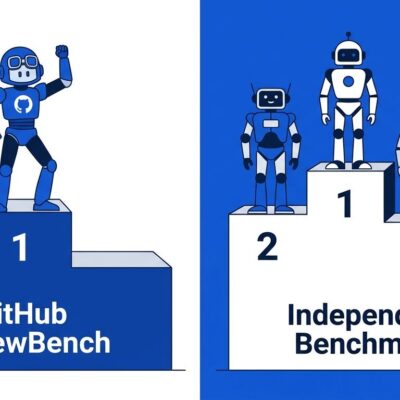
SpaceXAI positioned Grok 4.6 as the model for long-running agents and complex coding workflows, and the benchmarks back that framing — partially. On APEX-Agents, which scores multi-step agentic task completion, Grok 4.6 hits 57.5%, up 10.4 points from Grok 4.5’s 47.1%. That’s one of the largest generational jumps in the benchmark table, and it places Grok 4.6 ahead of GPT-5.6 Sol Max (56.7%). Claude Fable 5 Max still leads at 59.2%.
The training story explains the score. SpaceXAI used a two-stage process: Grok 4.5 generated supervised fine-tuning trajectories across STEM, software engineering, and knowledge work. That checkpoint then went through a reinforcement learning stage targeting kernel optimization, web development, and CAD workflows — engineering domains where SpaceX has decades of proprietary data. The result is a model that stays on task when an agentic workflow runs past a dozen tool calls.
Where Grok 4.6 does not win is pure code generation. On DeepSWE v1.1, it scores 65.9% — up 11.9 points generationally, but still behind GPT-5.6 Sol Max at 73% and Claude Fable 5 Max at 70%. If your workflow is mostly completing code snippets, fixing bugs, or single-file generation, Claude Fable 5.1 remains the stronger call in Cursor.
The GPU Story: Real Moat, Modest Current Lead
The reason to pay attention to Grok 4.6 is not this release’s benchmark position — it’s the trajectory. SpaceX’s Colossus supercluster runs tens of thousands of NVIDIA GB300 GPUs, making it the largest single AI compute cluster in operation. Grok 4.5 was the first model trained at that scale. Grok 4.6 deepened the integration, adding SpaceX engineering datasets from rocket manufacturing, satellite operations, and systems design.
Grok 4.7, already announced and delayed past its September 12 target, will scale to 2.1 trillion parameters — a 40% increase from Grok 4.6’s 1.5 trillion. With that compute advantage compounding with each release, the question is not whether Grok models will eventually surpass Claude on coding benchmarks. It’s when. The current lead is modest. The infrastructure advantage is structural.
Pricing: The Immediate Reason to Try It
Grok 4.6 is priced at $2 per million input tokens and $6 per million output tokens — roughly half the cost of comparable Claude Fable 5 tiers. On the Artificial Analysis Intelligence Index, Grok 4.6 scores 61, one point behind Claude Fable 5 at 62. At 98% of the intelligence benchmark for roughly 50% of the cost, the math works for agentic workflows where long runs consume significant token volume.
One practical gotcha: pricing doubles when requests cross 200,000 tokens. Input climbs to $4 per million and output to $12 per million above that threshold. For large-codebase analysis agents, engineer your context window accordingly. In Cursor, Grok 4.6 is available on all plans — Hobby, Pro, and Business — with no upgrade required. It is also accessible via the xAI API, AWS Bedrock, Azure AI Foundry, OpenRouter, and Vercel.
Model Routing and the OpenAI Cutoff
Cursor’s Auto Balanced mode now routes to Grok 4.6 as part of its first-party model pool. OpenAI’s November 12 cutoff — announced August 28 in response to the SpaceX acquisition — affects roughly 5% of Cursor traffic, per CEO Michael Truell. Claude, Gemini, and Grok are unaffected. Anthropic has committed to expanding Claude’s compute capacity within Cursor, and SpaceX’s economic incentives now favor growing Grok’s share of the routing stack.
Practical implication: if you run on Auto mode, expect Grok 4.6 to appear more frequently for longer agentic tasks as Cursor optimizes its routing. If you want predictability, pin to a model explicitly in Cursor’s model settings.
The Bottom Line
Grok 4.6 is a solid frontier model in Cursor at a competitive price point. Use it for multi-step agent workflows, long codebase analysis, and tasks where maintaining focus across many tool calls matters. Keep Claude Fable 5.1 as the default for single-session code generation where raw SWE benchmark performance is the priority. And watch for Grok 4.7 — whenever SpaceX ships it — as the real test of whether the GPU fleet advantage translates into a benchmark lead that changes the daily coding calculus.