 By ByteBot
OpenAI and Synopsys announced a multi-year partnership on September 30 to build GPT-Synopsys — a frontier AI model trained to directly operate Synopsys’ electronic design automation (EDA) software. This is not a code suggestion tool. It runs chip design workflows autonomously: synthesis, timing closure, PPA optimization, and verification. Early testing with semiconductor customers reports 50x faster verification closure.
This Is Not a Copilot for Hardware
The distinction matters. Most “AI for chip design” tools to date have functioned as assistants — generating RTL snippets, flagging timing violations, suggesting fixes. Engineers still ran the tool chains manually. GPT-Synopsys operates differently: it executes the EDA tool chain itself, interprets the outputs, implements changes, and iterates until engineering objectives are met.
Synopsys frames it as a model that learns to be “a native expert user” of their tools rather than a general model adapted to chip design. The system is trained on Synopsys’ ground-truth EDA workflows — not on chip-design forums or academic papers. It knows how to run VCS, Fusion Compiler, and PrimeTime the way a senior physical design engineer would.
What the Workflow Actually Looks Like
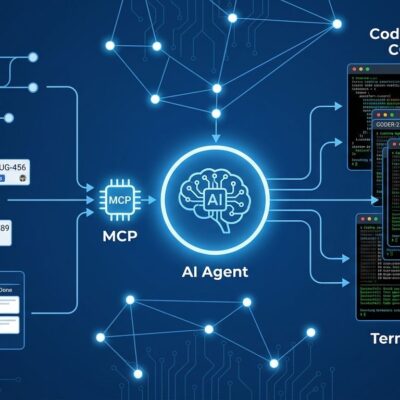
Engineers provide design objectives: PPA targets, timing constraints, functional requirements, and verification coverage goals. GPT-Synopsys handles execution — running the tool flows, interpreting results, making implementation changes, and looping until objectives are satisfied. Engineers review and approve before signoff. Nothing reaches tape-out without human approval.
The integration connects to Synopsys.ai and the Synopsys Autopilot agentic platform. The model runs on OpenAI-hosted infrastructure, which means chip teams do not need to stand up their own ML pipeline or GPU cluster. The product bundles compute, model access, and Synopsys software licenses into a single service.
The Numbers From Early Testing
Three metrics have emerged from early engagements with semiconductor customers: 50x faster verification closure, 20% higher verification coverage, and 30% overall productivity improvement. These are beta-stage figures and should be read with the usual caveats about vendor-reported benchmarks. But even half those improvements would be transformative — verification closure alone can consume months of engineering time on complex SoCs.
GPT-Synopsys Is Not Alone in This Race
Cadence Design Systems and Siemens EDA are both pursuing agentic chip design AI. Cadence’s ChipStack and Siemens’ Fuse EDA Agent use reasoning models to drive design flows and compete directly in the same space.
The differentiator OpenAI brings is frontier model capability. Cadence and Siemens are building with smaller, specialized models. GPT-Synopsys draws on OpenAI’s GPT-6-class reasoning — the same model family powering Codex Cloud. The bet is that broader reasoning ability transfers to chip design problem-solving in ways that narrow specialized models cannot match.
Data Security for IP-Sensitive Work
Every semiconductor company treats chip designs as crown jewels. GPT-Synopsys addresses this directly: customer design data is encrypted at rest and in transit, excluded from model training, and subject to configurable retention and audit controls. The system runs under enterprise data agreements — not through shared API endpoints that pool customer data.
The Bigger Picture
There is a recursive logic to this partnership worth noting. OpenAI is actively developing its own custom AI chips to reduce inference costs and reduce dependency on Nvidia. Using GPT-Synopsys to accelerate that silicon development creates a feedback loop: better AI designs better chips, which runs better AI. Greg Brockman framed it directly: “By helping them build better chips, we can build better AI and bring it to more people.”
For developers watching the broader pattern: AI agents ate software engineering over the past two years. This is the same playbook applied to hardware. The chip design workflow — RTL coding, synthesis, place-and-route, timing closure, verification — maps closely to the software development workflow that AI coding agents have already transformed. The EDA domain has a higher barrier to entry, but the structural dynamic is identical.
What to Watch
Pricing and general availability have not been disclosed. The product is in early customer testing as of October 2026. Two questions worth tracking: when tape-out failures caused by AI tool decisions occur, what is the liability model? And how does the pricing compare to current engineering time costs for the tasks GPT-Synopsys targets? Those answers will determine how fast adoption moves beyond early adopters.
The full partnership announcement is available on the Synopsys press release. Technical analysis is available from Converge Digest and Interesting Engineering.