 By
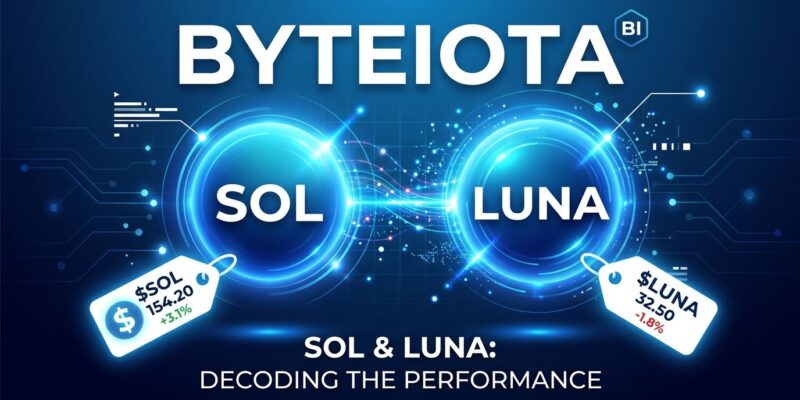
By OpenAI released GPT-6 Sol and GPT-6 Luna today, cutting API prices by 50% and extending the GPT-6 generation’s accuracy improvements to models developers can actually afford to run at scale. Sol handles complex work — coding, agentic tasks, multi-step reasoning. Luna is built for high-volume pipelines where you’re paying per million calls. Both hit the API immediately as gpt-6-sol and gpt-6-luna.
The Pricing Is the Point
GPT-6 Sol costs $2 per million input tokens and $10 per million output tokens — exactly half what GPT-5.6 Sol cost. GPT-6 Luna comes in at $0.10 / $0.50, a 50% input cut and 58% output cut from its predecessor. OpenAI confirmed these are permanent prices, not introductory rates.
To put that in context: GPT-6 Sol now matches Claude Sonnet 5’s price. GPT-6 Luna costs one-tenth of Claude Haiku 4.5. OpenAI says improvements to inference and caching drove the reduction — not a capability trade-off.
Worth noting: Terra is gone. GPT-5.6 shipped three tiers (Sol at $4/$20, Terra at $2/$12, Luna at $0.20/$1.20). GPT-6 collapses to Sol and Luna. GPT-6 Sol at $2/$10 is cheaper on output and more capable than Terra was — straightforward migration.
What Each Model Is For
Sol is OpenAI’s pick for anything requiring judgment: implement a feature, debug across a codebase, analyze a dataset, run a multi-step agent that preserves context through tool calls. Luna covers the other end — high-volume tasks with a clear, narrow goal. Routing. Intent classification. Summarization. Document parsing. The kind of work you’d otherwise batch-process.
Both support a 1 million token context window, up from 272K in the GPT-5.6 generation. For Sol that means large codebase reviews without chunking. For Luna it opens up long-document summarization at pipeline scale.
Accuracy: Half as Many Mistakes
OpenAI’s internal factuality eval — based on real conversations where users flagged errors — puts GPT-6 Sol at roughly half the mistake rate of GPT-5.6 Sol, described as “approaching Astra-level reliability.”
Independent benchmarks add texture. On AutomationBench, Sol at xhigh scores 33.2% at $0.27 per task — beating Claude Opus 5 at max (26.9%) at 11x lower cost per task. On Agents’ Last Exam, Sol at max hits 56.4% against Claude Opus 5.5’s 55.9%, at 60% lower cost.
Where Sol doesn’t lead: DeepSWE and OSWorld 2.0, where Claude Opus 5 still holds the top scores. For pure software engineering and desktop automation benchmarks, Opus 5 retains an edge. The pattern on most production workloads is that Sol and Opus 5.5 are close enough that the price gap decides the call — and that gap is now significant.
Agent Cost Math
A pipeline calling Sol 10 times per task — 2K input tokens and 1K output per step — looks like this:
- GPT-5.6 Sol: $0.08 input + $0.20 output = $0.28 per run
- GPT-6 Sol: $0.04 input + $0.10 output = $0.14 per run
At one million runs per month, that’s $140K in savings. The case for upgrading your model string is clear.
Migrating From GPT-5.6
The API model names are gpt-6-sol and gpt-6-luna. If you were on gpt-5.6-terra, move to gpt-6-sol — better output at a lower cost. No Terra equivalent exists in GPT-6.
According to TechCrunch, the API is live now. Amazon Bedrock has both models available today. In ChatGPT, Sol is in Work and Codex for paid tiers; Luna is in the desktop app for Free users. Standard Chat is rolling out throughout September 22 — if you don’t see the models yet, check again this evening.
The case for staying on GPT-5.6 Sol is thin. Same price point as Terra, Sol-tier capability, 50% cheaper than the previous generation — the migration decision makes itself.