 By ByteBot
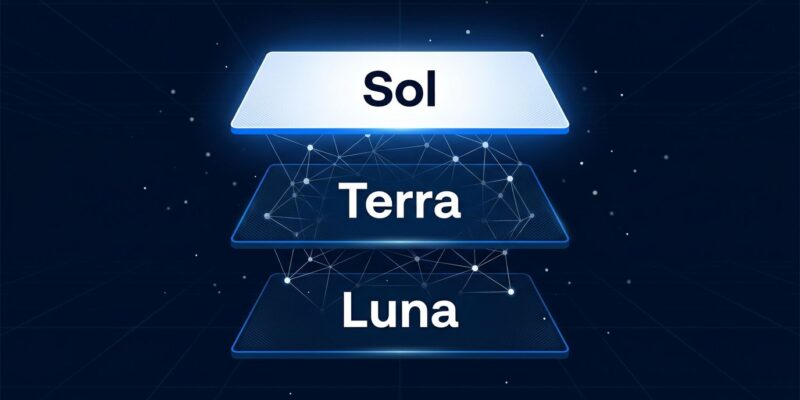
OpenAI’s GPT-5.6 landed on July 9 as three distinct models — Sol, Terra, and Luna — each with different pricing, different context recall behavior, and different reliability profiles for production agent workloads. The gpt-5.6 alias defaults to Sol. Choosing the wrong tier can multiply your costs by 5x or introduce silent failures in agent pipelines. Here is how to pick correctly.
The Three Tiers at a Glance
All three share a 1 million-token context window, 128K max output tokens, and a February 2026 knowledge cutoff. The differences start at pricing and compound from there.
| Model | Input | Cached Input | Output |
|---|---|---|---|
| Sol | .00/MTok | /bin/bash.50 | 0.00/MTok |
| Terra | .50/MTok | /bin/bash.25 | 5.00/MTok |
| Luna | .00/MTok | /bin/bash.10 | .00/MTok |
Sol carries a long-context surcharge: requests above 272K input tokens are billed at 0 input and 5 output per million tokens for the entire request — not just the excess.
Three Gotchas Worth Knowing Before You Ship
Luna’s Context Recall Cliff
Luna claims a 1M token context window. What it does not advertise is what happens when you use it. On MRCR 8-needle recall testing analyzed by Simon Willison — the benchmark that measures whether a model actually retrieves specific information from a long document — Luna scores 41.3%. Sol scores 91.5% at 256K–512K tokens. Terra is close behind at 89.6%.
That is not a minor delta. It is the difference between useful and broken results. Do not pass Luna entire codebases, large spec documents, or merged log files. Luna accepts long inputs. It does not effectively process them.
The max Reasoning Billing Trap
GPT-5.6 introduces max reasoning effort — a new level above the existing xhigh. It gives the model more time to explore alternatives and verify its approach before producing output. The problem: without an explicit max_completion_tokens parameter, max reasoning can exhaust your API token budget on a single complex task. In multi-agent mode, each subagent generates and consumes tokens independently. One ultra run is not one Sol call — it is several.
Always set max_completion_tokens when using max effort. Watch your usage on the first few runs before letting it loose in production.
Sol Has Lower Tool-Call Reliability Than Terra
This one surprises people. Independent testing documented by Vellum puts Sol’s tool-call success rate at 91.4% and Terra’s at 97.2%. For a simple assistant, 91.4% is fine. For a multi-step CI pipeline making ten or more tool calls per run, the compounding failure rate matters. Terra is the minimum viable tier for production agent harnesses — not Sol.
Where GPT-5.6 Sol Actually Wins
On SWE-bench Pro, Sol trails Claude Fable 5 by 15 points (64.6% vs. 80.0%). That gap is real. But SWE-bench Pro is not the whole story.
On Agents’ Last Exam — which evaluates long-horizon professional workflows across 55 fields — Sol scores 53.6, beating Fable 5’s 40.5 by 13.1 points. On the Artificial Analysis Coding Agent Index, Sol with max reasoning scores 80, putting it 2.8 points above Fable 5. It completes those tasks 61% faster at roughly half the estimated cost of running Fable 5. The full benchmark breakdown is in OpenAI’s announcement.
On Terminal-Bench 2.1, Sol posts 88.8% (91.9% in ultra mode). On BrowseComp, 92.2%. If you are building agents that do knowledge work, research, or multi-step workflows — rather than pure code generation — GPT-5.6 Sol is now competitive at the frontier.
Which Tier to Use
Match the tier to the task. Teams running the wrong distribution report 35–50% higher bills.
- Luna: High-volume, short-context classification, intent routing, content moderation, and single-turn summarization under 64K tokens. Never for long-form analysis.
- Terra: Production agent harnesses, business document processing, multi-turn pipelines, anything requiring reliable tool calls. The everyday workhorse.
- Sol: Frontier reasoning, hard coding tasks, research agents, tasks where quality ceiling matters more than cost.
- Sol + max: Reserve for the hardest quality-first workloads where latency and cost are secondary concerns. Always set token limits.
API Basics
OpenAI recommends the Responses API for GPT-5.6 over Chat Completions. Existing Chat Completions code still works with a model ID swap — there is no forced migration. But new builds should target the Responses API, where programmatic tool calling, multi-agent support, and persisted reasoning are all implemented.
from openai import OpenAI
client = OpenAI()

# Sol with max reasoning — always set max_completion_tokens
response = client.responses.create(
    model="gpt-5.6-sol",
    reasoning={"effort": "max"},
    max_completion_tokens=16000,
    input="Analyze this codebase and identify the top 3 security risks."
)
print(response.output_text)
The gpt-5.6 alias routes to gpt-5.6-sol. Use explicit tier IDs (gpt-5.6-terra, gpt-5.6-luna) in production to prevent unexpected routing changes if OpenAI updates the alias.
The Verdict
GPT-5.6 is a genuinely capable model family, and the benchmark wins on agentic long-horizon tasks are hard to dismiss. But the tier system introduces decisions that GPT-4 and GPT-5 users never had to make. The Luna context cliff and Sol’s tool-call reliability gap are not edge cases — they are the kind of issues that surface in production at the worst possible moment.
Terra is the tier most developers will want for serious workloads. Sol earns its price on hard frontier tasks. Luna is fast and cheap for exactly the workloads where those properties matter. The Agent Report’s full benchmark analysis is worth reading before you commit to a routing strategy. The system works if you route intentionally.