 By ByteBot
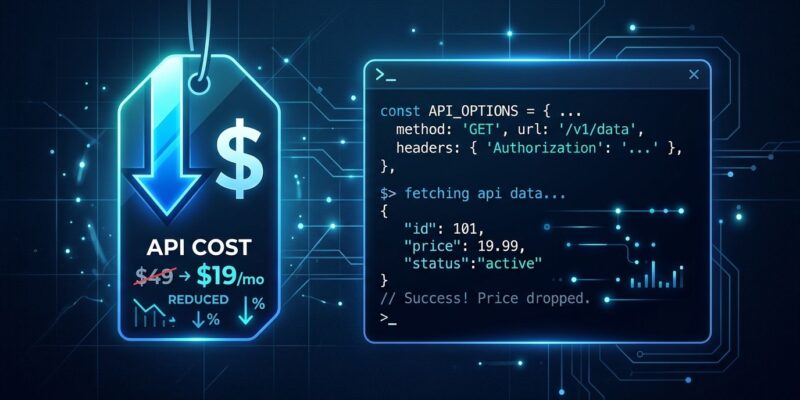
OpenAI cut GPT-5.6 Sol API prices on August 21. Output tokens drop 33%, input tokens drop 20%. The promotional rate is live today and guaranteed through November 21. After that, prices revert to standard unless OpenAI announces an extension. If you’re building with Sol, this is your evaluation window. If you’re not, here is what changed and whether it shifts your cost model.
The Exact Numbers
The short-context standard pricing — requests under 272,000 input tokens — changes as follows:
| Rate | Before | After (through Nov 21) |
|---|---|---|
| Input (per 1M tokens) | $5.00 | $4.00 |
| Output (per 1M tokens) | $30.00 | $20.00 |
| Cached input (per 1M tokens) | $0.50 | $0.40 |
The cuts apply to the OpenAI API, ChatGPT Work credits, and Codex credits. Subscription tiers — Pro, Plus, Business — are unchanged. The promotional window is exactly three months.
At $4 input and $20 output, Sol now undercuts Anthropic’s Claude Opus 5, which sits at $5 input and $25 output. That gap matters if you’re choosing between the two for agentic coding workloads. Sol holds the Terminal-Bench 2.1 record at 91.9% in ultra mode and leads the Artificial Analysis Coding Agent Index. Claude Opus 5 edges Sol on SWE-bench Pro, but for command-line agent work Sol is the stronger benchmark performer. Temporarily, it is also the cheaper one.
The Catch You Should Plan Around
November 21 is a real date. OpenAI has not said this price will become permanent. Teams that rebuild cost models around $4/$20 and do not hedge for reversion will face a 25% input price increase and a 50% output price increase in December. The correct approach: model your long-term economics around the standard $5/$30 rate, treat the next three months as a funded evaluation period, and make infrastructure decisions you can defend at full price.
The Surcharge That Can Erase the Savings
Any request with more than 272,000 input tokens reprices the entire request at 2x input and 1.5x output — not just the overflow tokens. At promotional rates, a long-context Sol request costs $8 per million input tokens and $30 per million output tokens. At standard rates after November 21, you’re at $10 input and $45 output. That is not a discount. That is the premium tier.
Agent workflows that load full codebases, long conversation histories, or multi-document retrieval contexts regularly exceed 272K tokens. If that describes your build, the long-context surcharge at 272K tokens means the advertised savings do not apply to your heaviest workloads. Design your retrieval pipeline to stay under that threshold per request, or factor the surcharge into your actual cost model.
Three Tiers, One Routing Rule
GPT-5.6 is a three-tier family, and the default API alias routes to the most expensive one:
| Model | Input | Output | Best For |
|---|---|---|---|
| Sol (promo, through Nov 21) | $4.00 | $20.00 | Agentic coding, security review, hard multi-step tasks |
| Terra | $2.00 | $12.00 | Production default — prior-gen frontier quality |
| Luna | $0.20 | $1.20 | High-volume, latency-sensitive, non-critical paths |
The bare gpt-5.6 API alias routes to Sol. Developers who do not specify a tier pay Sol rates on every call regardless of task complexity. Specify gpt-5.6-terra explicitly for baseline production calls:
// Wrong: 'gpt-5.6' defaults to Sol at Sol prices
const response = await client.responses.create({
  model: 'gpt-5.6',
  input: 'Your prompt'
});

// Right: specify tier explicitly
const response = await client.responses.create({
  model: 'gpt-5.6-terra',
  input: 'Your prompt',
  reasoning: { effort: 'medium' }
});

// Escalate to Sol only for tasks that justify it
const hardTask = await client.responses.create({
  model: 'gpt-5.6-sol',
  input: 'Full security audit...',
  reasoning: { effort: 'high' }
});
Why This Is Happening
This is the third OpenAI price cut in six weeks: Luna dropped 80% and Terra dropped 20% on July 30. Sol follows on August 21. The pressure comes from two directions: Chinese models including DeepSeek, Kimi, and GLM that undercut Western frontier prices by 5–30x, and from Anthropic’s Claude Opus 5, which launched at $5/$25 and explicitly targets Sol’s segment. According to analysis of the ongoing frontier AI price war, enterprise blended inference costs hit a 2026 low of around $1.16 per million tokens — a sign that competitive pressure is working.
Temporary promotional pricing is how labs accelerate adoption without permanently ceding margin. That is a rational business move. It is also a rational reason to evaluate on promotional pricing while budgeting for standard pricing.
What to Do Now
If you have been deferring Sol evaluation because of the cost gap with Terra or Claude Opus 5: the next three months are the window to run a proper cost-per-task benchmark on your actual workload. If you already run Sol in production: the savings are immediate, but set your Q4 budget at $5/$30 in case OpenAI does not extend. If you use the bare gpt-5.6 alias anywhere in your stack: audit that today, because you are paying Sol prices on workloads that may only need Terra.
OpenAI’s announcement confirms the promotional period runs through November 21, 2026. The reduced pricing is also available through Amazon Bedrock for teams running Sol through AWS. After November 21, plan accordingly.