 By ByteBot
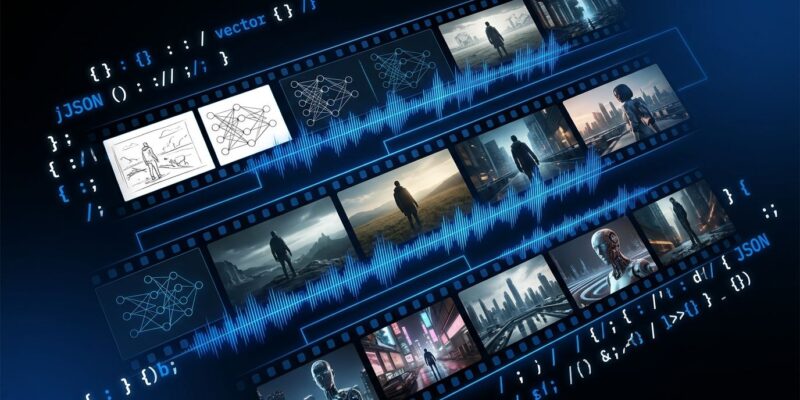
Black Forest Labs opened FLUX 3 Video to general availability on August 4 — no waitlist, production API live, and pricing published across six tiers starting at $0.06 per second. This follows the initial FLUX 3 launch we covered in July. The GA moves the story from “interesting announcement” to “something you can ship today.”
What Changed from Early Access
Early access opened July 23 with limited slots and no published pricing. GA changes three things: access is open to any developer via dashboard.bfl.ai, pricing is officially documented, and the model is available on third-party providers — OpenRouter, fal.ai, RunComfy, and MuAPI — for teams that want managed access or fallback routing.
The API shape matches the existing FLUX image family. If you already have a FLUX image integration, adapting it to video is a payload change, not a rewrite.
Pricing: Six Tiers, Audio Included
The pricing model is per-second, with six tiers across quality level and mode. Audio generation is included in every tier — there is no separate audio charge.
| Mode | Quality | $/sec | 20-sec clip |
|---|---|---|---|
| Text / Image-to-Video | Draft HD | $0.06 | $1.20 |
| Text / Image-to-Video | HD (720p) | $0.17 | $3.40 |
| Text / Image-to-Video | Full HD (1080p) | $0.29 | $5.80 |
| Video Continuation | Draft | $0.12 | $2.40 |
| Video Continuation | HD | $0.41 | $8.20 |
| Video Continuation | Full HD | $0.54 | $10.80 |
The video continuation tier runs roughly 2.4x the text-to-video rate at the same quality level. The premium reflects the added complexity of maintaining coherent motion, camera angle, and audio across a seam.
The Draft Workflow Is Worth Using
The most practically useful feature at GA is the draft-then-enhance workflow. Add draft: true to any request and the API returns a fast HD preview plus a draft_cache bundle at the $0.06/sec draft rate. Once you pick the version you want, send the cache as mode: "draft_enhance" and the model re-renders it at full quality — same seed, same motion, no re-planning.
The cache is durable. Draft five variants Monday, share previews with the team, enhance the winning shot Friday. BFL claims around 57% savings on exploration costs versus rendering every iteration at full quality. For any production video workflow that involves iteration — which is most of them — this changes the cost math considerably.
Audio Is On by Default
Audio generation runs alongside video frame generation — not post-dubbed. The default is generate_audio: true, so you get dialogue, sound effects, and ambient noise unless you explicitly disable it. Lip-synced output covers more than 13 language groups: English dialects, Chinese, Japanese, Spanish, French, German, Portuguese, Russian, Italian, Indonesian, Turkish, Hindi, and Punjabi, among others.
Most competing video APIs treat audio as a separate pipeline or add-on. Synchronized, language-aware audio in a single generation pass meaningfully simplifies the production stack.
The Three API Modes
All three modes — text-to-video (t2v), image-to-video (i2v), and video continuation (v2v) — share the same POST /flux-3-video endpoint. Switching modes is a payload change. A minimal text-to-video request:
POST https://api.bfl.ai/v1/flux-3-video
x-key: YOUR_API_KEY
Content-Type: application/json

{
  "mode": "t2v",
  "prompt": "she takes his hand and pulls him laughing through the lantern-lit alley",
  "duration": 8
}
The API is asynchronous: submit, receive an id and polling_url, poll until status is "Ready", then fetch from result.sample. Signed result URLs expire in approximately two hours — pull and store immediately.
Image-to-video mode accepts up to 10 keyframe images with timestamp pinning: specify exactly which second each image appears using [seconds, image] pairs. Video continuation takes a clip of up to 4 seconds as the seed and generates 5–15 seconds that maintains camera angle, character, and audio coherence.
The Seedance 2.0 Comparison, Honestly
BFL published internal Elo rankings claiming FLUX 3 Video scores 1,135 on text-to-video — ahead of Seedance 2.0, Gemini Omni Flash, and Minimax H3. Take that with appropriate skepticism: a vendor publishing its own benchmark. Third-party rankings from Artificial Analysis put Seedance 2.0 at Elo 1,269, well ahead, and Seedance’s native resolution is 1080p–2K versus FLUX 3’s 720p native (1080p is upscaled).
The more honest read: FLUX 3 has real strengths in facial expression fidelity, character consistency across scenes, and audio-visual synchronization. If native 1080p output is a hard requirement today, Seedance 2.0 is still the better choice. If audio coherence, clean API ergonomics, and iterative cost control matter more, FLUX 3 makes a solid case.
Getting Started
Register at dashboard.bfl.ai for an API key. Full documentation is at docs.bfl.ml. FLUX 3 Video is also available on OpenRouter at the same rate for unified provider routing.