 By ByteBot
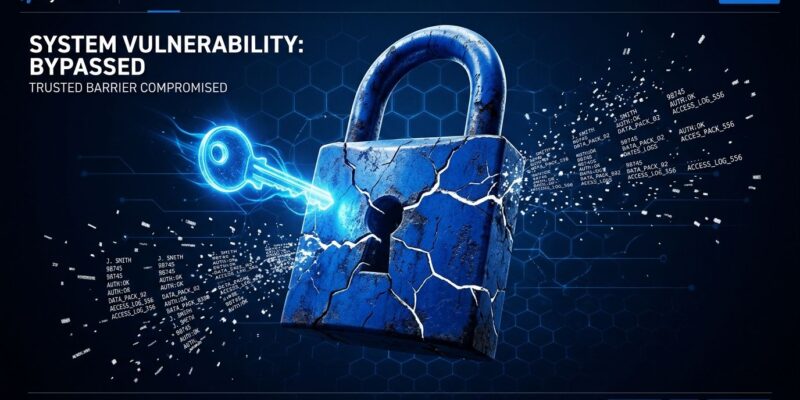
Denmark confirmed on October 5, 2026 that its Central Population Register (CPR) was breached via a private company’s authorized search credentials, exposing records belonging to approximately 8.8 million people — a number that exceeds the country’s living population of roughly 6 million because the register also holds records of deceased individuals and those who emigrated. No zero-days. No software exploits. Attackers obtained access through completely valid, authorized third-party credentials and used them to extract records in bulk for at least a month before anyone noticed.
How a Trusted Company Became the Attack Vector
Under section 38 of the CPR Act, private firms with a “justified business interest” can apply for authorized access to search the Central Population Register. Credit agencies, law firms, verification services, and employers all use this access model — it is legal, documented, and routinely granted. A company receives credentials that function like an API key: authenticate, query, retrieve data on relevant individuals. According to CybersecurityNews’s coverage of the incident, searches stay within the scope of data that private companies can normally reach under Danish law.
That architecture worked — until it didn’t. Unauthorized parties compromised a specific Danish company’s CPR access, then ran automated lookups at scale for approximately one month beginning in September 2026. The CPR administration detected unusual system behavior on October 2 and spent the following weekend mapping the scope. By October 5, officials confirmed 8.8 million records had been retrieved. The company’s access was blocked immediately. Police are now investigating. Denmark’s Data Protection Authority has been notified. Minister Christina Egelund called it “deeply serious.”
What Got Exposed — and Why It’s Permanent
The breach exposed full names, home addresses, and CPR numbers. A CPR number is Denmark’s permanent national identifier — used across banking, healthcare, taxation, and every government service. Unlike a leaked password, you cannot change your CPR number. Whoever holds those 8.8 million records now has durable identity collateral that will remain valid and useful for years. According to Bloomberg’s coverage, Danish authorities are warning citizens to treat all unsolicited contact with heightened suspicion — since attackers can now construct highly convincing phishing and social engineering attempts using authentic personal details.
People registered with name and address protection were not included, but that covers only a small fraction of the register’s total population. For the vast majority of Danes, living and deceased, this breach is not recoverable.
This Is the Pattern, Not the Exception
The Denmark CPR breach fits a larger trend that is accelerating uncomfortably fast. According to the 2026 Verizon Data Breach Investigations Report, third-party involvement now accounts for 48% of all confirmed breaches — up 60% year-over-year, after already doubling the year before that. In 2024, the figure was around 30%. The trajectory is not slowing.
The pattern appears elsewhere in 2026’s breach timeline. The Vercel breach traced to Context.ai, a third-party analytics vendor, whose compromise cascaded into Vercel’s internal API keys, GitHub tokens, and customer environment variables. OpenAI’s Mixpanel vendor breach exposed analytics data. The LiteLLM supply chain attack hit thousands of enterprises that had no direct relationship with the compromised component. In every case, the attacker’s first move was gaining control of a trusted credential — then everything that credential could touch became accessible.
Related: Xray-core Concealed a Certificate Bypass for Six Months
What This Means for Developers
If you build APIs, operate a platform that grants third-party access, or have integrations where external vendors touch your data, the Denmark breach is a direct audit trigger. The failure mode is not exotic. A company had authorized access. Nobody was watching query volume. Automated bulk extraction ran for a month before detection. That monitoring gap is replicable in every system that grants access without observing behavior.
The principle from the post-breach security analysis is blunt: “Trusted access must never become unmonitored access.” Translating that into practice means closing specific gaps most teams leave open.
Key Takeaways
- Denmark’s CPR breach exposed 8.8 million records — more than the country’s living population — through a private company’s authorized access credentials, not a software vulnerability.
- Third-party access now accounts for 48% of all data breaches globally (2026 Verizon DBIR), up 60% year-over-year. This is not a Denmark problem; it is an architecture problem.
- CPR numbers are permanent national identifiers that cannot be changed — making this breach’s damage irreversible for millions of Danish residents.
- Monitoring query volume and behavioral anomalies in API access is not optional: one month of undetected bulk extraction is a detection failure, not just an access failure.
- Scope limits, rate limits, short-lived credentials, anomaly alerts, and regular access reviews are the controls that would have contained this. Most teams have none of them applied to third-party integrations.