 By ByteBot
claude-mem just crossed 108,000 GitHub stars. Not a new model. Not a new agent framework. A memory plugin for Claude Code. That it is trending harder than most foundation model releases this month is worth pausing on.
The Problem Every Agent Developer Has Stopped Mentioning
Every new Claude Code session starts completely cold. Your agent has no memory of what you were building yesterday. It re-reads the same architecture files, re-analyzes the same constraints, re-learns the same project context — and you pay for every token of that repetition.
Teams using AI coding agents in production have started quantifying this. One audit found developers spending roughly $40 per day per engineer just on re-explaining architectural constraints to the same model. A single coding task can require 35,000 tokens of startup context before any actual work happens. Scale that to a ten-call workflow: 1.8 million input tokens before your agent writes a single useful line. According to mem0’s 2026 Token Optimization Playbook, production systems using naive context management run 3 to 5 times higher token costs than necessary.
The industry calls this the cold-start problem. It has been quietly expensive since agents became standard developer tooling. claude-mem is the community’s answer, and 108,000 stars in roughly 18 months suggests developers agree it works.
How claude-mem Fixes It
The system operates on a three-step loop: capture, compress, inject.
During a session, five lifecycle hooks track everything the agent does — tool calls, file edits, command results, observations. When the session ends, a stop hook compresses those observations using a fast model (configurable; claude-haiku-3-5 by default) and stores the compressed summary in two places: a local SQLite database for full-text search and ChromaDB for semantic vector retrieval. When the next session starts, relevant context is automatically injected before you type anything.
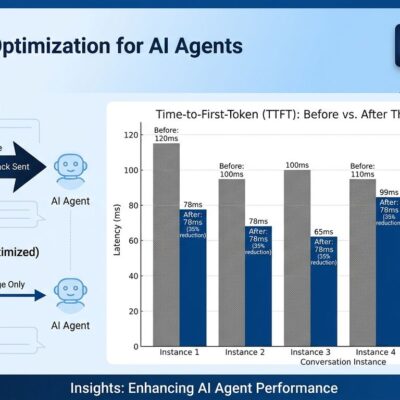
The compression is what makes this viable. Simply saving everything creates a different problem — context bloat. Injecting raw session logs into every new session would balloon token counts just as fast. The AI-powered compression pipeline extracts what matters and discards what does not, which is why the token economics work out: managed context costs around $0.63 per coding task versus $2.14 with naive context management — a 3.4x difference per task.
Everything stays local. No cloud dependency, no separate infrastructure to run. SQLite handles structured recall; Chroma handles semantic queries for past work similar to the current task. The full architecture is documented at docs.claude-mem.ai.
Getting It Running
Installation is a single command:
npx claude-mem installAfter that, choose a memory provider — your Anthropic plan, an OpenRouter key, or a Gemini key. The plugin auto-configures the lifecycle hooks, installs Bun if missing, and sets up the local database. The next session you start in Claude Code will have persistent memory. The official installation docs cover provider-specific setup and advanced options.
For teams, there is a CMEM Cloud tier at $20/month that adds team scopes, roles, and an audit trail — useful if you need shared agent context across engineers rather than per-machine storage.
Before You Install: Know Your Options
claude-mem is not the only solution here, and it is not the right one for every situation. The honest comparison:
- Claude Memory Primitive (built-in): Anthropic’s native MEMORY.md system. Zero install, zero friction. If you are not running complex multi-session workflows, start here before adding any plugin.
- claude-mem: The community standard for Claude Code power users. Install it when the built-in system feels insufficient — typically when managing long-running projects with substantial accumulated context.
- mem0 (66K stars): The right choice when you need vendor-neutral memory across multiple tools, not just Claude Code. Supports production compliance (SOC 2 Type 1, HIPAA, GDPR).
- Zep: Temporal knowledge graph memory. Best for conversational agents that need entity-level recall rather than session compression.
One misconception worth addressing: the widespread assumption that you need a vector database for agent memory is wrong for most individual developers. SQLite with FTS5 handles retrieval well at single-developer scale. Hybrid approaches make sense at production scale with thousands of users, not for one engineer on a local machine. Anthropic’s own guidance on effective harnesses for long-running agents confirms this — the right architecture depends heavily on scale and use case.
The Bigger Signal
What makes the claude-mem star count interesting is not just the tool itself — it is what the GitHub repository’s trajectory represents in the November 2026 trending data. The top repositories this month are not new models or new agent frameworks. They are persistence engines, memory layers, context management systems, headless browsers for autonomous agents. Infrastructure.
2024 and 2025 were about building agents. 2026 is about making them functional at scale. The community has pivoted from what can this agent do to how do I make it reliable, cost-controlled, and persistent across sessions. That is a maturity signal. The next set of problems worth solving are not in the models themselves — they are in the plumbing underneath.
claude-mem is the clearest expression of that shift. A memory plugin should not be trending harder than new foundation model releases. But here we are, and the numbers say this is exactly what developers actually need right now.