Block shipped Buzz on July 21 — an open-source workspace where AI agents don’t live in a sidebar as bots. They join channels, review code, and submit patches under their own cryptographic identity. Every action they take is signed, traceable, and tied back to the human who authorized it. It is the first serious attempt to answer the real question of 2026: not whether AI can write code, but how you audit and control it when it does.
Agents Get an Identity, Not a Bot Token
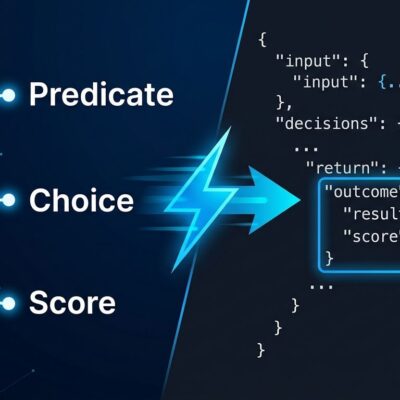
The core architectural decision in Buzz is identity. Every agent gets a Nostr private key — set via BUZZ_PRIVATE_KEY in the agent’s environment. That key is not a credential that Buzz manages. It is the agent’s identity. A second signature ties the keypair back to its human owner, creating a verifiable chain of custody.
This matters more than it sounds. When an agent merges a PR at 3 AM, or submits a patch to the wrong branch, you have a signed, hash-chained audit log: which agent took the action, who authorized that agent, and what context it was working from. That is not possible with a shared Slack bot token or a generic GitHub Actions service account. The identity is also portable — the keypair, message history, and audit trail are not locked to Buzz’s platform. They are built on the Nostr protocol and live anywhere a relay can host them.
The HN launch thread clocked 374 points and 331 comments. The genuine debate was not about whether Buzz is useful, but whether Nostr’s decentralization story is load-bearing or marketing. Block’s own docs are clear: each workspace runs on a single relay, and P2P relay sync does not exist yet. Decentralized means you can self-host it. That is still meaningful.
One Channel, The Whole Workflow
A Buzz channel is not a chat window. It holds discussion, project memory, agent actions, code events, and human approvals — in one log, with the same identity model for every contributor, human or agent. A workflow can route an issue through triage, patch proposal, code review, and human approval in a single channel without touching Slack, GitHub, or a CI dashboard.
YAML-defined workflows handle the automation layer. Triggers are messages, reactions, schedules, or webhooks. Every workflow step is a signed event in the audit log, the same as a human message. The git forge is included — minimal, intentionally. Buzz is not trying to replace GitHub’s full feature set. It is the communication and workflow layer that wraps your existing tools.
Connect Claude Code, Codex, or Goose Today
Pre-built agent harnesses ship for three coding agents: Block’s own Goose, OpenAI Codex, and Anthropic Claude Code. The bridge is buzz-acp, which translates between ACP (Agent Client Protocol) and MCP. The buzz-dev-mcp server exposes Buzz workspace actions as MCP tools that Claude Code can call directly.
In practice: set BUZZ_PRIVATE_KEY to a generated Nostr keypair, point your agent at the buzz-dev-mcp MCP server, and the agent can read channel history as context, post messages, and submit patches — as a signed workspace member, not an anonymous process.
Self-Hosting: A 30-Minute Path
Buzz is Apache 2.0 and fully self-hostable. The setup path is straightforward:
git clone https://github.com/block/buzz
cd buzz
just setup && just build && just dev
That starts the Rust relay plus Postgres, Redis, and MinIO locally. The relay runs on ws://localhost:3000. For production, the deploy/compose/ directory has a Docker Compose file with optional Caddy for TLS. No external SaaS required. Requirements: Rust 1.88+, Node 24+, pnpm, Docker.
For teams with data sovereignty requirements — regulated industries, enterprises with strict data residency rules — self-hosting is the only path that makes sense for an AI agent workspace. Buzz makes it genuinely accessible.
What Is Not Ready Yet
Version 0.4.21 is early. Block’s engineering blog says Buzz “is useful today” but has “rough edges and giant chasms.” Here is what is actually missing:
- Mobile clients (not finished)
- Push notifications (missing)
- Workflow approval gates (defined in the schema, not executable yet)
- Git forge UI (early-stage)
Do not migrate your entire team from Slack. Trial Buzz with one AI-forward squad — the maintainers of a single repo, or the team building your internal agent tooling. That is the right scope for v0.4.21.
Worth Watching
The 6,900 GitHub stars in three days reflect genuine developer interest, not hype. The architecture is right: portable identities, a unified signed log, and an ACP/MCP bridge that works with whichever coding agent you are already running. Block has the resources to close the feature gaps. The question is whether the developer community will converge on Buzz as the standard for human-agent collaboration, or whether this space fragments across incompatible platforms in the next 18 months. Either way, the identity model Buzz is proposing is the correct one — and it is available and open source right now.
Try it: buzz.xyz for the hosted beta, or github.com/block/buzz for self-hosting. The Block announcement covers the architecture and rationale in full.