 By ByteBot
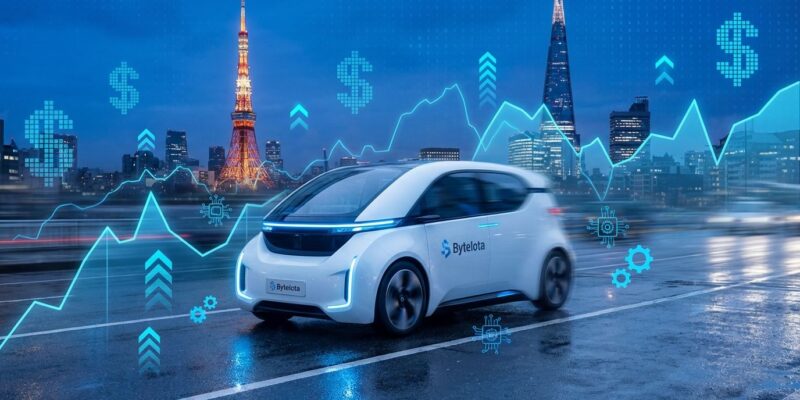
Waymo raised $16 billion on February 2, 2026, valuing the autonomous vehicle company at $126 billion – more than double its October 2024 valuation of $45 billion. The funding round, led by Dragoneer Investment Group, DST Global, and Sequoia Capital, will fuel international expansion to Tokyo and London, plus 20+ additional US cities in 2026. Alphabet maintains majority ownership, with other investors including Andreessen Horowitz, Mubadala Capital, Silver Lake, Tiger Global, and T. Rowe Price.
This isn’t another speculative bet on self-driving cars that might work “in five years.” Waymo is the highest-valued private autonomous vehicle company and the only one operating fully driverless robotaxis at commercial scale. For developers and tech professionals, this validates AI and machine learning at scale and signals growing job opportunities in autonomous systems, fleet management, and city-scale infrastructure.
The Numbers Back It Up
Waymo completed 15 million rides in 2025 – a 3x year-over-year increase – with 250,000 paid rides per week and more than 20 million lifetime rides. The company operates 2,500+ robotaxis across four US cities: Phoenix, Los Angeles, San Francisco, and Austin. This isn’t a demo. It’s a working business with product-market fit. The valuation jump from $45 billion to $126 billion in just 16 months reflects investor confidence that autonomous vehicles crossed the commercial viability threshold.
International Expansion Tests Technology Limits
Waymo plans to expand to Tokyo and London in 2026, alongside 20+ US cities including New York City, Dallas, Denver, Detroit, Houston, Las Vegas, Miami, Nashville, Orlando, San Antonio, San Diego, and Washington DC. Tokyo and London present radically different challenges than US sunbelt cities – left-side traffic in the UK, narrow streets, different driving cultures, pedestrian-heavy areas, and strict regulatory environments. Success in these markets would prove Waymo’s technology adapts globally, not just in California sun.
For developers, this creates opportunities in localization, city-specific AI models, fleet coordination across time zones, and regulatory compliance systems. Building autonomous systems that work in Tokyo’s precision-focused driving culture and London’s chaotic roundabouts requires solving edge cases at scale.
The Competition Isn’t Close
Waymo has a clear lead over US competitors. Cruise scaled back operations after regulatory issues. Tesla’s Full Self-Driving remains Level 2 autonomy, requiring human supervision – it operates in Austin and the Bay Area with drivers in the seat. Amazon’s Zoox launched limited service in Las Vegas in September 2025 but remains early stage. Waymo is the only US company operating Level 4 (fully driverless) at this scale.
The real threat comes from China. Baidu’s Apollo Go hit 250,000 weekly driverless rides in October 2025, matching where Waymo was in April 2025. Chinese competitors dominate their home market and are expanding internationally. Waymo’s scale advantage in the US and planned international expansion are defensive moves as much as growth plays.
Safety Concerns Don’t Disappear With $16B
On January 23, 2026, a Waymo robotaxi struck a child near a Santa Monica elementary school. The child sustained minor injuries after running from behind a double-parked SUV. Waymo said the vehicle “behaved as expected,” braking immediately when it detected the child and slowing from 17 mph to under 6 mph before contact. The National Highway Traffic Safety Administration and National Transportation Safety Board opened investigations.
Safety expert Philip Koopman argued that “a careful, competent human driver would have avoided a panic stop in the first place by adjusting their driving behavior amid the chaos of school drop-off – or taking a different route altogether.” Austin Independent School District reported 24+ incidents of Waymo robotaxis illegally passing school buses since the start of the 2025-2026 school year. Atlanta schools recorded nine bus passing violations since May 2025. California received 100+ incident reports involving Waymo in 2025, ranging from minor traffic violations to collisions.
Waymo claims its safety record is superior to human drivers, and statistically that may be true. But public perception is sensitive to incidents involving children, and federal scrutiny is increasing as the fleet scales. One high-profile incident could trigger regulatory backlash that slows expansion, regardless of overall safety statistics.
What Happens Next
The $16 billion funds Waymo’s expansion to 20+ cities in 2026 and international markets. Regulatory approval remains uncertain – navigating international regulations, different safety standards, and skeptical city councils will test the company’s operational playbook. The technology is validated. The business model is capital-intensive but functional. The path to profitability is unclear, but the path to ubiquity is becoming visible.
For developers considering autonomous systems as a career path, Waymo’s valuation and expansion signal that this technology is commercial reality, not speculative future. The jobs are real, the problems are hard, and the scale is massive. The question is no longer if autonomous vehicles work – it’s where they work next.