 By ByteBot
OpenAI launched the Codex app for macOS yesterday, nine months after Anthropic’s Claude Code captured enterprise giants like Uber, Netflix, and Spotify. The February 2 release introduces multi-agent orchestration, an open-source skills library, and background automations—technical bets on workflow parallelism over single-agent depth. OpenAI’s catch-up product faces a crowded market: Anthropic’s head of Claude Code claims 100% of code at his company is AI-generated, Microsoft employees prefer Claude despite selling GitHub Copilot, and developers are torn between passive code completion and autonomous agent chaos.
OpenAI is betting differentiation beats first-mover advantage. Whether developers care about multi-agent threading more than Claude’s 200K context window remains an open question.
Three Features That Actually Matter
Codex isn’t another Copilot clone. The app introduces capabilities that competitors either lack or handle differently:
Multi-agent management runs separate AI coding agents per project in isolated threads. You can refactor authentication on one branch while another agent adds analytics and a third updates documentation—all on the same repository simultaneously via built-in worktree support. No merge conflicts, no context switching penalty. Freelancers and engineers juggling client projects get the most value here.
The open-source skills system extends AI coding agents beyond code generation. The GitHub library includes Figma-to-code conversion, Linear project management sync, cloud deployment to Cloudflare/Netlify/Render/Vercel, and PDF/spreadsheet/docx creation. Skills bundle instructions plus scripts, so agents follow workflows reliably instead of hallucinating deployment steps. This addresses the “almost right” problem—agents execute predefined patterns rather than improvising.
Background automations schedule tasks to run unattended: security audits at 2 AM, dependency updates overnight, documentation generation after merges. Results queue for morning review. Useful for DevOps toil, less useful if you don’t trust agents unsupervised.
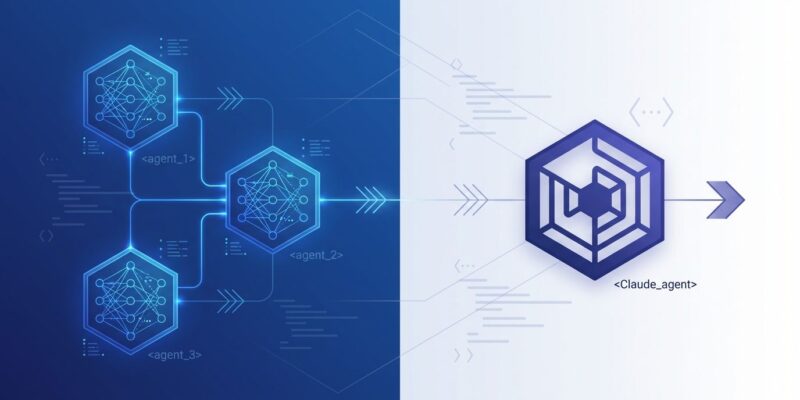
The architecture distinguishes Codex from Claude Code’s approach: multiple specialized agents versus one powerful agent with massive context. OpenAI is betting workflow orchestration matters more than context depth.
OpenAI Plays Catch-Up with Aggressive Pricing
Anthropic launched Claude Code in May 2025. Nine months is forever in AI coding tools. Claude’s enterprise adoption—Uber, Salesforce, Accenture, Snowflake—demonstrates production readiness. Anthropic’s Boris Cherny hasn’t written code in two months; 100% of his output is AI-generated. That’s validation, not hype.
OpenAI counters with scale: over 1 million developers used the Codex app in the past month at companies like Harvey, Sierra, and Cisco. Usage doubled since the GPT-5.2-Codex model dropped in December. But market share isn’t market leadership—Anthropic owns mindshare.
The pricing strategy is transparent desperation: ChatGPT Free and Go users get limited-time Codex access (Anthropic charges for Claude Code), and paid tiers receive doubled rate limits temporarily. This is land-grab tactics—capture users, create switching costs, monetize later. Peter Steinberger, creator of the viral OpenClaw tool, reported productivity roughly doubled after switching to Codex. That’s one data point, but it’s the only independent validation so far.
Platform Gaps and Model Lock-In
Codex launches macOS-only. Windows support is “in development” with no timeline. If you’re on Windows—roughly half of developers—you’re excluded. Claude Code runs cross-platform. Cursor AI runs cross-platform. GitHub Copilot runs cross-platform. OpenAI shipped incomplete.
Model lock-in is worse. The OpenAI Codex app requires GPT-5.2-Codex and GPT-5.2 models. You cannot use Claude Opus, Gemini, or local models. Teams committed to Anthropic or multi-model strategies are locked out. GitHub Copilot now supports Anthropic, Gemini, and OpenAI models—acknowledging developers want flexibility. OpenAI chose the opposite path.
The trust gap affects all AI coding tools, not just Codex. ByteIota covered the 48% drop in AI coding trust—developers don’t verify output, agents produce “almost right” code that breaks subtly. Steinberger’s 2x productivity claim assumes he’s reviewing agent work. Most developers won’t. That’s the adoption paradox: AI code generation tools promise speed but demand vigilance.
Free Tier Won’t Last
OpenAI’s promotional pricing is temporary. ChatGPT Free and Go access will expire. Rate limits will revert. Post-promotion pricing is undisclosed, which means OpenAI hasn’t decided or doesn’t want sticker shock before adoption. Anthropic’s Claude Code pricing is known. GitHub Copilot pricing is known. Codex pricing is uncertain.
For developers evaluating AI coding tools, uncertainty is friction. Committing workflows to Codex means betting on future affordability. OpenAI’s track record includes GPT-4o retirement after 15 days’ notice, breaking promises and workflows. Trust erodes when vendors change terms unpredictably.
The worktree concurrency and skills extensibility are technically interesting. Multi-agent coding orchestration solves real problems for context-switching developers. But technical merit doesn’t guarantee adoption when competitors have 9-month leads, enterprise proof points, cross-platform support, and predictable pricing.
OpenAI needed this launch 6 months ago. Whether “late but different” beats “early and proven” depends on how much developers value parallel workflows over context depth. The market will decide by Q2.