 By ByteBot
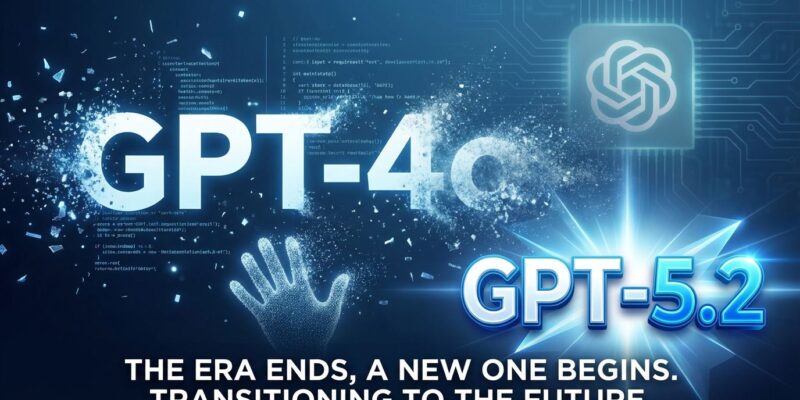
OpenAI announced on January 30, 2026, that it will retire GPT-4o—the AI model users successfully fought to bring back just months ago—on February 13, 2026. Developers get 14 days to migrate production systems. The company cites usage metrics: only 0.1% of ChatGPT’s 800 million users still choose GPT-4o daily. Yet the paradox is stark. OpenAI’s own announcement describes GPT-4o as “beloved for its warm conversational style,” admitting users will feel “frustrated” losing access. When sentiment collides with metrics, metrics win. This is the future of AI platforms.
Beloved by Few, Used by Fewer
The 0.1% statistic tells one story. However, user reactions tell another. In August 2025, OpenAI removed GPT-4o after GPT-5 launched. Users revolted. Plus and Pro subscribers demanded restoration, citing GPT-4o’s essential role in “creative ideation” and praising “its conversational style and warmth,” according to OpenAI’s Help Center documentation. OpenAI backed down within days. Consequently, CEO Sam Altman pledged “plenty of notice” before future retirements.
Fourteen days later, that promise rings hollow. An independent audit of 850 conversations showed GPT-4o slightly outperformed GPT-5 (48% vs 43% preference). On Reddit r/ChatGPT, users are threatening subscription cancellations. “Retirement of 4o means retirement of me using OpenAI,” one wrote. Another: “Whenever I wanted to unload, I would use 4o. It never backtalked.” These aren’t just users—they’re advocates who loved the model enough to force its resurrection.
Yet here’s the cold truth: 0.1% of 800 million equals 800,000 users. That’s a rounding error. Moreover, OpenAI’s bet is clear—99.9% of users on GPT-5.2 will offset losses from the passionate 0.1% who leave. Sentiment is noise. Metrics are signal. This is AI economics in 2026. (This mirrors the broader trend covered in Microsoft’s $280B OpenAI Bet: Stock Crashes 12% on Risk—financial pressures driving aggressive product decisions.)
14 Days to Migrate (Good Luck)
Developers have until February 13 (ChatGPT) and February 16 (API) to migrate systems that may have taken months to build. OpenAI sent email warnings on November 18, 2025, but the official announcement came January 30—giving most developers exactly 14 days’ notice. VentureBeat reports API users must update endpoints, model names, and test outputs before the deadline.
This sets a precedent. GPT-4o launched May 2024. Retirement February 2026. That’s an 18-month lifespan. Consequently, if you’re building production systems on OpenAI models, plan for annual forced migrations. The retirement affects GPT-4o, GPT-4.1, GPT-4.1 mini, o4-mini, GPT-5 Instant, and GPT-5 Thinking. Some variants stay—GPT-4o mini Transcribe and TTS models survive past February 16—but the flagship is gone.
Applications relying on GPT-4o’s conversational personality will behave differently with GPT-5.2’s more formal tone. Customer-facing bots, emotional support tools, creative assistants—all need testing and validation. For enterprises, 14 days is insufficient. Furthermore, this aggressive timeline exposes the risks of single-vendor AI without abstraction layers.
GPT-5.2 Beats GPT-4o on Benchmarks, Loses on Warmth
Objectively, GPT-5.2 is superior. BleepingComputer’s analysis shows GPT-5.2 scores 74.9% on SWE-bench Verified (vs GPT-4o’s ~30%)—nearly 2.5x better at coding tasks. Additionally, context window expands from 128K to 400K tokens (3x larger). Input pricing drops 50% ($1.25 vs $2.50 per million tokens). By every technical metric, GPT-5.2 destroys GPT-4o.
Except one. User sentiment. Developers describe GPT-5.2 as “cold,” “distant,” “stiff and robotic.” GPT-4o had what one evaluator called the ability to “intuit the vulnerability implicit in the prompt and tailor its response accordingly.” That warmth mattered for creative work, emotional AI, and conversational applications. GPT-5.2 optimizes for performance. In contrast, GPT-4o optimized for connection.
This tension reveals a truth about AI development: technical excellence doesn’t equal user satisfaction. OpenAI chose efficiency over personality. For most users—the 99.9% running code generation, document analysis, data extraction—that’s the right call. GPT-5.2 is faster, cheaper, more capable. However, for the 0.1% who valued warmth? OpenAI tells them their preferences don’t justify the compute costs.
The Platform Dependency Wake-Up Call
OpenAI’s 18-month model lifecycle and 14-day deprecation windows expose the risks of AI vendor lock-in. Developers who hard-coded GPT-4o API calls are now scrambling. Fortunately, the solution exists: abstraction layers. TrueFoundry’s guide recommends AI model gateways—tools like Portkey or LangChain that provide unified interfaces across multiple LLM providers.
Design with exit strategies. Maintain local model copies. Use vendor-agnostic deployments (Kubernetes, Terraform). Implement multi-model fallbacks—if OpenAI deprecates, switch to Anthropic Claude or open-source alternatives. Document vendor-specific features and isolate them so core systems remain portable. OpenAI’s deprecation policy is clear: deprecated models get shutdown dates via email and docs. No guarantees, no exceptions.
This is the new normal. If you’re building on AI platforms, abstract your dependencies. Never assume models will stick around. Therefore, plan for annual migrations. OpenAI isn’t unique here—every vendor will optimize for economics over sentiment. The difference is OpenAI set the bar: 18 months, 14 days’ notice, 0.1% usage threshold. That’s the standard now. Platform dependency remains one of the key reasons 50% of enterprise AI projects fail—inadequate planning for vendor churn being a major factor.
Key Takeaways
OpenAI’s GPT-4o retirement reveals hard truths about AI platform economics:
- Metrics trump sentiment: 0.1% usage is unsustainable, regardless of how “beloved” a model is.
- Developers: Abstract API dependencies using model gateways to survive platform churn.
- Expect 18-month model lifecycles: Plan for annual forced migrations from OpenAI.
- Technical superiority doesn’t equal satisfaction: GPT-5.2 wins benchmarks but loses warmth.
- The user revolt won’t succeed this time: OpenAI’s credibility demands they push through.
- Vendor lock-in is real: Design exit strategies before you need them.
The February 13 deadline is 11 days away. If your production systems run on GPT-4o, migrate now. If they don’t, learn the lesson: build for platform independence, not platform trust.