 By ByteBot
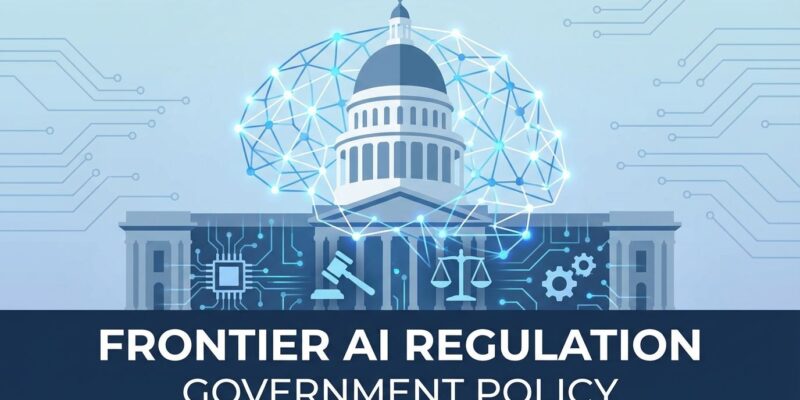
California just made history with the first U.S. law regulating frontier AI safety. On January 1, 2026, SB 53 and three companion laws took effect, requiring major AI companies to publicly disclose how they’ll prevent catastrophic risks. The timing couldn’t be more contentious: Trump’s December executive order challenges these laws, leaving developers caught between state mandates and federal pushback.
What SB 53 Requires and Who It Affects
SB 53 targets “frontier models”—foundation models trained using more than 10²⁶ floating-point operations. No current model hits that threshold yet, which means the law anticipates AI systems not yet built. About five to eight companies fall under its jurisdiction: OpenAI, Anthropic, Google DeepMind, Meta, and Microsoft.
These companies must now publish annual safety frameworks explaining how they’ll mitigate “catastrophic risks”—outcomes causing 50 or more deaths, exceeding $1 billion in damages, or enabling weapons development or autonomous major crimes. Before deploying new or modified frontier models, companies must file transparency reports detailing capabilities, intended uses, limitations, and risk assessments. Critical incidents must be reported within 15 days of discovery—or 24 hours if imminent danger exists. Violate these rules? Up to $1 million per violation.
Trump’s Executive Order Creates Legal Uncertainty
On December 11, 2025—three weeks before SB 53 took effect—Trump signed an executive order establishing a “minimally burdensome national policy framework” for AI. The order directs the Attorney General to establish an AI Litigation Task Force to challenge state AI laws deemed inconsistent with federal policy. The Commerce Department has until March 11, 2026 to identify “onerous” state laws. States with conflicting laws could lose federal funding.
Colorado’s AI Act got explicitly criticized in Trump’s order. California didn’t make the final cut, though earlier leaked drafts targeted it. The legal uncertainty is real: can an executive order override a state statute? Probably not without Congressional action or a court ruling. That leaves frontier AI developers in limbo—comply with California’s law now and risk wasted effort if federal preemption wins, or ignore it and face million-dollar penalties if the law stands.
Developer Impact: Whistleblower Protections and Workflow Changes
Whistleblower protections took effect January 1. If you’re working on frontier AI and see catastrophic risks being ignored, you now have legal protection to report concerns anonymously without retaliation. That’s a win for safety culture even if the broader law gets challenged.
But compliance isn’t trivial. Wharton AI Initiative notes that developers should expect governance frameworks mirroring financial compliance rigor. This means formalized risk protocols before training begins, ongoing monitoring during development, third-party evaluations before deployment, and incident detection infrastructure post-launch. AI safety governance becomes a business function with systematic assessments, clear escalation paths, and external accountability.
Companion Laws Target Chatbots and Police AI
California didn’t stop at frontier models. AB 489 bans AI chatbots from impersonating licensed professionals like doctors and nurses—a response to data showing 72% of teens use AI as a companion and 12% for mental health support. SB 243 protects minors from dangerous chatbot interactions by requiring disclosures that bots aren’t real people and protocols for handling suicidal ideation. SB 524 requires law enforcement to disclose when AI tools draft police reports. Together, these laws signal California’s comprehensive AI regulation approach.
The Effectiveness Debate: Transparency vs. Compliance Theater
Does any of this actually prevent catastrophic risks, or does it just create compliance theater? Future of Privacy Forum argues SB 53 converts voluntary corporate commitments into public accountability, turning best practices into enforceable requirements. Stanford Law is more skeptical, questioning whether disclosure alone reduces risk or merely generates paperwork.
Industry reactions split accordingly. Anthropic publicly endorsed the law, noting requirements align with practices already adopted. OpenAI and Meta acknowledged positive aspects but emphasized preference for federal frameworks. Here’s the uncomfortable truth: we don’t know if transparency prevents catastrophic AI risks. We do know transparency creates information infrastructure for future policy. Whether companies publish meaningful safety frameworks or boilerplate compliance documents will determine if SB 53 succeeds or becomes another regulatory checkbox.
What’s Next for Frontier AI Developers
The Commerce Department’s March 11 evaluation will clarify which state laws Trump’s administration considers “onerous.” Legal challenges are likely. Other states are watching to see if California’s approach survives or gets preempted. The only certainty is more AI regulation—state and federal—coming soon.
For developers at frontier AI companies, governance, documentation, and oversight are the new normal. Choose transparency and robust safety practices not because a law forces you to, but because catastrophic risks are real and your work matters. The regulatory fight will sort itself out. Your decisions about AI safety won’t wait.