 By
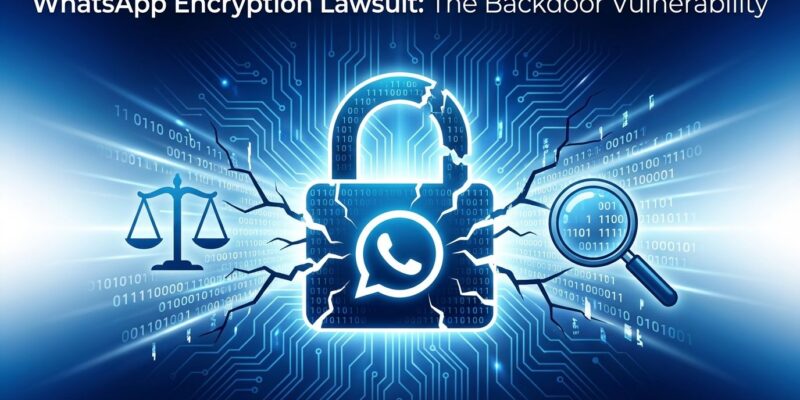
By A class-action lawsuit filed on January 28, 2026, claims Meta’s WhatsApp encryption is a lie. Whistleblowers—former content moderators who worked through Accenture—allege they and Meta employees had “unfettered access” to supposedly encrypted messages. The 51-page complaint accuses Meta of building a “kleptographic backdoor” that undermines privacy promises made to over 3 billion users. Named plaintiffs from Australia, Brazil, India, Mexico, and South Africa are seeking class-action status to represent WhatsApp’s entire user base.
What makes this more than just another Big Tech lawsuit? The US Department of Commerce has been investigating these same claims since July 2025.
Federal Investigation Adds Legitimacy
The US Department of Commerce’s Bureau of Industry and Security is running an investigation dubbed “Operation Sourced Encryption.” Started in July 2025, the probe remains active as of this month. Moreover, investigators interviewed the same whistleblowers now backing the lawsuit—former Accenture contractors who worked as WhatsApp content moderators in Austin, Dublin, and Singapore.
According to investigator reports, these insiders testified they had “broad access” to supposedly encrypted WhatsApp messages. Both sources confirmed “unfettered” access to messages at their physical work locations. Consequently, this isn’t speculation from outside observers—these people worked inside the system.
The government investigation lends credibility the lawsuit alone might lack. Federal investigators have resources to verify technical claims and access Meta’s internal systems through legal channels. Therefore, if the Commerce Department finds merit, regulatory action could follow regardless of how the civil lawsuit plays out.
The WhatsApp Encryption-Moderation Paradox
Here’s the fundamental problem: WhatsApp claims to offer end-to-end encryption (where nobody, including WhatsApp, can read your messages) while simultaneously running a content moderation operation with over 1,000 human reviewers. However, security experts say these two things are mathematically incompatible.
The official explanation goes like this: When users flag messages for review, those messages are already decrypted on the recipient’s device. The flagged message plus a few previous messages from the thread get sent to moderators in plaintext. Indeed, this is acknowledged and documented by WhatsApp.
But whistleblowers described “unfettered” access—not just to flagged messages. If access is truly limited to user-reported content, why did insiders characterize their access so broadly? Furthermore, that’s the unanswered question driving this lawsuit.
The math doesn’t lie. Either encryption is real and moderation happens only on flagged messages, or moderation happens at scale and encryption has holes. You can’t have both absolute encryption and platform-level content access. WhatsApp uses the Signal Protocol—the same trusted, open-source encryption used by Signal itself. The protocol works. The question is whether Meta’s implementation maintains its guarantees.
Meta’s Response: Categorical Denial
Meta isn’t hedging its response. Spokesperson Andy Stone stated: “What these individuals claim is not possible because WhatsApp, its employees, and its contractors, cannot access people’s encrypted communications.” In addition, the company called the lawsuit “a frivolous work of fiction” and threatened to pursue sanctions against the plaintiffs’ attorneys.
Meta’s stock dropped 1% on the news. Nevertheless, the company’s legal threat shows how seriously it’s taking this. Going after the lawyers themselves—not just defending against claims—is a bold move that signals Meta views this as an existential threat to WhatsApp’s credibility.
But whistleblowers aren’t random critics. They worked inside the moderation system for months or years. They saw how messages flowed through internal tools. Accordingly, either they fundamentally misunderstood what they were looking at, or Meta’s absolutist denial leaves no room for the nuance of how content moderation actually works alongside encryption.
Security Experts Remain Skeptical
The security community isn’t ready to burn WhatsApp at the stake. Matthew Green, a cryptography professor at Johns Hopkins University, told reporters that experts see “no clear technical path” for Meta to routinely access plaintext messages at scale. Meanwhile, the only realistic scenario, Green suggested, would be unencrypted cloud backups stored with Google or Apple—systems outside Meta’s control.
Maria Villegas Bravo, counsel at the Electronic Privacy Information Center, noted the lawsuit appears “light on factual detail” about WhatsApp’s actual software implementation. Without technical evidence showing how the alleged backdoor works, cryptographers remain skeptical.
Yet those same experts acknowledge the content moderation paradox is real. True end-to-end encryption and platform-level moderation are fundamentally at odds. Consequently, the lawsuit may lack smoking-gun evidence, but it’s asking a question the industry hasn’t answered: How exactly does WhatsApp moderate content without breaking encryption?
Trust in Tech Privacy Takes Another Hit
Three billion people use WhatsApp because they were told their messages are private—readable only by sender and recipient. If Meta built a backdoor to enable broader content access, that’s a massive breach of trust affecting billions of users worldwide. Journalists, activists, healthcare workers, and ordinary people rely on those privacy guarantees.
Even if the lawsuit fails, the damage is done. Elon Musk piled on this week, tweeting “WhatsApp is not secure” and urging users to switch to X Chat—ignoring his obvious conflict of interest as X’s owner. Trust in Big Tech privacy claims takes another hit.
The core question isn’t whether this specific lawsuit succeeds. It’s whether platforms can credibly claim to protect your privacy while simultaneously reading messages to moderate content. The math says they can’t do both. Meta’s absolutist denial doesn’t explain how the moderation system actually works. Whistleblowers say they had access. The government is investigating.
Something doesn’t add up. Either Meta needs to explain the mechanics better, or users need to understand that “end-to-end encrypted” comes with asterisks when content moderation is involved. You can’t have your encryption cake and moderate it too.