 By ByteBot
OpenAI’s Stargate Project has deployed over $100 billion across 7 gigawatts of AI data center capacity as of January 2026, racing toward a $500 billion infrastructure buildout by 2029. Five new sites across Texas, New Mexico, and Ohio became operational this month, consuming enough electricity to power San Francisco twice over. But the same week Stargate hit this milestone, Microsoft lost $357 billion in market value as investors questioned AI infrastructure ROI—and DeepSeek proved competitive AI performance costs $6 million, not $500 billion. The question facing developers: Is massive infrastructure the path to AGI, or an expensive bet against efficiency innovation?
The $500 Billion Infrastructure Bet
Stargate represents a fundamental belief that AGI requires massive scale. The project’s 10-gigawatt target equals power for 7.5 million homes. Abilene’s flagship site alone runs 1.2 gigawatts across ten 500,000-square-foot facilities with liquid cooling because air cooling can’t handle 130 kilowatts per rack. It’s infrastructure maximalism: spend enough on hardware, and intelligence emerges.
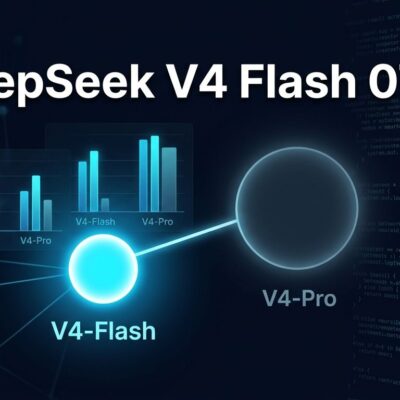
Except DeepSeek R1 trained for $5.58 million using pure reinforcement learning and matches OpenAI o1 performance on math, code, and reasoning tasks. DeepSeek’s inference API costs 55 cents per million input tokens versus OpenAI’s $15—that’s 96% cheaper. When NVIDIA dropped 17% after DeepSeek’s release, markets signaled something important: maybe you don’t need $500 billion in data centers to compete in AI.
Microsoft’s $357B Market Cap Wipeout
The collision between infrastructure ambitions and market reality hit on January 29, 2026. Microsoft reported Azure growth slowing to 39% while capital expenditures jumped 66% to $37.5 billion per quarter. The stock plummeted 10%, wiping out $357 billion in a single day—the second-largest market cap loss in history. Morgan Stanley’s warning was blunt: capex growing faster than Azure is a fundamental ROI problem.
Worse for Stargate’s prospects: 45% of Microsoft’s $625 billion backlog ties directly to OpenAI, meaning $280 billion rides on this infrastructure bet succeeding. Investors have shifted from celebrating AI capabilities to demanding monetization proof. SoftBank chairman Masayoshi Son just committed another $30 billion to OpenAI despite track records including WeWork and Sprint—both infrastructure-heavy bets that failed spectacularly.
The Power Grid Can’t Keep Up
The physical constraints are as severe as the financial ones. The 5.5 gigawatts from Stargate’s new Oracle sites doubles San Francisco’s electricity consumption. PJM Interconnection, serving 65 million people across 13 states, projects a 6-gigawatt shortfall by 2027—exactly when Stargate plans full deployment. Seventy percent of the U.S. grid is approaching end-of-life, and data centers already consume 183 terawatt-hours annually, projected to hit 426 TWh by 2030.
For developers, this creates a paradox: Microsoft spent $37.5 billion in one quarter and still reports compute capacity bottlenecks. Throwing money at infrastructure doesn’t guarantee availability when the power grid itself can’t support the load. Residents near data centers already face higher utility bills as transmission companies pass infrastructure costs downstream.
What Developers Should Do
If you’re building on OpenAI’s APIs, you’re implicitly betting Stargate succeeds. The infrastructure aims to eliminate capacity constraints that throttle ChatGPT and API access during peak usage. OpenAI’s vertical integration—chips to data centers to APIs to applications—could mean better performance or ecosystem lock-in. Current pricing shows the stakes: GPT-5 costs $1.25 per million input tokens while DeepSeek charges 55 cents.
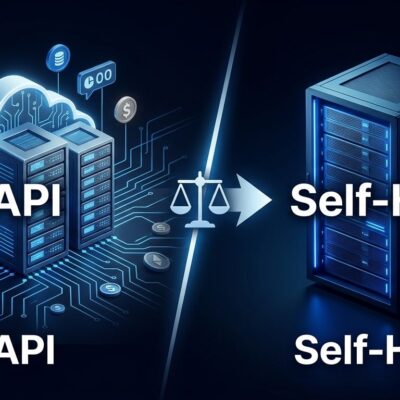
Enterprise developers face a strategic choice: build on infrastructure giants with SLAs and dedicated capacity, or bet on efficiency innovators offering 96% cost savings. The winner determines whether AI development centralizes around a few hyperscale infrastructure owners or remains accessible to smaller teams. Gartner projects that by 2030, 80% of organizations will evolve to smaller, AI-enhanced teams—which approach supports that future better?
Software Always Favors Efficiency Over Scale
Stargate is being compared to the Manhattan Project: massive scale, government backing, strategic urgency. But there’s a critical difference. The Manhattan Project needed infrastructure because nuclear fission requires physical critical mass. You can’t split atoms with better algorithms. AI might be different.
DeepSeek’s Manifold-Constrained Hyper-Connections architecture, announced in January 2026, demonstrates that training innovations can achieve scale without proportional infrastructure. Wei Sun at Counterpoint Research called it a “striking breakthrough.” Software has always favored efficiency over brute force: mainframes lost to PCs, PCs lost to smartphones, on-premise lost to cloud.
If AGI is more like software than physics, Stargate’s $500 billion could become a stranded asset. Especially if energy constraints or efficiency breakthroughs arrive before the 2029 completion date. Masayoshi Son bet big on physical infrastructure with WeWork’s office leases and Sprint’s cell towers. Both bets assumed scale beats efficiency. Both failed.
The Bottom Line
The irony is stark: the same month Stargate demonstrates unprecedented infrastructure deployment, markets punish Microsoft for infrastructure spending, and a Chinese startup demonstrates competitive AI for pocket change. For developers, the message is clear. API pricing, capacity constraints, and ecosystem lock-in matter more than boardroom promises about future gigawatts.
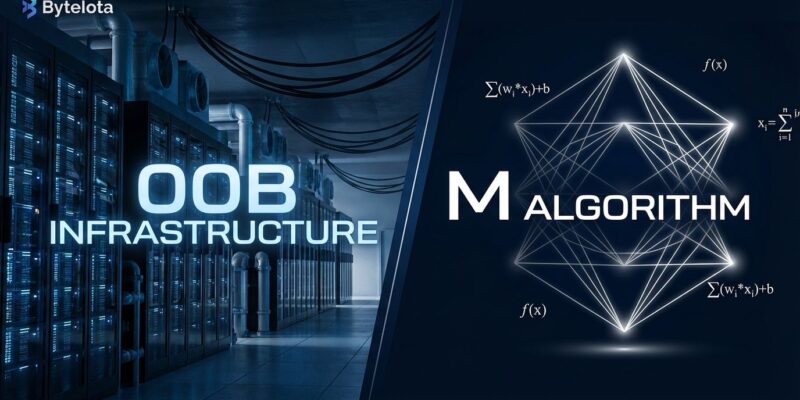
Infrastructure maximalism assumes AGI needs hardware when history suggests it needs ideas. Watch DeepSeek’s cost efficiency as closely as OpenAI’s infrastructure announcements. The future of AI development might not be decided in Texas data centers burning natural gas—it might be decided in research labs finding better algorithms.