 By ByteBot
Developer Revolt Forces GitHub’s Hand
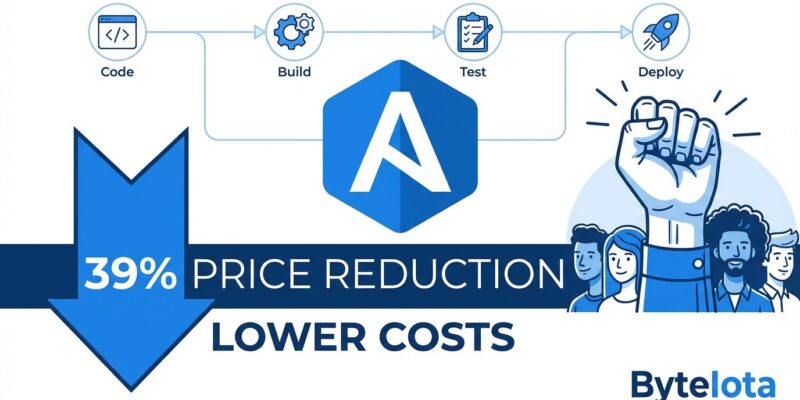
GitHub slashed hosted runner prices by 39% on January 1, 2026, and indefinitely postponed controversial self-hosted runner charges after developers revolted. Standard Linux runners dropped from $0.008 to $0.005 per minute while GitHub admitted it “missed the mark” on its attempt to charge $0.002 per minute for self-hosted orchestration.
The price cuts save teams running 50,000 minutes monthly $1,728 annually. But the real story isn’t the discount—it’s that GitHub tried to monetize orchestration on customer infrastructure, and developers said no. Tech giants don’t usually back down.
The Self-Hosted Charge That Wasn’t
In December 2025, GitHub announced a $0.002 per-minute “platform charge” for self-hosted runners, scheduled for March 1, 2026. The fee would apply to job queuing, routing, and logging—services developers argued they already paid for through GitHub subscriptions.
The community erupted. One developer called it “absolutely bananas,” calculating a personal bill jumping to $140 monthly for running jobs on their own hardware. Enterprise customers cited budget chaos. Volunteer organizations faced forced upgrades that would price them out entirely.
“Don’t charge them the same per minute price as your own runners, that is just anti-competitive,” one user wrote in GitHub’s pricing discussion. “We are already paying for the privilege by paying for our GitHub accounts.”
GitHub postponed the charges indefinitely, acknowledging it “missed the mark.” That admission sets precedent: platforms must consult communities before major pricing changes.
Why This Happened Now
GitHub’s pricing moves are defensive plays in an accelerating CI/CD cost war. Organizations waste 30-50% of cloud spending on unused resources, and 2026 priorities focus on efficiency over expansion.
Competitors are circling. CircleCI offers better economics above 50,000 minutes monthly. GitLab CI includes CI/CD with no separate self-hosted charges. Jenkins charges nothing for orchestration. Cloud repatriation favors self-hosted infrastructure.
GitHub Actions executes over 6 billion workflow runs monthly, but market leadership doesn’t guarantee loyalty. The 39% price cut responds to competitive pressure. The self-hosted reversal recognizes that developer economics have changed.
Real Numbers, Real Savings
Standard Linux runners dropped from $0.008 to $0.005 per minute. 16-core runners fell from $0.064 to $0.040 per minute. Free tiers remain unchanged—2,000 minutes monthly for private repositories, unlimited for public.
A medium team running 50,000 minutes monthly saves $1,728 annually. Large enterprises at 500,000 minutes save $17,928 yearly. Self-hosted teams using 10 million minutes avoided $240,000 in new charges.
These aren’t rounding errors. For startups, these savings fund developer salaries. For enterprises, they justify CI/CD investments to cost-conscious CFOs.
What Developers Won
GitHub’s reversal is rare—tech giants typically announce pricing changes, weather backlash, then proceed anyway. That GitHub paused and admitted error signals a shift.
Developers control billions in infrastructure spending. Platforms need them more than they need platforms. Cost transparency is now competitive advantage. Community consultation is expected, not optional.
Other platforms are watching. The precedent is set—platforms must justify costs, explain decisions, and respond to feedback. Or lose customers.
The Cost Optimization Mandate
GitHub’s adjustments reflect broader infrastructure economics. Cloud spending hit $1.3 trillion in 2025, but blanket budget increases are over. Developers are now economic stakeholders, not just infrastructure users.
This changes platform relationships. Developers compare competitors on price, performance, and transparency. They migrate when economics don’t align. Platform lock-in matters less when cost optimization is a career skill.
GitHub Actions remains the market leader, but leadership requires trust. The self-hosted charge attempt damaged it. The reversal begins rebuilding.
What This Means for You
Teams using hosted runners gain automatic savings—no action required. Self-hosted teams avoid unexpected charges indefinitely. Evaluate whether current infrastructure makes economic sense at 2026 prices.
More importantly, recognize your economic power. GitHub reversed course because developers collectively demanded accountability. That power extends beyond pricing to product roadmaps and platform decisions.
When pricing doesn’t align with value, say so. When decisions lack transparency, demand explanation. When platforms ignore feedback, consider alternatives.
GitHub Actions just proved that developer collective action works. The question is whether developers will use that power beyond pricing disputes. Transparency and accountability should be standard across developer platforms—not exceptions granted under pressure.