 By
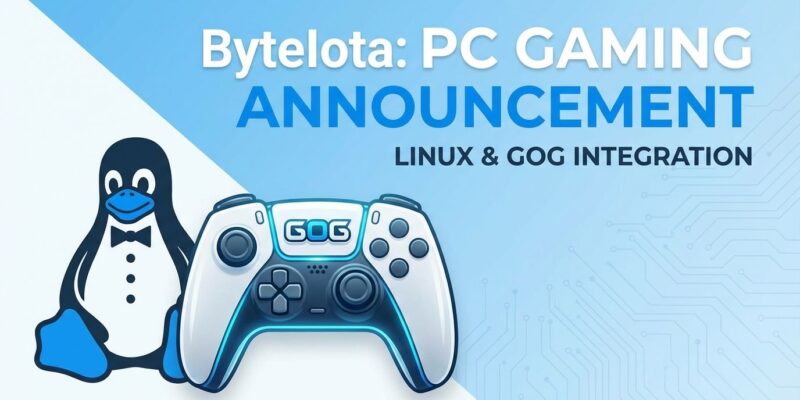
By GOG.com announced in late January 2026 that Linux is “the next major frontier” for their gaming platform, hiring a Senior Software Engineer to build native GOG Galaxy client support with “Linux in mind from day one.” The move comes after GOG was acquired by co-founder Michał Kiciński in December 2025, who bluntly called Windows “bad software” in a PC Gamer interview. GOG is now the last major PC gaming platform without official Linux support—Steam, Epic, and smaller competitors all have native clients or third-party solutions.
Linux gaming hit 3.58% market share on Steam in December 2025, up 50% year-over-year and representing roughly 4.7 million users. However, GOG’s announcement arrives years after Steam solved the hard problems: Proton handles 90% of Windows games on Linux, and the Steam Deck validated Linux gaming commercially. The timing raises a question: is this catching up or too late?
Last Holdout in a Steam-Dominated Market
Steam launched its native Linux client in 2013. Valve released Proton in 2018, cracking the Windows compatibility problem. The Steam Deck arrived in February 2022, proving Linux gaming could work at scale. Meanwhile, GOG removed Linux support from its Galaxy 2.0 roadmap entirely—a move that frustrated the community for years.
Now GOG is hiring to build what Steam perfected half a decade ago. The job posting signals serious architectural work: “help shape GOG GALAXY’s architecture, tooling, and development standards with Linux in mind from day one.” That phrasing implies the client wasn’t designed for Linux initially, which means significant engineering effort ahead. For context, Linux gaming just crossed 3% on Steam, driven by both Steam Deck and desktop Linux adoption.
GOG faces a brutal competitive reality. Steam isn’t just ahead—it owns the ecosystem. Valve funds driver development, maintains Proton, and ships hardware that runs Linux. GOG can build a client, but competing with that level of integration and investment is another matter entirely. A Hacker News commenter captured the skepticism: “I bought less from GOG and more from Valve since acquiring a Steam Deck. Will a native client change this calculus?”
New Owner’s Philosophy: Windows Is “Bad Software”
Kiciński’s Windows criticism stands out. Gaming platforms don’t typically trash the operating system that runs 96% of PC games. His exact words: “Windows is bad software. It’s hard to believe it has remained on the market for so long.” This isn’t diplomatic hedging—it’s ideological positioning.
Managing Director Maciej Gołębiewski confirmed Linux is part of GOG’s 2026 strategy, framing it alongside game preservation and DRM-free values. The message is clear: GOG differentiates through philosophy rather than competing on Steam’s terms (convenience, deep integration, market dominance). DRM-free games plus open-source platform support aligns perfectly with Linux community values.
But does ideology matter if the user experience can’t match Steam? Linux users appreciate DRM-free principles, but they also appreciate Steam Input working flawlessly with controllers, Proton updates landing automatically, and Steam Deck hardware that just works. GOG needs to deliver substance, not just philosophy.
Competing with Community-Built Alternatives
Here’s the irony: GOG games already work on Linux, no official client needed. Heroic Games Launcher provides a polished, open-source solution supporting GOG, Epic, and Amazon Prime. Features include cloud saves, Proton integration, offline mode, and controller support. It’s free, maintained by the community, and functional.
GOG must now build something better than the free alternative. That’s an unusual competitive dynamic—competing with your own unofficial ecosystem. Some Hacker News commenters argue GOG should fund Heroic instead of building their own client. The counter-argument: companies deserve control over their products, and official support matters for enterprise credibility and feature parity.
The technical challenge is real. The job posting’s “Linux from day one” language suggests Galaxy wasn’t designed with cross-platform Linux support initially. GOG needs to handle distribution fragmentation (Ubuntu, Arch, Fedora), integrate with Proton for Windows games, support native Linux titles, and match Heroic’s feature set—all while maintaining Windows and macOS compatibility.
Years of Frustration Meet Cautious Hope
The Linux gaming community has requested GOG Galaxy support for years. The GOG wishlist page for Linux client has thousands of votes. Linux was mentioned in early Galaxy roadmaps, then quietly dropped. That history creates a trust deficit.
The January announcement generated significant engagement—251 points and 141 comments on Hacker News—but sentiment is divided. Optimistic voices see new ownership as genuine change: “Very hopeful that Linux gaming will save the open PC desktop.” Skeptics remember broken promises and Steam’s entrenched position.
A job posting isn’t a product. It’s a hiring intent, nothing more. The Linux community has seen vaporware promises from many companies. GOG needs to ship, not just announce, to convert skeptics. Every month without a beta erodes credibility further.
What Happens in 2026
GOG provided no release date or concrete timeline. The job posting is for a Senior Software Engineer—a foundational role, not a maintenance position. That suggests early-stage planning, not near-term launch.
Realistic timeline? Beta in late 2026 at earliest. Full feature parity with Windows/macOS likely stretches into 2027. The “2026 strategy” language from Gołębiewski could mean anything from Q2 beta to year-end promise. No specifics means no accountability.
Managing expectations matters. Linux users have been burned before. GOG needs to demonstrate progress—public roadmaps, beta access, transparent development—to maintain community goodwill while building. Otherwise, skepticism hardens into dismissal.
Philosophy Versus Pragmatism
GOG’s announcement signals broader industry acknowledgment that Linux gaming is commercially viable. Three and a half percent market share isn’t dominant, but 4.7 million users and 50% annual growth can’t be ignored. Steam proved the technical feasibility. GOG now tests whether DRM-free ideology plus Linux support creates a differentiated value proposition.
However, philosophy doesn’t guarantee success. Linux users value open-source principles and DRM-free ownership, but they also value convenience. Steam’s integration is seamless. Heroic Launcher is free. GOG must deliver an experience worth switching for, not just an ideological statement.
The ultimate question isn’t whether GOG can build a Linux client—it’s whether anyone cares once it ships. Steam’s dominance, Heroic’s functionality, and years of delay created a market where GOG is fighting for scraps, not leadership. Catching up isn’t the same as winning.
Key Takeaways
- GOG is building native Linux support after years of community requests, hiring engineers for “Linux from day one” architecture
- The timing is awkward: Steam already solved the hard problems (Proton, drivers, Deck hardware) years ago
- New owner Kiciński’s Windows criticism signals ideological differentiation (DRM-free + open platforms) rather than competing on Steam’s terms
- GOG must compete with Heroic Games Launcher, a free community-built alternative that already works well
- No release timeline provided—job posting suggests early-stage planning, not near-term launch
- Philosophy (DRM-free + Linux) aligns with community values, but delivery and user experience will determine success
GOG’s Linux announcement is newsworthy but not revolutionary. The question isn’t whether they can build it—it’s whether they can compete after arriving years late to a Steam-dominated market.