 By ByteBot
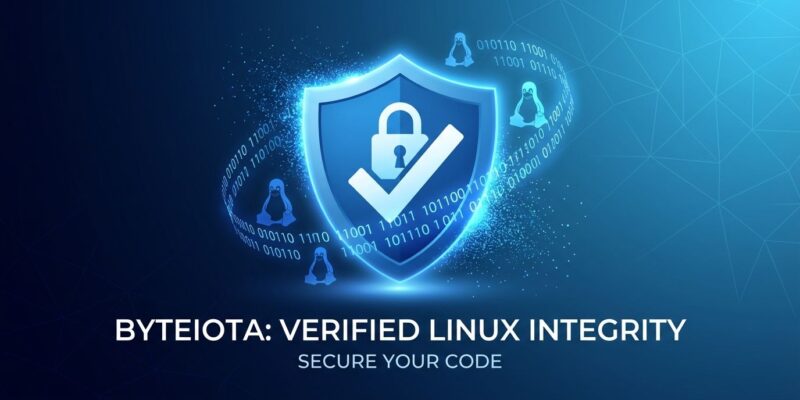
Lennart Poettering, the systemd creator who sparked years of Linux controversy, announced yesterday a new startup called Amutable focused on bringing “verifiable integrity to Linux workloads everywhere.” Co-founded with Linux kernel maintainer Christian Brauner and former Kinvolk CEO Chris Kühl, the January 27 announcement targets a glaring vulnerability exposed by last year’s XZ backdoor near-catastrophe: Linux systems lack comprehensive cryptographic verification from build to runtime.
The company aims to provide integrity verification across three critical phases—build integrity, boot integrity, and runtime integrity—offering cryptographic proof that systems haven’t been tampered with. All three founders worked at Microsoft before launching Amutable, lending credibility but also raising eyebrows given Poettering’s divisive history with systemd adoption.
The Supply Chain Crisis That Makes This Matter
The XZ Utils backdoor in March 2024 came within days of becoming what security expert Alex Stamos called “the most widespread and effective backdoor ever planted in any software product.” A three-year social engineering campaign by an attacker using the name “Jia Tan” successfully inserted malicious code into the xz compression library, which would have given attackers SSH access to hundreds of millions of Linux systems worldwide.
Only blind luck prevented disaster. Andres Freund, a Microsoft engineer, noticed an unexplained 500-millisecond latency during SSH connections and traced it back to the compromised xz package. The backdoor earned a CVSS severity score of 10.0—the maximum rating—and exposed a fundamental weakness: Linux systems are mutable by default, allowing attackers to modify binaries after installation without detection.
Traditional security is reactive, designed to detect breaches after they occur. Amutable’s approach is proactive—using cryptographic verification to prove a system matches its expected state at every stage. That’s the difference between finding out your house was robbed versus having cameras that prove no one broke in.
What Linux Integrity Verification Actually Means
At its core, integrity verification means cryptographic proof that software hasn’t been tampered with from the moment it’s built until it’s running in production. The technology spans three distinct phases.
Build integrity verifies that software was compiled correctly from known source code, not modified during the build process—exactly what would have caught the XZ backdoor’s tarball-only injection. Boot integrity uses measured boot and Trusted Platform Modules to record cryptographic hashes of firmware, bootloader, and kernel components, creating an immutable chain of trust that attackers can’t fake. Runtime integrity continuously verifies that running systems match their expected state, using Linux kernel features like IMA (Integrity Measurement Architecture) and dm-verity.
Current solutions like Fedora Silverblue and NixOS provide immutability but don’t offer comprehensive attestation. NixOS delivers reproducible builds but doesn’t verify runtime integrity. Silverblue makes the root filesystem read-only but can’t cryptographically prove boot integrity to a remote verifier. Amutable could fill the gap by integrating all three phases into a unified verification system, likely leveraging systemd’s existing presence on most Linux distributions.
The Poettering Problem: Can Linux Trust This Team?
Lennart Poettering remains one of the most controversial figures in Linux history. His systemd project, launched in 2010, rapidly replaced traditional init systems across major distributions despite fierce opposition from developers who argued it violated the Unix philosophy of “do one thing well.” Critics called systemd monolithic, bloated, and prone to feature creep as it expanded to encompass logging, networking, DNS resolution, and session management.
The controversy turned personal. Poettering faced death threats. Debian developers resigned over the decision to adopt systemd. The Devuan fork was created specifically to maintain SysV init. Linux kernel developer Theodore Ts’o warned of a “dangerous trend toward uniformizing the Linux ecosystem.” Linus Torvalds himself criticized Poettering for treating bug reports as “annoyances that should be ignored.”
Yet systemd won. It’s now the default on virtually every major Linux distribution, from Fedora to Ubuntu to Arch. The question is whether Amutable will follow the same trajectory—controversial adoption that eventually becomes standard—or whether the community’s trust has limits.
The Hacker News discussion generated 362 comments and 273 points, showing the announcement sparked significant interest. But key concerns emerged: Will this become “systemd for security,” another Poettering project that takes over Linux infrastructure? Can the community trust a security tool from someone with such a divisive track record? And does the Microsoft connection—all three founders came from Redmond—raise red flags about corporate influence over Linux security?
What Happens Next for Amutable
The team brings serious expertise. Christian Brauner is a core Linux kernel maintainer who worked on namespaces and security features. Chris Kühl led Kinvolk, which created Flatcar Container Linux and was acquired by Microsoft in 2021. Poettering’s systemd runs on most production Linux systems. If anyone can build comprehensive integrity verification, this trio has the credentials.
The timing favors them. The XZ backdoor is less than a year old, fresh in everyone’s minds. TPM 2.0 chips are standard on modern hardware. Supply chain security is a regulatory priority following CISA’s response to the XZ crisis. Immutable Linux distributions are gaining mainstream acceptance. Enterprise customers are demanding verifiable security, not just detection tools.
However, adoption depends on trust, and trust is Amutable’s biggest challenge. Poettering’s history with systemd proves he can ship widely-adopted infrastructure despite opposition—but it also proves the opposition will be fierce. Watch for technical announcements, partnerships with major distributions, and whether the solution integrates with systemd or stands alone. The stakes are preventing the next XZ-style catastrophe. Whether Amutable can overcome its Poettering problem will determine if Linux finally gets the integrity verification it desperately needs.