 By ByteBot
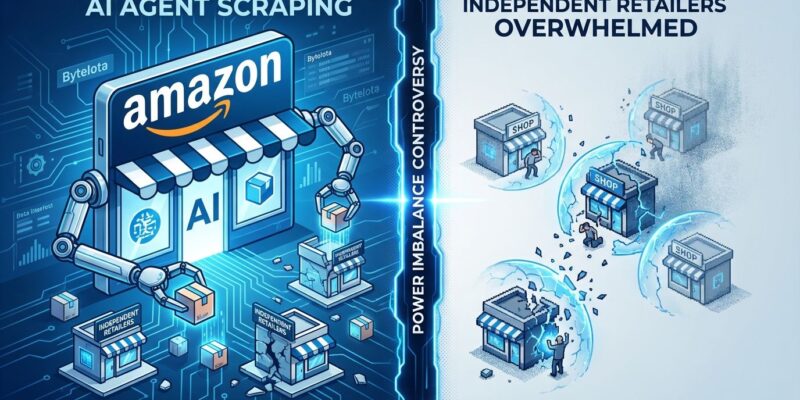
Amazon scraped thousands of retailer websites without permission to power its Buy for Me AI shopping agent, sparking backlash from small businesses who discovered they were listed on Amazon in January 2026. Bobo Design Studio CEO Angie Chua’s viral Instagram post exposed the practice, with 180+ businesses reaching out after learning Amazon forced them into an opt-out model where retailers must email Amazon to remove products—despite never agreeing to enrollment. The hypocrisy is stunning: Amazon sued Perplexity AI in November 2025 for scraping Amazon’s website, yet Amazon simultaneously scrapes independent retailers doing the exact same thing.
Amazon Sued Perplexity While Scraping Retailers
In November 2025, Amazon sent a cease-and-desist letter to Perplexity AI (October 31) and filed a lawsuit (November 4) accusing Perplexity of “computer fraud” for using AI agents to scrape Amazon’s website. Amazon claimed Perplexity was “disguising Comet as a Google Chrome browser” and violating security and data protection. The lawsuit argued Perplexity’s scraping threatened customer data and Amazon’s business interests.
Yet Amazon’s own Shop Direct and Buy for Me tools, launched in February 2025, do the exact same thing to thousands of independent retailers. Amazon scrapes product data (descriptions, images, prices), lists them on its marketplace, and uses AI agents to complete purchases without retailer consent. By November 2025, Amazon had scraped over 500,000 products from independent websites. Perplexity responded by calling Amazon’s legal action “bullying” in a blog post titled “Bullying is not innovation.”
This exposes the classic platform double standard: Big tech sets rules for others while exempting itself. Amazon argues scraping is illegal when it hurts Amazon, but acceptable when Amazon profits. For developers building e-commerce sites, this signals a dangerous precedent—platforms will scrape you while aggressively protecting themselves.
Retailers Forced Into Opt-Out Model
Small business owners only discovered Amazon was scraping their websites when they received orders through Buy for Me or saw their products listed on Amazon without notification. Amazon’s opt-out model means retailers must actively find the violation, then email branddirect@amazon.com to request removal. This violates core web ethics principles where consent should be opt-in, not opt-out.
Angie Chua, CEO of Bobo Design Studio, captured the frustration: “We were forced to be dropshippers on a platform that we have made a conscious decision not to be part of.” Over 180 small businesses contacted her after her Instagram post went viral in January 2026. Emi Moon, founder of Peachie Kei, emphasized the reputational concern: “I don’t want to be associated with Amazon.” Moon stressed the need for opt-in consent rather than Amazon’s default scraping approach.
Hitchcock Paper received orders for stress balls they don’t actually sell—Amazon’s AI scraped incorrect or outdated product data. This shifts the burden to victims: retailers who consciously avoid Amazon for brand positioning, ethical reasons, or business strategy have their autonomy violated. The precedent is dangerous: AI companies can scrape first, ask forgiveness later, or never.
How Buy for Me Works Technically
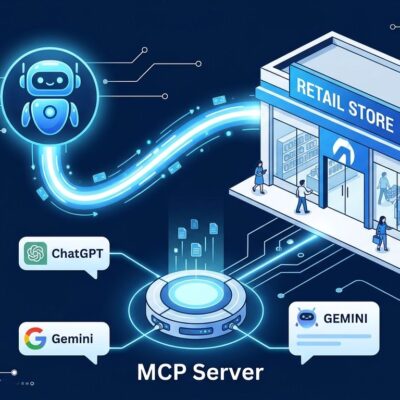
Buy for Me uses “agentic AI” to browse third-party websites, scrape product catalogs, and automatically complete purchases on behalf of customers. When a customer clicks “Buy For Me” on a product listing, Amazon’s AI agent navigates to the retailer’s website in the background, fills out checkout forms with the customer’s encrypted payment and shipping information, and completes the transaction—all without the customer leaving Amazon’s app.
Amazon’s AI agents disguise themselves as standard Chrome browsers (user-agent spoofing) to evade detection. The scale is massive: Amazon grew from 65,000 scraped products at launch (February 2025) to 500,000+ by November 2025, adding roughly 60,000 new products per month. Amazon provides unique email addresses for each order to relay communications between merchants and customers, maintaining control over the relationship.
Amazon claims a zero-commission model, unlike its standard marketplace fees of 15-20%. However, this is strategic: Buy for Me expands Amazon’s product catalog without inventory costs while making Amazon the default shopping interface. For developers, this shows the technical sophistication of agentic commerce—traditional bot detection (user-agent checks, CAPTCHA) may not work against advanced AI agents that mimic human browsing behavior.
Related: eBay AI Agent Ban: Revenue Protection Strategy 2026
The AI Shopping Wars Heat Up
Amazon isn’t alone in the AI shopping agent race. OpenAI introduced Instant Checkout in ChatGPT, partnering with Target, Instacart, and DoorDash using Stripe’s Agentic Commerce Protocol. Google launched its Universal Commerce Protocol in January 2026 at the National Retail Federation conference, partnering with Walmart, Shopify, Etsy, and Wayfair. Microsoft debuted Copilot Checkout to compete directly. 2026 is the year tech giants battle to make their AI agents the default shopping interface.
The critical difference: OpenAI and Google use opt-in consent models with explicit retailer partnerships. Retailers choose to participate. Amazon chose the aggressive route—scrape without permission, force opt-out. Amazon has the market power to impose its terms; smaller platforms need consent. This fork in the road defines the future of AI commerce: ethical AI (consent-based) versus extractive AI (scrape and dominate).
Amazon’s Rufus AI shopping assistant, complementing Buy for Me, is projected to generate $10 billion in annual incremental sales. Rufus reached 250 million users in 2025, with 140% monthly active user growth. Amazon raised its 2025 capital expenditure from $118 billion to $125 billion to fund AI infrastructure. With financials this compelling, ethics take a back seat. Small business backlash is noise compared to billions in revenue. Amazon won’t stop scraping because the incentive structure rewards dominance over consent.
Key Takeaways
- Amazon sued Perplexity AI for scraping in November 2025 while simultaneously scraping 500,000+ products from independent retailers without consent, exposing platform hypocrisy where big tech exempts itself from rules it enforces on others.
- Buy for Me operates on an opt-out model that violates web ethics by scraping retailer websites by default, forcing small businesses to discover violations and manually request removal via email rather than providing opt-in consent.
- Competing AI shopping agents from OpenAI, Google, and Microsoft use ethical opt-in partnership models, proving consent-based AI commerce is viable—Amazon chose the aggressive scraping approach because it has market power to impose terms.
- With Rufus projected to drive $10 billion in sales and Amazon investing $125 billion in AI infrastructure, the financial incentives ensure Amazon will continue scraping regardless of small business complaints.
The AI shopping wars are rewriting e-commerce rules. Platforms with power will scrape your data, list your products, and intermediate your customer relationships—consent optional. Developers building e-commerce sites should prepare for AI agents that bypass traditional bot detection while big tech faces no accountability for the same behavior it prosecutes in competitors.