 By ByteBot
Apple announced on January 12 that Google’s Gemini AI will power the next generation of Siri and Apple Intelligence features, with Apple paying an estimated $1 billion annually under a multi-year partnership. This isn’t a typical collaboration between rivals—it’s a public admission that Apple, despite its $3 trillion market cap, cannot build competitive AI on its own.
Moreover, the partnership centers on a custom 1.2 trillion-parameter variant of Google’s Gemini 3 model, specifically optimized for Apple’s hardware and privacy standards. The new Siri is expected to launch with iOS 26.4 in late March or April 2026—18 months after Apple’s original promise of an AI-powered voice assistant.
Why This Happened: Apple’s AI Collapse
Apple spent nearly two years trying to build competitive AI and failed spectacularly. Furthermore, the Apple Intelligence features demonstrated at WWDC 2024 were, according to Bloomberg, “effectively fictitious”—the Siri team had never seen working versions of the capabilities Apple publicly showcased. Consequently, by March 2025, Apple admitted “it just couldn’t make it all work” and delayed the Siri overhaul indefinitely.
Internal reports paint a picture of chaos: weak leadership, conflicting priorities, and technical limitations that couldn’t meet customer expectations. In fact, Siri, once groundbreaking, now trails behind Google Assistant and even Samsung’s Bixby. The V1 architecture Apple built simply wasn’t capable of competing with the foundation models from Google and OpenAI.
The delay timeline tells the story. Apple promised an AI-powered Siri by late 2024. That became “next year” in early 2025. However, with Google’s help, it might arrive in early 2026—a delay that cost Apple credibility and forced it to turn to a fierce competitor for rescue.
The Deal: What Apple Gets from Google Gemini
Apple isn’t just licensing off-the-shelf Gemini. Instead, the partnership involves a custom 1.2 trillion-parameter model—eight times larger than Apple’s current 150 billion-parameter cloud models. This “ultra-sparse” architecture contains over a trillion parameters of knowledge but activates only 5 to 30 billion parameters per inference, balancing capability with performance.
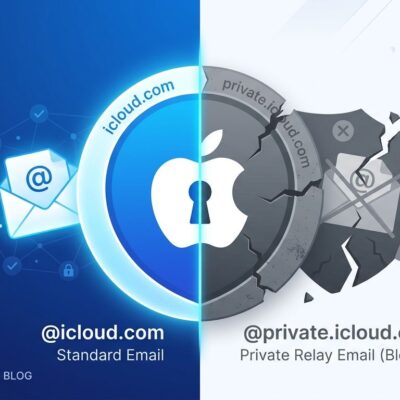
Moreover, the model will run on Apple’s Private Cloud Compute infrastructure, not Google’s servers, and will be white-labeled with no Google branding visible to users. Gemini will handle Siri’s “summarizer and planner” functions, powering expected features like personal context understanding, on-screen awareness, and per-app controls.
Both companies insist that no user data will be shared with Google. Apple says all processing will happen on-device or through its Private Cloud Compute platform. Nevertheless, the fact remains: Apple’s “privacy-first” brand now depends on AI technology built and trained by Google.
Google Wins, OpenAI Loses
This partnership is a major victory for Google and a significant setback for OpenAI. In particular, Google now powers AI on both Android and iOS, the world’s two dominant mobile platforms. The company already collects roughly $20 billion annually from Apple for being Safari’s default search engine—now add another $1 billion for AI infrastructure. Additionally, Google’s market cap surged past $4 trillion following the announcement.
OpenAI, meanwhile, finds itself relegated to an “optional feature” role. Its existing ChatGPT integration with Siri continues, but Google’s Gemini is the foundation layer. Fortune noted that the deal “solidifies the narrative that Google has not only caught up with OpenAI but has now edged past it” in having the best AI models. Reports suggest OpenAI consciously passed on a deeper Siri integration, preferring to focus on its own product development—a decision that may haunt them as Google captures default distribution to Apple’s billion-plus users.
Elon Musk, whose xAI company is currently suing Apple and OpenAI over App Store practices, criticized the partnership as creating “an unreasonable concentration of power for Google.” He has a point. Consequently, with Android and iOS both dependent on Google’s AI, the company’s dominance in the AI infrastructure layer is becoming entrenched.
Privacy Concerns and Trust Issues
Apple and Google have issued strong privacy assurances. Specifically, Apple states that Gemini won’t be loaded onto iPhones and that no data will pass to Google’s servers. Furthermore, Google confirmed it won’t receive Apple user data. The technical architecture—running on Apple’s infrastructure with on-device processing—appears sound on paper.
However, the problem is trust. Many iPhone users chose Apple specifically to avoid Google’s data collection practices. Now they have no choice but to use Google AI baked into a core system feature. As one Hacker News commenter put it: “Users choose Apple because they do not trust Google and now they have no choice but to have Google AI on-board their machines.” Another Reddit user expressed the visceral reaction: “As someone who avoids Google to the extent that is practically possible, I feel like I would need to shower after having this baked into my phone.”
The cognitive dissonance is real. Apple built its brand on privacy protection, positioning itself as the alternative to Google’s surveillance capitalism. Nevertheless, it’s now paying Google $1 billion per year to power a core feature. The technical protections may be real, but the optics are brutal.
What This Means for the AI Market
If Apple—with unlimited resources, top talent, and years of research—can’t build competitive AI independently, what does that mean for everyone else? Indeed, the partnership signals that the AI infrastructure layer is consolidating around just two companies: Google and OpenAI. Barriers to entry are now impossibly high. Training frontier models requires billions in compute, vast datasets, and architectural breakthroughs that even Apple couldn’t replicate.
Furthermore, the multi-year nature of this partnership suggests Apple may never catch up. The company that pioneered voice assistants with Siri in 2011 is now dependent on a smartphone rival for the technology. Therefore, Apple’s “walled garden” strategy—controlling the entire stack from hardware to software—is failing in the AI era. Sometimes, you have to pay the toll to enter someone else’s garden.
iOS 26.4 with the new Gemini-powered Siri is expected in late March or April 2026. Developers can likely expect beta builds next month. Whether this partnership delivers the AI capabilities Apple promised two years ago remains to be seen. Ultimately, what’s certain is that Apple tried to build it alone, failed, and had to pay a rival billions for a solution. That’s not innovation—that’s surrender.