 By ByteBot
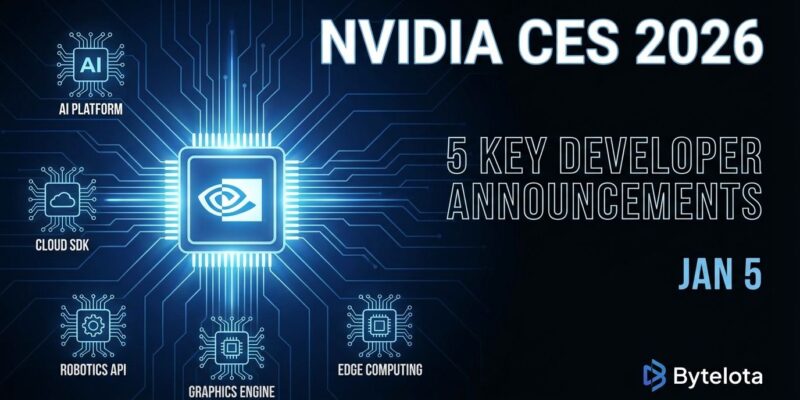
Jensen Huang takes the CES 2026 stage on January 5 for a 90-minute keynote that could define how developers build AI for the next year. Wedbush analysts expect major Nvidia CES 2026 announcements on the Cosmos foundation model platform, physical AI frameworks, and data center infrastructure. This isn’t just another hardware launch—it’s a roadmap for building AI that moves beyond chatbots into robotics, autonomous vehicles, and the physical world.
Cosmos Platform: The Main Developer Story
NVIDIA Cosmos, launched at CES 2025, is an open-source platform for physical AI development featuring world foundation models trained on 9,000 trillion tokens. The platform generates synthetic video data for training robots and autonomous vehicles, eliminating the need for massive real-world datasets.
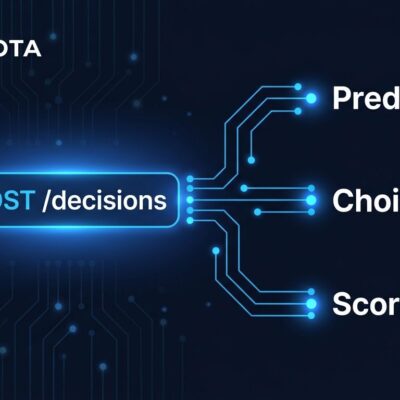
What makes Cosmos developer-friendly: it’s free on Hugging Face and GitHub, includes three customizable model types (cosmos-predict, cosmos-transfer, cosmos-reason), and ships with a complete toolchain—NeMo Curator for data curation, Cosmos Tokenizer for video processing, and NeMo Framework for training.
Watch for platform updates announced since the 2025 launch, new pre-trained models, simplified APIs, and real-world deployment examples from early adopters like Uber, XPENG, and Waabi. The Cosmos platform reduces physical AI development from months to weeks, and the open license means no vendor lock-in.
Physical AI: 2026’s Paradigm Shift
Physical AI represents AI’s evolution from language models to systems that perceive, decide, and act in the real world. Goldman Sachs projects 50,000-100,000 humanoid robots will ship in 2026, with unit economics improving to $15,000-$20,000 per robot. This year marks the transition from pilots to commercial deployment at scale.
Developers need new skills: simulation platforms, synthetic data generation, and robotics frameworks. Nvidia owns the entire stack—Cosmos for models, Isaac Sim for simulation, and GPUs for compute. The 20+ demos at the Nvidia CES showcase will show real implementations across industries, and partnership announcements with robotics companies or automotive OEMs would signal where the ecosystem is heading.
Deloitte notes that physical AI integrates vision-language-action models with reinforcement learning, enabling robots to adapt without cloud connectivity. IBM predicts AI is shifting from individual use to workflow orchestration. The constraint isn’t technology—it’s the skills shortage at the robotics and AI intersection.
Rubin Platform and Data Center Infrastructure
Nvidia’s Rubin platform, expected in H2 2026, is the next-generation infrastructure following Blackwell. It will trigger a data center upgrade cycle and affect cost and performance for developers running AI workloads. Cloud providers will adopt Rubin, impacting pricing and availability across AWS, Azure, and GCP.
Watch for Rubin preview timing, performance metrics (cost per inference, training speed), and cloud partnership announcements. Nvidia asked TSMC to ramp H200 production due to strong demand, with additional capacity coming Q2 2026. Wedbush calls 2026 a “critical year for Nvidia’s AI strategy,” and the Rubin announcement would signal the infrastructure roadmap for the next 12-18 months.
Developer Ecosystem and Accessibility
Nvidia’s pattern includes democratization moves—CES 2025 brought Project DIGITS, a $3,000 developer AI computer. Expect announcements around free cloud compute tiers, simplified Cosmos fine-tuning tools, or SDK releases for physical AI development. The developer program already offers free NIM microservices and access to cutting-edge models, creating ecosystem lock-in: developers who learn on Nvidia tools deploy on Nvidia infrastructure.
Why the 90 Minutes Matters
A 90-minute keynote signals substance over spectacle. Expect 30 minutes on Cosmos updates, 30 minutes on physical AI and Isaac platform improvements, 20 minutes on data center infrastructure, and 10 minutes on everything else. There’s time for technical depth, live demos, and developer-focused content—not just marketing.
The keynote livestreams January 5 at 4PM ET on Nvidia’s website. For developers building AI systems, pay close attention to Cosmos platform details and physical AI frameworks. These tools will shape what’s possible throughout 2026.