 By ByteBot
OpenAI launched “Your Year with ChatGPT” on December 22, 2025—a Spotify Wrapped-style annual review showing users their AI usage patterns, conversation statistics, and personalized awards. But this isn’t Spotify Wrapped. While knowing you listened to Taylor Swift 47 times won’t expose proprietary code, your ChatGPT usage absolutely can. The feature requires “saved memories” and “chat history” enabled, both storing data indefinitely. OpenAI conspicuously excluded Enterprise accounts—a clear signal they know the privacy stakes are too high for business use.
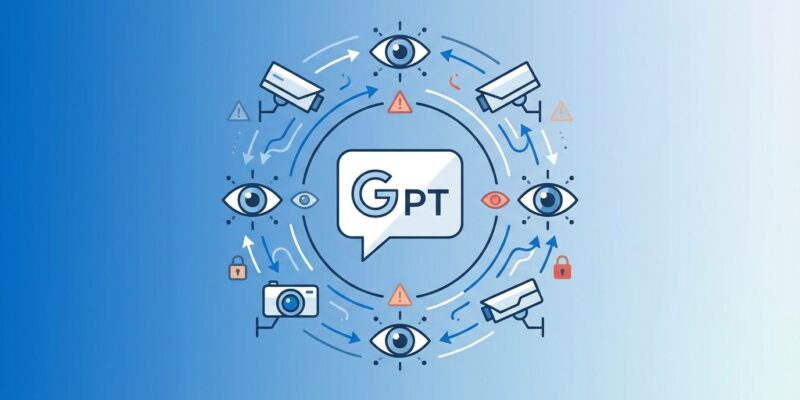
This gamifies AI usage tracking at the exact moment Shadow AI is becoming a workplace surveillance crisis. According to Cisco’s 2025 Data Privacy Benchmark Study, 81% of organizations can’t track which AI tools employees use. Developers using personal ChatGPT accounts for work are exposing IP while bypassing enterprise protections—and now OpenAI is turning that tracking into shareable social content.
Enterprise Exclusion Is the Tell
OpenAI excluded Team, Enterprise, and Education accounts from “Your Year with ChatGPT.” Only Free, Plus, and Pro personal accounts get the feature. The reason? Enterprise accounts operate under Data Processing Addendums (DPAs), meet GDPR compliance requirements, and don’t use conversations for model training. Personal accounts lack these protections.
The contrast is stark. Enterprise ChatGPT customers get DPAs, admin controls, and guarantees that conversations won’t train models. Free and Plus users get none of this—conversations may train models unless you manually opt out, data retention is indefinite, and there’s no DPA available. The feature itself is only available where protections are weakest.
The exclusion is the tell. OpenAI knows this feature is too privacy-sensitive for business accounts but happily deploys it for personal use. If you’re a developer using personal ChatGPT for work—creating Shadow AI—you’re exposing data that OpenAI won’t let Enterprise customers risk. Every proprietary code snippet, architecture decision, and client name you’ve discussed is tracked, stored, and now summarized in a shareable year-end review.
Indefinite Retention Isn’t Fun Transparency
ChatGPT memories and chat history are stored indefinitely unless manually deleted. According to OpenAI’s Memory FAQ, “Unless you delete them, saved memories are always considered in future responses.” There’s no automatic expiration. Even temporary chats are kept for 30 days “for safety purposes” before deletion.
This isn’t like Spotify Wrapped, which operates on defined retention periods. It’s permanent tracking disguised as a year-end summary. Users think they’re getting harmless engagement content—”look how many times I asked ChatGPT about Python debugging!”—but every conversation is stored permanently unless manually deleted.
The GDPR implications are severe. The European Union’s “Right to Erasure” requires companies to delete personal data on request, but LLMs can’t easily forget specific facts without complete model retraining. This creates a compliance nightmare. activeMind.legal’s GDPR analysis confirms that free ChatGPT versions can’t lawfully process personal data under GDPR because OpenAI doesn’t provide DPAs for non-Enterprise accounts.
Your work discussions, architecture decisions, and client details aren’t ephemeral fun facts—they’re permanently retained unless you proactively delete them. That’s not transparency. That’s surveillance with a bow on it.
Shadow AI Meets Gamification
Cisco’s 2025 Data Privacy Benchmark Study found that 81% of organizations lack visibility into which AI tools their employees use. This “Shadow AI” problem has spawned an entire industry of AI monitoring platforms. Tools like Teramind, ActivTrak, and BrowseReporter now track employee AI usage, monitor data exposure risks, and provide compliance dashboards for IT departments.
Meanwhile, developers use personal ChatGPT accounts for work without realizing they’re creating unmonitored data exposure. Enterprise AI tools like Microsoft 365 Copilot and GitHub Copilot give admins full usage visibility and control. Personal ChatGPT bypasses all of this—no employer visibility, no admin controls, no DPA, no compliance framework.
The year-end review feature makes this tracking visible in the worst possible way: as entertainment. Users are encouraged to share their ChatGPT usage publicly, potentially revealing work patterns, project details, technology stacks, and problem areas. What looks like “fun transparency” is actually a gamified window into Shadow AI risk that most companies don’t even know exists.
Related: ChatGPT App Store Launches: 800M Users, No Monetization
What Developers Should Do
The feature shows total messages sent, images generated, your chattiest day, conversation topics, stylistic patterns, and personalized “awards” like “Creative Debugger.” It’s available in the US, Canada, UK, Australia, and New Zealand for users with memory and chat history enabled—both on by default for free users.
Before sharing your year-end review publicly, audit what it reveals. Your top topics might include client project names, internal tools, proprietary frameworks, or debugging patterns that expose your company’s technology stack. Use this as a trigger to review and delete sensitive memories immediately.
Better yet, separate your accounts. Use Enterprise ChatGPT for work—it has DPAs, compliance protections, admin controls, and doesn’t include your conversations in year-end summaries. Reserve personal ChatGPT for actual personal use. For sensitive work discussions, use temporary chat mode, which auto-deletes after 30 days.
Most importantly, understand what you’re agreeing to. Enabling memory and chat history means indefinite data retention. “Fun transparency” is still permanent surveillance. OpenAI excluded Enterprise accounts from this feature for a reason—they know the privacy risks. Developers should too.
Key Takeaways
- OpenAI’s year-end review requires indefinite data retention (memory and chat history stored until manually deleted), not the ephemeral fun of Spotify Wrapped
- Enterprise account exclusion signals OpenAI knows the privacy stakes—personal accounts lack DPAs, compliance protections, and admin controls
- 81% of companies can’t track employee AI usage (Cisco 2025), making Shadow AI a surveillance blind spot that year-end reviews inadvertently highlight
- Audit your ChatGPT memories immediately—delete sensitive work discussions, client names, proprietary code, and architecture decisions
- Use Enterprise ChatGPT for work, personal ChatGPT for personal tasks, and temporary chat mode for anything sensitive