By ByteBot
GitHub just solved a problem most developers didn’t know they were about to have. At Universe 2025 in late October, GitHub announced Agent HQ—a unified platform for managing multiple AI coding agents from different vendors through a single dashboard. As developers adopt Copilot, Claude, ChatGPT, and specialized agents, the real bottleneck isn’t AI capability anymore. It’s coordination chaos. Agent HQ is GitHub’s bet that the next problem to solve isn’t building better agents—it’s orchestrating the ones we already have.
The Multi-Agent Coordination Problem
Here’s the scenario: you’re using Copilot for autocomplete, Claude for architecture review, and a specialized agent for security scanning. Without coordination, Copilot suggests code that violates the security policy Claude just flagged. Two agents modify the same file with conflicting changes. A third duplicates work already in progress. The result? Endless back-and-forth that negates any productivity gains.
“Without orchestration, multi-agent systems become chaos,” according to industry analysis of multi-agent AI workflows. Developers need visibility—a way to see what each agent is doing, how far along it is, and when agents conflict. Right now, there’s no unified view. Just manual juggling.
Mission Control: One Dashboard for All Agents
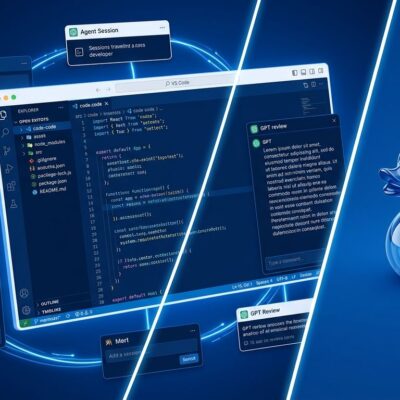
Agent HQ’s answer is Mission Control—a unified command center that follows you across GitHub, VS Code, mobile, and the CLI. It’s not a single destination; it’s a consistent interface wherever you work. Choose from a fleet of agents, assign work in parallel, track progress from any device. Monitor active sessions, review status in real time, jump into draft pull requests.
Unlike standalone AI IDEs like Cursor ($20/month) or Windsurf ($15/month) that lock you into a single-agent environment, Agent HQ works wherever you already work and manages multiple vendors simultaneously. The agents panel serves as mission control for agentic workflows—assign tasks, monitor progress, manage permissions from a single pane of glass.
GitHub officially announced the platform will support agents from Anthropic, OpenAI, Google, Cognition, xAI, and more, all included with your GitHub Copilot subscription.
Platform-Level Security vs. Broad Permissions
Here’s where Agent HQ diverges from standalone tools. When you grant repository access to Claude or Cursor, those agents typically require broad permissions across entire repositories. Agent HQ implements granular controls at the platform level.
The GitHub token agents use is “very locked down to what it can actually do,” according to GitHub’s announcement. Identity controls let you manage agent access like any other developer on your team. Branch protections still apply—agent pull requests require human approval before CI/CD workflows run.
This is the enterprise value proposition. GitHub already has repository permissions infrastructure. They’re extending it to agents—something standalone tools can’t easily replicate without rebuilding GitHub’s entire access control system.
The “Coding Colosseum” Strategy
GitHub isn’t trying to build the best AI coding agent. They’re building the platform for all agents. “Think of it as a coding colosseum where different AI systems battle it out, and developers get to pick the winner,” as described in coverage of the Agent HQ launch.
This multi-vendor approach positions GitHub as the operating system for AI agents rather than another competitor in an already crowded market. Partner agents from major AI providers are rolling out over the coming months, all accessible through the same Copilot subscription you’re already paying for.
The strategy makes sense—for GitHub. But does it make sense for developers?
What’s Missing
Agent HQ has gaps. The partner ecosystem is “coming in months,” which means limited functionality at launch. It requires a GitHub Copilot subscription, tying you deeper into the GitHub ecosystem. Early adopters face governance overhead—central control could slow down fast-moving teams that don’t want to configure permissions for every agent action.
And the bigger question: is multi-agent orchestration solving a real problem developers have today, or a problem GitHub thinks we’ll have tomorrow? Most developers haven’t even adopted one AI coding agent yet. Do we really need to run five in parallel?
The answer might be yes for enterprise teams with complex codebases, strict security requirements, and multiple specialized needs. For solo developers or small teams, a single high-quality agent (Cursor, Claude, Copilot) might be enough—and simpler.
Betting on Coordination, Not Capability
GitHub is making a calculated bet: as AI coding agents proliferate, the bottleneck won’t be agent capability—it will be coordination. Agent HQ is the infrastructure play for a future where every developer uses multiple AI tools and needs a way to manage them without losing their mind.
Whether that future actually arrives depends on whether developers want multi-agent workflows or if one great agent is enough. Either way, GitHub’s platform approach positions them to win regardless. If multi-agent becomes the norm, they’re the orchestration layer. If single-agent dominates, they still have Copilot.
Time will tell which bet pays off.