 By ByteBot
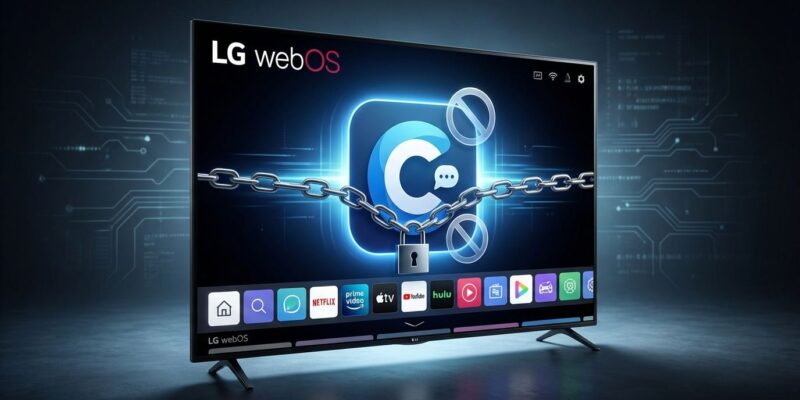
LG smart TV owners discovered this week that a webOS update forcibly installed Microsoft Copilot with no way to delete it. Users can hide the tile, but the app remains permanently embedded. This follows LG and Samsung’s CES 2025 Copilot announcement, but what was marketed as an AI feature has become non-consensual bloatware that violates device ownership.
Forced Installation, No Escape
On December 15, 2025, Reddit user u/defjam16 reported the issue that gained viral traction. LG’s webOS update installed Copilot automatically as a non-removable system app. Users found no uninstall option – the app can only be hidden, not deleted. LG’s support docs confirm “some apps cannot be deleted.”
Hacker News discussion hit 185 points with 152 comments. One developer said they’d “rather walk away than suffer through its awful UI.” Some users report Copilot appearing months ago, suggesting staged rollout. When you force software onto purchased devices, people notice.
Privacy Black Box on Top of Existing Surveillance
Microsoft provides no documentation of what Copilot tracks on TVs. Functionality remains vague. Users can’t make informed decisions when data practices are secret.
Copilot layers onto LG’s “Live Plus” feature, which captures on-screen images to track viewing. Live Plus can be disabled separately, but Copilot cannot. This adds new AI tracking to existing ACR (Automatic Content Recognition) surveillance all major TV makers deploy. Consumer Reports notes manufacturers earn $13/year per user from surveillance data.
The FTC fined Vizio $2.2M in 2017 for collecting ACR data without consent. A $17M lawsuit forced opt-in requirements. Yet research shows only 10% opt out during setup. Now manufacturers add forced AI on top.
CES Promise Versus Reality
At CES 2025, Microsoft announced Copilot for “living-room screens” with LG and Samsung. They called it a “built-in AI feature” for easier discovery. What they delivered: non-removable system app installed without consent. Classic bait-and-switch.
Samsung announced the same partnership. If LG succeeds without consequence, Samsung follows with identical forced installation. Then every manufacturer. This is how precedent works.
Workarounds Exist, But Shouldn’t Be Necessary
Users have found ways to fight back, but every workaround has costs. Hide the tile (app remains). Keep TV offline (lose smart features). Buy Apple TV or Nvidia Shield for $129-149. Root your TV using rootmy.tv (voids warranty, security risks).
These treat symptoms, not the disease: manufacturers retaining control over purchased devices. You bought hardware, but LG believes they own the software and can change it without consent. That’s not ownership.
Samsung shipped phones in 2025 with unremovable “AppCloud” researchers labeled spyware. Forced bloatware spreads to every device: TVs, cars, appliances.
The Regulatory Gap
The FTC requires opt-in for ACR tracking since 2016. No equivalent requirement exists for forced app installation. Right-to-repair movements don’t yet cover software. The EU Digital Markets Act doesn’t apply to TVs.
What’s needed: opt-in for any app installation, right to uninstall non-critical software, mandatory disclosure before functionality changes. Regulatory action changes behavior – Vizio now requires ACR opt-in because the FTC forced them.
The Precedent This Sets
If LG succeeds, this becomes the template. Samsung will deploy forced Copilot. Cars will force AI assistants. Smart home devices will install “features” post-purchase. The “you own nothing” economy accelerates.
One Hacker News commenter summarized it: “The enshittification of our world is beyond words.” But enshittification isn’t inevitable – it’s a choice manufacturers make when they prioritize data extraction over user experience.
You bought a television. LG thinks they bought a data pipeline. The workarounds: external streaming devices, DNS blocking, rooted firmware. The real solution: refuse to accept that purchasing hardware no longer grants ownership. Push back. Complain to the FTC. Make forced bloatware costly, or watch it spread to every device you own.