 By ByteBot
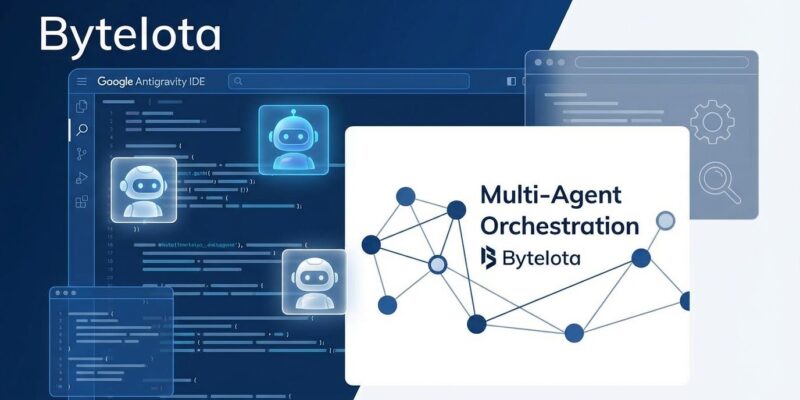
Google’s free Antigravity IDE launched in November 2025 and immediately topped December’s AI development tool rankings, beating paid competitors like Cursor ($20/month) and GitHub Copilot ($10-19/month). The platform introduces multi-agent orchestration—where AI agents autonomously control your editor, terminal, and browser—at zero cost during public preview. Google just undercut the entire AI coding assistant market.
Multi-Agent Orchestration: Not Your Average Autocomplete
Antigravity isn’t another code completion tool. It’s the first true “agent-first IDE” where autonomous AI agents handle complex tasks across your entire development environment. The Agent Manager functions as Mission Control: you spawn multiple agents, assign them features or bugs, and watch them work in parallel while you maintain oversight.
The platform scored 76.2% on SWE-bench Verified (real-world software engineering tasks) and 54.2% on Terminal-Bench 2.0. Developers describe code generation as “overwhelmingly fast” with the multi-agent system running as “efficient without interference.” One agent can refactor authentication while another builds a new API endpoint and a third tests the integration—simultaneously.
The artifacts system makes this practical. Agents don’t just write code; they generate task lists, implementation plans, screenshots, and browser session recordings. You review tangible deliverables, not opaque AI decisions. The “separate agent management window provides excellent DX” according to early adopters, solving the trust problem that makes developers hesitant about autonomous tools.
Browser Automation: End-to-End Testing Without Extra Tools
The Chrome extension gives agents direct browser control. They navigate pages, click buttons, fill forms, verify responses, and capture screenshots at critical states—all autonomously. Build a component, let the agent launch it in the integrated browser, and watch it test the full user journey without writing a single test script.
Practical applications include form validation testing, visual regression detection, and console log monitoring. One developer noted: “Agent can autonomously build, launch, interact, and verify—all without human intervention until review.”
The tradeoff? Google’s terms warn of data exfiltration and code execution risks. Some developers question whether they want an IDE with autonomous browser and terminal access. The convenience is undeniable; the security implications are real.
How It Stacks Up: Free vs. $20/Month Competition
December 2025 rankings reveal the competitive landscape:
Cursor leads at 4.7/5, dominating speed and productivity. It’s fastest for complex refactoring with top-tier codebase awareness, but costs $20/month.
Antigravity scores 4.4/5 with unmatched agentic power and automation depth. The only fully-featured free option, it supports Gemini 3 Pro, Claude Sonnet 4.5, and OpenAI models in one platform. Multi-agent orchestration and browser automation are exclusive to Antigravity.
GitHub Copilot rates 4.3/5 as the most stable and enterprise-ready option at $10-19/month. SOC 2 compliance makes it the default for financial institutions and production environments.
The recommendation is clear: Antigravity for individual developers and R&D work, Cursor for speed-obsessed daily coding, Copilot when compliance matters.
The Catch: Rate Limits and Enterprise Gaps
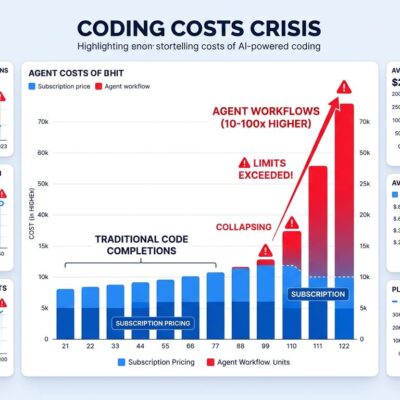
Free comes with limitations. The weekly-based rate limits are “relatively easy to hit in a few hours” for heavy users. Google AI Pro and Ultra subscribers get priority access with higher caps, suggesting a future tiered pricing model.
Enterprise readiness is absent. No SOC 2 certification, no audit capabilities, no compliance documentation. Preview-stage bugs include login redirect issues and occasional instability. Antigravity is built for experimentation, not production pipelines—at least not yet.
The VS Code fork controversy adds friction. Community members question why Google built a full fork instead of VS Code extensions, noting similarities to existing tools. Attribution concerns echo across Hacker News.
Google will likely monetize after preview. Security certifications take time. Enterprise features are in development. For now, this is a tool for individual developers willing to trade compliance for cutting-edge capabilities at zero cost.
The Shift from Code Completion to Agent Orchestration
Antigravity represents the inevitable evolution: developers as architects overseeing autonomous AI systems, not writing every line manually. Code completion was phase one. AI assistants were phase two. Multi-agent orchestration is phase three—and Google is forcing the market to accelerate.
The free pricing is strategic. Google challenges Microsoft’s GitHub Copilot dominance while showcasing Gemini 3 capabilities to the developer community. The “Open Agentic Web” vision announced at Build 2025 positions the IDE as a control plane for agentic coding, not just a text editor with smarter autocomplete.
Cursor and Copilot will add agent features. Pricing pressure will intensify. Developers will demand model optionality and full-stack automation. Antigravity may not be enterprise-ready today, but it’s defining what “ready” means tomorrow.
Download Antigravity at antigravity.google/download for macOS, Windows, and Linux. Public preview includes unlimited tab completions, Agent Manager, and browser integration at no cost—while it lasts.