 By ByteBot
Cursor just raised $2.3 billion at a $29.3 billion valuation on November 13, tripling its worth in five months and proving that developers will pay top dollar to escape GitHub Copilot. The funding round attracted Nvidia and Google as new investors, validating the 3-year-old startup’s bet that AI coding tools should understand entire codebases, not just autocomplete individual lines.
The math is staggering. From $9.9 billion to $29.3 billion in the time it takes most startups to close a Series A. Five months. Three times the value. Over $1 billion in annualized revenue from developers paying $20-40 per month. According to CNBC’s report, this isn’t hype – it’s a market screaming for better AI coding tools.
Why Nvidia and Google Bet Against Microsoft
When your AI model provider and your customer both invest $2.3 billion in you, you’re building something that threatens the established order. Google knows Cursor could reduce dependence on Gemini with its proprietary Composer model, launched in October. Meanwhile, Nvidia recognizes that AI coding tools will drive chip demand for years. Both are hedging their bets.
The investor roster tells the story: existing backers Thrive Capital, Andreessen Horowitz, Accel, and DST doubled down, while Coatue joined alongside the tech giants. This is strategic capital, not just growth funding.
The David vs Goliath Battle
Microsoft has 15 million Copilot users and 90% of the Fortune 100. Cursor has 1 million users and a fraction of the enterprise market. Yet developers are paying $20-40 monthly for Cursor when Copilot comes bundled with GitHub. Why?
Because autocomplete isn’t enough when you’re refactoring a massive codebase. Cursor delivers whole-codebase understanding – it sees the entire system, not just the file you’re editing. The difference shows in the numbers: Cursor holds 18% market share against Copilot’s 42%, and it’s growing fast.
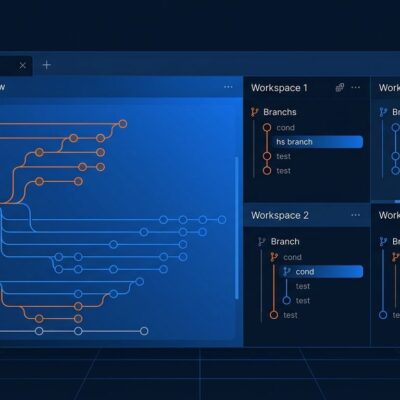
Cursor 2.0, launched weeks before the funding round, introduced Composer – a proprietary AI model that generates code at 250 tokens per second, four times faster than comparable frontier systems. It supports up to eight AI agents working simultaneously, each in isolated workspaces. That’s not incremental improvement – it’s a different category of tool.
The Composer Bet on Technological Sovereignty
Two weeks before raising $2.3 billion, Cursor dropped Composer and stopped depending entirely on OpenAI, Google, and Anthropic for its AI models. Coincidence? Not likely. This is a bet on technological sovereignty.
Composer uses mixture-of-experts architecture with reinforcement learning to handle complex, multi-file coding tasks. Furthermore, the $2.3 billion will fund more of this: custom model training, frontier research, and the infrastructure to compete with tech giants on their own turf.
What This Means for Developers
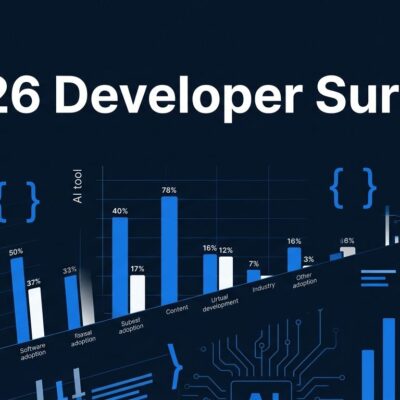
AI coding tools crossed the chasm from experimental to essential. 85% of developers use AI tools regularly, and those tools now write 41% of all code. According to market research, the sector will grow from $7-15 billion today to $23-27 billion by 2030, and Cursor’s valuation reflects that trajectory.
Developers now have real choice. Cursor excels at complex refactors and multi-file editing. Copilot integrates seamlessly with GitHub workflows and costs less. Codeium, Amazon Q, and Tabnine offer other trade-offs. Importantly, competition will drive better features and pricing for everyone.
The question isn’t whether AI will write code – it already does. The question is which AI you’ll trust to understand your entire system, not just the function you’re writing right now.
The Bottom Line
Cursor bet that building better AI would make developers pay, and a $29.3 billion valuation says the market agrees. Whether a 3-year-old startup can sustain this against Microsoft’s resources remains to be seen. Nevertheless, one thing is certain: the AI coding wars have just begun, and developers are the ones who win.