 By ByteBot
For 25 years, Huawei paid Qualcomm for chip patents. On October 5, 2026, that dynamic reversed. Qualcomm signed a multi-year patent cross-license with Huawei covering 5G, AI, compute, and networking — and the headline buried in the fine print is this: Qualcomm now holds a license to Huawei’s LogicFolding chip patents, the 3D stacking technique behind a 140% NPU performance jump in the Kirin 2026. For developers building anything that runs inference on Snapdragon hardware, this is not a business story. It’s a roadmap signal.
The Deal Nobody Saw Coming
The agreement has two components. First, both companies exchange cross-licenses to their respective patent portfolios across 5G, compute, AI, and networking. Second — and more unusually — Qualcomm purchases a set of Huawei U.S. patents outright, specifically covering compute, AI, networking, and interconnect technologies. That makes Qualcomm the net payer in this arrangement. According to Nikkei Asia, this is the first time Qualcomm has paid Huawei in any cross-license — a reversal of a relationship that began roughly 25 years ago, when Huawei was the one cutting royalty checks.
The licensed portfolio covers 680+ Huawei patents. The LogicFolding-related patents are what make this worth paying for.
What LogicFolding Actually Is
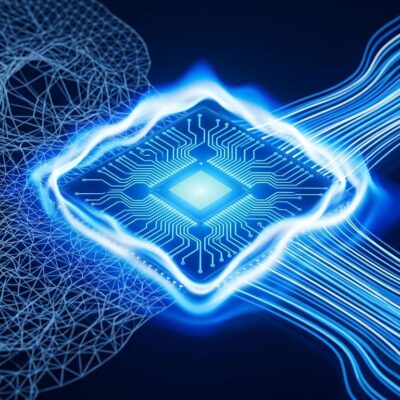
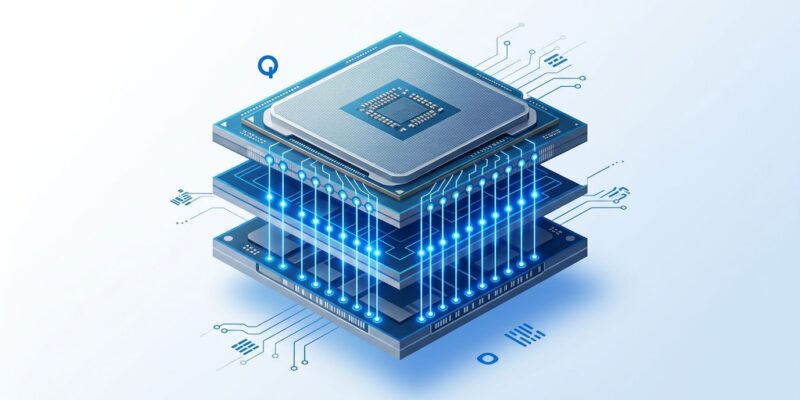
LogicFolding is Huawei’s answer to a specific problem: how do you improve chip performance when you cannot access TSMC or EUV lithography? The answer is to stop thinking in two dimensions. LogicFolding stacks two full silicon wafers face-to-face using 3D hybrid bonding at a 1.5-micron interconnect pitch. By redistributing logic circuitry across vertical planes, signal paths get shorter — and shorter paths mean lower RC delay (τ ≈ RC, where R is resistance and C is capacitance). Huawei calls this framework the Tau Scaling Law, introduced at IEEE ISCAS in May 2026 by He Tingbo, Huawei’s semiconductor chief.
The results in mass production are not theoretical. The Kirin 2026, built on SMIC’s N+3 node using DUV (not EUV), delivers a 55% increase in transistor density, a 41% improvement in power efficiency, and a 140% NPU performance gain versus the 2025 baseline. The Kirin 9050 Pro pushes NPU compute from 29 TOPS to 70 TOPS. Tom’s Hardware covered Huawei’s claim of reaching 1.4nm-equivalent density by 2031 — still ambitious, but the 2026 hardware numbers are already shipping. This technique has been deployed across 381 chip designs over six years, spanning mobile SoCs to AI accelerators.
Why This Changes the NPU Conversation for Developers
Qualcomm’s 2027 Snapdragon roadmap already targets 30B MoE model inference on-device. The Kirin 9050 Pro already does this — it was the first mobile chip to run a 30B MoE model entirely on-device. Now Qualcomm holds the patents to apply similar 3D stacking approaches to its own NPU designs. If future Snapdragon NPUs incorporate LogicFolding-style vertical integration, the 30B target becomes a floor rather than a ceiling.
That matters for what you can build. An NPU that handles 30B+ MoE inference on-device means legitimate local deployment of models that currently require cloud API calls. Fewer tokens routed to remote servers, tighter feedback loops, lower latency for agents that respond in real time. AMD’s own hybrid cloud/edge analysis found that 69% of tokens can be processed locally with capable edge silicon — cutting inference costs by 40–60% over three years versus pure cloud. Qualcomm gaining this IP nudges that silicon capability forward considerably.
There Is Also an Optics Play
The Qualcomm patent purchase specifically includes near-packaged optics (NPO) and co-packaged optics (CPO) patents — optical interconnects that replace copper wires between chips. For data center inference, this is relevant: Qualcomm’s AI accelerator lineup (AI200 in 2026, AI250 in 2027, Dragonfly C1000 in 2028) depends on fast chip-to-chip communication inside GPU clusters. NPO delivers the bandwidth density that mixture-of-experts inference at scale requires, and now Qualcomm owns Huawei’s U.S. patents in that space.
The Part That Still Needs Approval
The deal is not closed. Both companies confirmed it requires regulatory sign-off before it takes effect. US authorities will review whether Qualcomm’s purchase of Huawei-held U.S. patents — covering AI and compute technology from a company on the entity list — meets current export compliance rules. Patent licensing is not the same as hardware transfer, so approval is plausible. But it is the most geopolitically unusual element of an already unusual deal.
What the full scope of the agreement reveals is that the US-China chip war does not prevent US companies from licensing Chinese AI intellectual property when that IP is genuinely valuable. Qualcomm’s NPU roadmap just got access to the most interesting chip architecture to come out of the US export restrictions. That is worth watching — regardless of how the geopolitics resolves.