 By ByteBot
Gemini CLI stopped working for Google AI Pro, Ultra, and free-tier accounts on June 18, 2026. If you were using it — for refactors, scaffolding, or just having an AI in your terminal — that deadline was non-negotiable. The replacement is Antigravity CLI, invoked as agy. Three months in, a lot of developers still treat it as a rename. It is not.
A Different Tool, Not a Different Name
Gemini CLI was a Node.js package. Antigravity CLI is a compiled Go binary. The practical difference: faster startup, lower memory under load, and the ability to actually write files and run commands. Gemini CLI could not do either. Antigravity CLI can.
It also dropped the single-model constraint. Gemini CLI was Gemini-only. Antigravity CLI supports Gemini 3.5 through 3.7 Flash, Gemini 3.1 Pro, Claude Sonnet and Opus 4.6 (including thinking variants), and GPT-OSS-120b. You switch models mid-session with /model or set one at launch:
agy --model="Claude Sonnet 4.6"The one thing Google did not carry forward: open-source. Gemini CLI was open. Antigravity CLI is a closed-source binary. That is a legitimate concern, and developers noticed — the GitHub discussion thread for the migration announcement drew hundreds of comments explicitly asking Google to keep Gemini CLI alive. Google did not.
Parallel Subagents: The Actual Upgrade
The feature that justifies the migration is not the Go rewrite or the multi-model support. It is subagents.
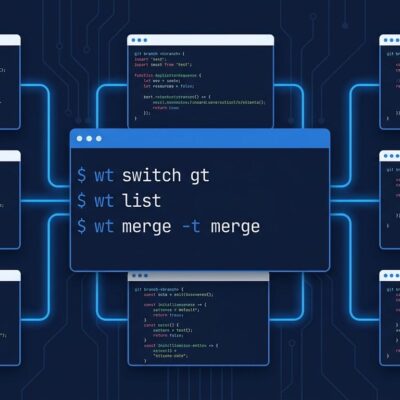
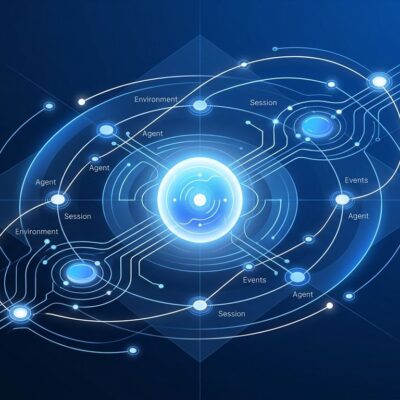
In Antigravity CLI, you give the orchestrator a goal in plain English, and it decides what specialized subagents to spawn and runs them in parallel — no orchestration code from you. For large-scale refactors or multi-file changes, the primary agent fans out to concurrent background subagents, each with access to isolated Git worktrees. The pattern that works well in practice:
# Launch agy in separate worktrees for parallel tasks
agy -p "Refactor authentication module" &
agy -p "Update API client types" &
agy -p "Write unit tests for payment service"
That said: parallel subagents burn quota in parallel. One plain-English goal can trigger 10 or more model calls without warning. Before you fan out to five agents, run /usage inside your session. The agent cannot see its own remaining quota, and the weekly compute cap catches migrators off guard.
The Quota Change That Bites
Gemini CLI used a daily request limit (1,000 requests). Antigravity CLI uses a weekly compute-based cap Google calls “Work Done” — a proprietary metric that factors in input tokens, output tokens, hidden thinking tokens, and tool-call overhead. Pro account holders report exhausting the weekly cap after roughly 2,000 lines of generated code when running parallel subagents.
The practical adjustment: keep parallel subagent count to three to five on Pro or Ultra, run /usage before any heavy session, and enable credit fallback in ~/.gemini/antigravity-cli/settings.json if you want uninterrupted sessions:
// settings.json
{
  "useG1Credits": true
}
Getting Migrated in Five Minutes
The migration path is straightforward. Antigravity CLI reuses the ~/.gemini/ directory intentionally — your ~/.gemini/GEMINI.md global instructions file carries over automatically.
# Install
curl -fsSL https://antigravity.google/cli/install.sh | bash

# Rename environment variable
export AV_API_KEY="your-key"
# (was GEMINI_API_KEY)

# Verify
agy --version
What breaks and what transfers:
| What Changed | Gemini CLI | Antigravity CLI |
|---|---|---|
| Binary | Node.js (gemini) | Go (agy) |
| File writes | No | Yes |
| Multi-model | No | Yes |
| Subagents | No | Yes |
| Source | Open-source | Closed-source |
| Quota reset | Daily (1,000 requests) | Weekly (compute cap) |
| Env variable | GEMINI_API_KEY | AV_API_KEY |
Other breaking changes to know: the default model is now gemini-3-pro (not 2.5-pro), --stream now emits SSE by default, the agent state directory moved to ~/.antigravity/, and exit codes are non-zero on tool-use failures — which matters for any scripts that parse Gemini CLI output.
Is It Worth the Switch?
If you were already using Gemini CLI, the choice was made for you. But whether agy is an upgrade in practice — not just a forced migration — has a real answer: yes, with caveats.
The Go binary is noticeably faster. Multi-model support is genuinely useful when a task fits Claude better than Gemini. Subagents are a real capability step up from linear chat. The new slash commands — /goal, /plan, /schedule — push the tool toward autonomous session management rather than interactive Q&A. DataCamp hands-on tutorial is the fastest way to get past the initial learning curve.
The caveats are real too. The closed-source move limits inspectability and community contributions. The compute quota model is opaque compared to a simple request counter. And the desktop app rocky May launch — which stripped terminal access and Git tools, then had to restore them three months later in version 2.10.0 — does not inspire confidence in Google product decisions here.
The CLI itself, though, is solid. Install it, update your env variable, learn /usage, and keep your subagent count reasonable. That is the migration in practice.