 By
By Anthropic’s Claude Fable 5.1 landed on September 1 and immediately took the top spot on Code Arena’s WebDev leaderboard — 1,765 points, 77 ahead of Alibaba’s Qwen3.8 Max in second. Cursor shipped it on day one. The benchmarks are real. But if you’re building on the API, the more consequential news is buried in the pricing table: cache reads dropped 75%, from $1.00 to $0.25 per million tokens. For any team running an agent loop that re-reads a large system prompt on every call, that line item quietly changes the cost math in Fable 5.1’s favor — even against cheaper models.
The Benchmarks Worth Knowing
Fable 5.1 didn’t just inch forward. On Terminal-Bench-Science, it scored 52.6% — more than double Fable 5’s 24.7%. On Anthropic’s internal benchmark, it clocks in at 1,853, against Opus 5’s 1,824, Fable 5’s 1,723, and GPT-5.6 Sol’s 1,711. Notably, the gap Fable 5.1 opens over Fable 5 (130 points) is larger than the gap Opus 5 opened over Fable 5 (101 points). That earned it the #1 slot on CursorBench 3.2 for agentic coding at 73.4%.
The benchmark-versus-practice gap is always real, but Fable 5.1 shipped in production IDE tools on day one, not six weeks later. That’s the signal the numbers translate into actual coding-agent behavior — not just an artifact of Anthropic’s own eval harness.
The Pricing Change That Reshuffles the Model Hierarchy
Input and output pricing for Fable 5.1 are unchanged from Fable 5: $10 per million input tokens, $50 per million output. What changed is cache reads, which dropped from $1.00 to $0.25 per million — a 75% cut. In an agent loop, your system prompt — plus any memory, context, or scaffolding — is re-read on every turn. Cached input is the dominant cost term, not raw input. At $0.25/M cached reads, Fable 5.1 is now cheaper on that term than Claude Opus 5 ($0.50/M). Real-world figures: teams running agentic workloads report 25% average cost reduction, with some pipelines reaching 45%.
The catch: this math only works when you have a large, stable prefix that gets cached and re-read many times. If your prompts are dynamic or sessions are short, Opus 5 at half the uncached input price still wins. Know your cache hit ratio before you migrate for cost reasons.
How to Route Workloads Across the Model Tier
Anthropic’s own routing guidance: start with Opus 5 for most advanced coding and reasoning. Move to Fable 5.1 when evaluations show meaningful improvement. Don’t route everything to the most capable model by default — it costs twice as much per uncached input token and hits rate limits harder. The tiered pattern that’s emerging in the community:
- Fable 5.1 — orchestrator and planner; long-horizon agentic tasks, multi-file refactors, security review, hard debugging
- Sonnet 4.6 — implementation and heavy lifting where the task is defined
- Haiku 4.5 — search, classification, short retrieval steps
Treating each step as a separate routing decision rather than assigning one model to the entire workflow typically yields 30–50% cost reductions with equivalent output quality. Fable 5.1 exposes five effort levels (low, medium, high, xhigh, max). In Claude Code, it defaults to high. At low or medium effort, it reportedly matches or beats Fable 5 at lower cost — meaning you don’t have to commit to max effort on every call.
What Fable 5.1 Still Cannot Do Alone
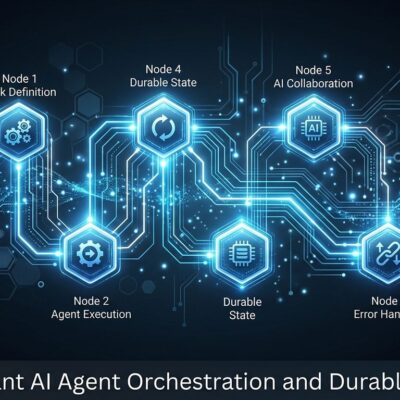
The marketing around autonomous agents is outrunning what the model actually delivers. Fable 5.1 still requires an external agent loop to store state across turns, execute tools, return results to the model, manage context, and recover from failures. You are the orchestration layer. The model is the reasoner inside it.
If you’re building anything serious, you need: a maximum tool-call count, wall-clock limits per session, checkpointing at meaningful steps, loop detection to catch infinite retry spirals, isolated execution environments, and human approval gates before destructive operations — deleting data, changing infrastructure, merging code, deploying to production. Anthropic’s Fable 5.1 documentation covers the full safe-autonomy requirements.
Rate limits are also a live constraint. The most consistent developer complaint about intensive Fable 5.1 sessions is hitting ceilings quickly. Plan your retry logic and fallback routing before you need it.
How to Switch
The API model identifier is claude-fable-5-1. In the Messages API or Claude Managed Agents, change the model parameter. In Cursor, it’s available natively. In Claude Code (v2.1.255 or later), run /model fable or launch with claude --model fable. Some enterprise accounts may need an admin to enable access first.
import anthropic
client = anthropic.Anthropic()
message = client.messages.create(
    model="claude-fable-5-1",
    max_tokens=1024,
    messages=[{"role": "user", "content": "Refactor this module..."}]
)
Fable 5 is now the previous generation. If you’re still on it, there’s no reason to stay. The 75% cache-read price cut alone pays for the migration overhead in any reasonably active agent loop. Check the LogRocket AI dev tool power rankings for a broader view of where Fable 5.1 sits against the full competitive field.