 By ByteBot
Temporal just closed a $550M Series E at a $12.55B valuation — more than double the $5B it was worth in February. The headline is the money, but the real number is buried deeper: OpenAI’s usage of Temporal grew 60x in a single year. When the company building the most widely-deployed AI agents needs durable execution this badly, developers should pay attention.
Your AI Agent Is Already Failing — You Just Can’t See It
The industry spent two years building impressive AI agent demos. Production is less flattering. Tool calls fail 3 to 15 percent of the time in real deployments. Silent failures — where a tool returns HTTP 200 with an empty payload — are the nastiest kind because no error surfaces. A broken tool output at step two may not show up as a problem until step seven, by which point the causal chain is long buried. A July 2026 analysis from Openlayer found that production AI agents underperform their benchmark scores by 18 to 24 percentage points across accuracy, tool correctness, and policy compliance. Nothing crashes, nothing alerts — the outcome is just wrong.
This is the problem Temporal is pricing at $12.55B.
What Durable Execution Actually Means
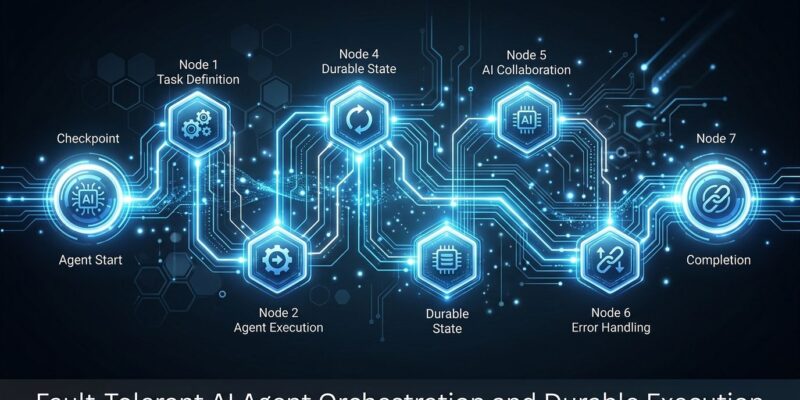
The concept is simpler than the marketing suggests. Temporal records every workflow event to a persistent log. When something fails, it replays that log to reconstruct exactly where the workflow was. The agent does not restart from scratch — it continues from the step that broke. Two types of code live in this model: deterministic Workflows (orchestration logic that runs identically when replayed) and Activities (non-deterministic I/O — API calls, LLM invocations, database writes — each retried safely and independently). Developers write normal code. Temporal handles the reliability machinery underneath.
OpenAI’s VP of Infrastructure put it plainly: “Durable Execution is more than ever a core requirement for modern AI systems, and Temporal offers a compelling platform to help build it in from the start.”
What Developers Can Use Right Now
At Replay 2026, Temporal shipped several capabilities worth knowing. The Vercel AI SDK integration wraps any LLM call in a durable Activity with a single provider swap:
const worker = await Worker.create({
  plugins: [new AiSDKPlugin({ modelProvider: openai })],
});

const result = await generateText({
  model: temporalProvider.languageModel('gpt-4o-mini'),
  prompt: question,
});
Every model call becomes retryable and resumable. If the worker crashes mid-generation, Temporal picks up from that exact point — not from the beginning of the workflow.
- Workflow Streams: durable real-time token streaming for responsive LLM UIs (Public Preview)
- Serverless Workers on AWS Lambda: no cluster management, automatic scaling (Pre-release)
- External Payload Storage: S3-backed storage for large AI data payloads (Public Preview)
- OpenAI Agents SDK integration: GA since March 2026
- Rust SDK: first-party support in Public Preview
What the Funding Actually Signals
The valuation doubling from $5B to $12.55B in seven months is not Temporal being overvalued — it is the market pricing in that durable execution graduated from “good idea” to “mandatory infrastructure” in roughly 18 months of AI agent adoption. The company processed 1.9 trillion billable actions in August 2026, up 350 percent year-over-year. It has 43 million open-source installs and 4,300 paying customers. The Series E announcement landed the same week competitors like Inngest, Restate, and DBOS are all expanding — the whole category is being repriced upward.
If you are building production AI agents right now and not thinking about what happens when your LLM call fails at step four of a seven-step workflow, you are building on sand.
One Thing Temporal Does Not Fix
Worth stating clearly: durability is not security. Temporal keeps work alive through failures. It does not handle authorization, access control, or regulatory compliance — those remain entirely your problem. It also will not save you from bad deployment practices: rename a workflow step while executions are in flight and you break recovery. Governance and deployment hygiene still require discipline on your side.
Where to Start
The open-source version is free and has 43 million installs for a reason. The official tutorials cover Python, TypeScript, Go, and Java with hands-on durable execution examples. For AI-specific workflows, the Vercel AI SDK integration guide is the fastest path from zero to durable agents. Temporal Cloud exists for when you want managed infrastructure without running the cluster yourself.
The question is not whether you need durable execution. The question is how long you wait to find out you did.