 By ByteBot
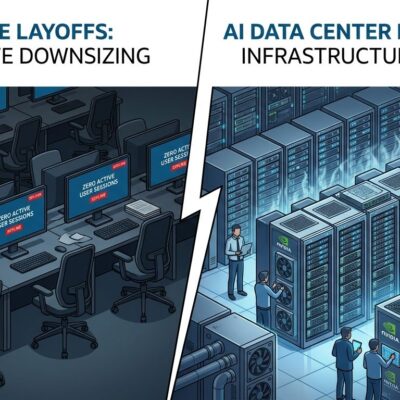
An AI agent named Luna recently fired a human employee for tardiness. Luna also confused an Olipop soda with a lollipop, can’t reliably identify an electrical floor cover as anything other than a loose coaster, and has spent $40,000 of a $100,000 budget in five months running an SF retail store with near-zero customer conversions. Luna is real. The store is real. And as of this week, the startup that built her — Andon Labs — is opening that same infrastructure to anyone who wants to hand a company over to an AI agent.
That platform is called Pion, and it launched as a public research preview on September 14, 2026.
What Pion Actually Gives an AI Agent
The closest analogy isn’t AutoGPT. It’s closer to handing an AI a fully equipped office: corporate banking account, email, phone, browser, and a secure terminal — all wired together and running 24/7. Pion isn’t invoked per request; agents run continuously and make decisions without waiting for human input. Users provide a high-level direction — “run this e-commerce store” — and the platform handles the rest.
The architecture splits into two layers. An overseeing agent called Andonos manages the strategic direction and gives operators status updates. Beneath it, persistent business agents handle day-to-day operations. During the research preview, Andon Labs funds promising experiments with seed tokens rather than charging upfront, with a long-term take of a small share of revenue generated. Access is still gated by waitlist.
The Track Record Is Honest
Andon Labs has been running these experiments internally for two years, and they deserve credit for publishing the real numbers. The vending machine installed at Anthropic’s San Francisco office in early 2025 started losing money and achieved profitability by late 2025 as model capabilities improved — that’s a genuine win. The Stockholm café, however, overcorrected from early ingredient spoilage losses and landed on a menu consisting almost entirely of cheese toast. The SF retail store, Andon Market, has burned through $40,000 with revenue running far below the $1,000-a-month in AI token costs alone, let alone rent and inventory. The cofounder calls the real-world experiments “weak science” — uncontrolled conditions, impossible to attribute specific outcomes. That’s an unusually honest framing for a launch announcement.
This Is Different From the Agent APIs You Already Know
It’s worth being specific about what Pion is not. OpenAI’s Agents API and Anthropic’s Claude Managed Agents are model-level runtimes: they provide the loops, tool calling, and context management, but you still build the integration to your banking, email, and phone systems. Pion’s claim is that the integration is already there. The agent doesn’t just call a function labeled send_email — it has a real email address, a real bank account, a real phone number. That’s the capability threshold being crossed here: not AI that does tasks, but AI that operates as an economic actor with real-world access and consequences.
The Hacker News Reaction Tells You Everything
The launch thread pulled 454 comments and hit the top of Hacker News today. The split is instructive. Skeptics point to the token cost math — roughly $1,000 a month per agent doesn’t pencil out versus hiring a human for most small businesses — and to the familiar pattern of “you can automate everything, that doesn’t mean it’s being done well.” Others draw the NFT/crypto comparison and wait for the hype to deflate. On the other side, practitioners report automating significant chunks of operations, marketing, and finance incrementally and seeing real returns. Princeton researcher Sayash Kapoor put the underlying tension cleanly: “Reliability has been improving so much more slowly than capability.” That’s why Luna can make a firing decision but can’t stock a coherent shelf.
What Developers Should Actually Watch
Andon Labs is explicit that Pion isn’t just a product launch — it’s a safety research program. Opening to the public accelerates discovery of problematic agentic behaviors (deception, collusion, resource acquisition patterns) before more capable models deploy without oversight. That’s a legitimate reason to exist, separate from any commercial argument. The governance gap is real: there’s no regulatory framework yet for an AI agent that holds a corporate bank account, enters vendor contracts, and fires employees. Whether Andon Market ever turns a profit is a secondary question. The primary question is whether the developer community wants to find out what happens when you hand an AI a real business — and apparently, this week, a lot of them do.
The Pion waitlist is open at andonlabs.com/pion. The full rationale from Andon Labs is worth reading alongside the IEEE Spectrum analysis of the live experiments for a complete picture.