 By ByteBot
Cognition — the startup behind Devin, the AI agent that operates as a fully autonomous software engineer — closed a $2 billion Series E at a $48 billion valuation this week. That is nearly double the $26 billion investors paid just four months ago. Annualized revenue has climbed from $492 million in May to roughly $900 million today, with Cognition projecting $4 to $5 billion by year-end. The AI coding market officially has three categories now: inline assistants, CLI agents, and autonomous engineers. Devin lives in the third column — and that distinction matters for how you think about your toolchain.
What Devin Actually Is (And Is Not)
Devin is not GitHub Copilot with extra steps. You do not interact with it while coding. You assign it a task in plain language — “migrate all usages of lodash.merge to native Object.assign across the repo, add tests, open a PR” — and Devin works inside a sandboxed cloud VM with its own browser, terminal, and editor. It plans the work, writes code, runs tests, fixes failures, and opens a pull request. You review; Devin ships. The workflow runs asynchronously, typically minutes to a few hours per task.
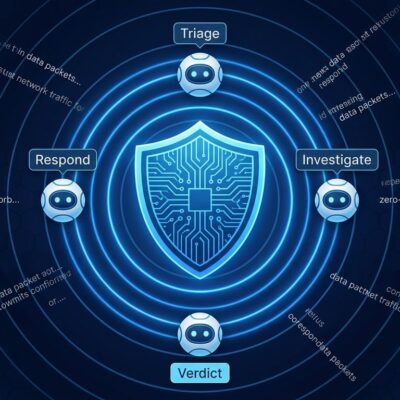
In 2026, Cognition expanded Devin beyond code authoring. Devin Auto-Triage handles production incident investigation — Devin reads logs, identifies the likely cause, and summarizes findings before a human engineer even opens a terminal. Devin Security Swarm runs parallel vulnerability detection agents across a codebase. Devin Automations lets you trigger agent work from GitHub events, Linear tickets, or Slack messages without a manual hand-off. Enterprise customers — Nvidia, GE Aerospace, Goldman Sachs, Mercedes-Benz, NASA — are using it at scale, not just piloting.
Performance reality: Devin completes roughly 75% of well-defined engineering tasks, per Cognition’s own benchmarks. A Nubank case study reported 8 to 12x engineering efficiency and 20x cost savings on migration work. Those numbers look good because the task selection is deliberate. Devin still struggles with novel architecture, ambiguous specs, and anything that needs tight back-and-forth iteration. The pattern that works: give Devin the well-scoped, testable, repeatable tasks your team keeps deprioritizing. Keep Cursor open for the creative work that requires your judgment.
The Numbers, and the Honest Catch
The valuation math works — if you trust the growth trajectory. Cognition is growing ARR at roughly 83% in four months. Investors across Andreessen Horowitz, Accel, Founders Fund, General Catalyst, and Nvidia itself backed the round, signaling broad conviction in the category. The complication: Cognition burns approximately $800 million annually, mostly on Nvidia GPU cluster leases to run Devin’s sandboxed environments at scale. That is why the company is actively training proprietary models on open-source foundations — the goal is to reduce inference cost dependence on OpenAI and Anthropic APIs and improve margins before the next fundraise.
This Is Not a Winner-Takes-All Market
The evidence is clear: AI coding is not a winner-takes-all market. Claude Code, Cursor, and GitHub Copilot together hold over 70% market share — and all three are growing fast, not cannibalizing each other. The State of AI Coding Agents 2026 report from Sourcery puts the market at roughly $11 billion annualized, up from $7.37 billion in 2025. There is enough budget here for multiple specialists to thrive simultaneously.
The reason these tools coexist is that they solve fundamentally different problems. Cursor is your IDE — real-time suggestions, inline edits, fast iteration. Claude Code is your CLI agent — high-accuracy complex reasoning, multi-step orchestration. GitHub Copilot is enterprise-integrated — baked into GitHub Actions, security scanning, compliance workflows. Devin is your async delegation layer — the bounded tasks that take your team hours every week and could ship without human involvement. Senior developers in 2026 routinely run two tools simultaneously, spending $40 to $60 per month combined. That is not redundancy; it is leverage.
What the $48 Billion Signals
Cognition’s round signals that enterprise IT budgets are opening up for AI engineers, not just AI assistants. Goldman Sachs and NASA are not paying for autocomplete — they are paying for delegation. An autonomous agent that can own a sprint’s worth of migration work is a different purchase than a subscription that helps a developer write code faster. Cognition’s $900 million ARR and accelerating growth rate suggest the bet is credible.
For developers, the practical takeaway is simpler than the valuation headline suggests. The AI coding market has stratified into tools for different parts of your workflow. Devin earns its spot in the tier that handles the backlog your team never gets to. At $20 per month on the Pro tier, testing it on one bounded sprint of migration or test-writing work costs less than a team lunch. If the Nubank numbers translate to your codebase — even at half the efficiency gains — the ROI math is straightforward.