 By ByteBot
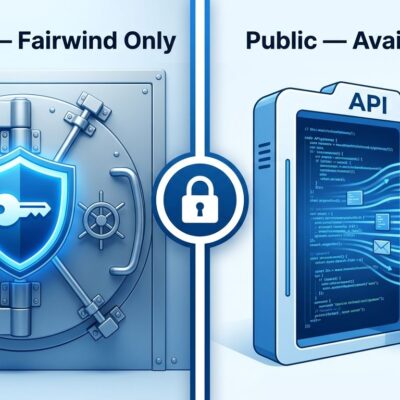
Perplexity just shipped something enterprise AI buyers have been asking for since the agent wave started: an AI that automatically decides what stays on your machine and what goes to the cloud. Hybrid Compute launched September 1 for Mac, and the real story is not the local inference or the three supported models. The real story is PII-Tracer — a 0.6-billion-parameter on-device classifier that reads every prompt and file upload before anything touches a remote server, routes sensitive content to local processing, and open-sources itself on Hugging Face so your IT team can actually audit the split.
How the Routing Works
Every task starts in the cloud. Frontier models handle planning, web search, and long-horizon reasoning — the work that benefits from scale. When PII-Tracer spots sensitive content, it delegates that specific step down to the local model on your Mac without restarting the task or losing context. Results from both environments merge back into one output. The user sees nothing but a result.
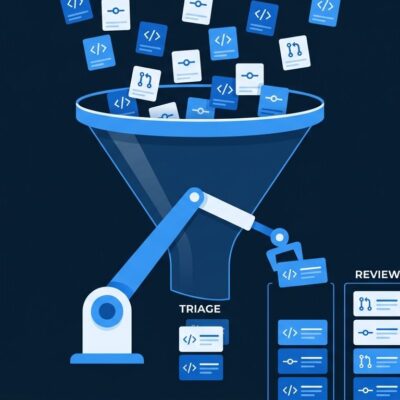
That inverted orchestration is the key design choice. Most hybrid AI systems escalate from local to cloud when a task exceeds local capability. Perplexity flips it: start with the most powerful model, then pull back to local when the data requires it. When PII is detected, the gate applies one of four outcomes: keep the step entirely local, mask sensitive spans before cloud transmission, refuse the action outright, or prompt the user for explicit consent.
What PII-Tracer Actually Does
PII-Tracer is a bidirectional Qwen3 encoder with two inference heads. The first does token classification across 37 labels — catching nine PII categories including private person names, account numbers, private addresses, email and phone data, private URLs, private dates, government IDs, and general secrets. The second head scores conversation-level sensitivity for longer context decisions.
For long conversations, PII-Tracer uses sliding-window inference over 4,096-token windows, recovering recall that would otherwise degrade. The numbers are concrete: 0.965 recall on conversations exceeding 10,000 characters and 79.4% recall on recurring identifiers — compared to GPT-5.6’s 57.0% on the same benchmark. The model runs entirely locally, consuming no cloud credits and transmitting nothing.
Perplexity open-sourced both the model and the PII-TRACE evaluation benchmark — 13,148 synthetic conversations across 13 languages. Enterprise IT teams can audit exactly what gets classified and how the split is made. That open audit trail is not a minor detail. It is the reason this can clear regulated-industry procurement where a vendor’s word is not enough.
Enterprise Controls
Organization admins can set policies dictating what must remain local, what may be masked before leaving the device, and what requires explicit user consent. Every action that routes data off-device is logged. The sensitivity threshold is tunable, allowing teams to tighten the gate for specific compliance requirements.
The practical implication: attorneys can run AI research on client documents without sending privileged information to any external server. Financial analysts can query AI about market data while confidential projections stay on the machine. Healthcare teams can use local models for patient records and route only public medical literature searches to the cloud. These are the regulated-industry workflows that have been functionally blocked from AI agent adoption until now.
The RAM Wall
Hybrid Compute requires an Apple silicon Mac with macOS 15 or later and at least 24GB of unified memory — 32GB is the recommended configuration. If you are on an 8GB or 16GB machine, you are excluded entirely. No workaround is currently available.
This is a real problem worth naming. The majority of Macs sold in the last two years shipped with 8GB or 16GB. Perplexity’s architecture earns its headline — but it will not reach most individual developers on the devices they actually carry. Broadening hardware support should be the next publicly stated priority.
Why This Landed Now
The timing is not accidental. The EU Cyber Resilience Act’s vulnerability reporting deadline hits September 11. Data residency requirements are tightening across legal and financial sectors. And 84% of developers now use AI tools daily — the subset working in regulated industries has watched that adoption happen while sitting on the sidelines, locked out by data handling constraints.
Hybrid Compute is a direct answer to that block. It is also the clearest signal yet that privacy is becoming an architectural requirement, not a feature toggle. Perplexity is betting that the team willing to open-source their PII classifier and publish a 13-language benchmark wins the enterprise deals that pure cloud vendors cannot touch. That is a defensible bet — and one that should prompt every other AI agent platform to show their work on data handling, or start explaining why they have not.