 By ByteBot
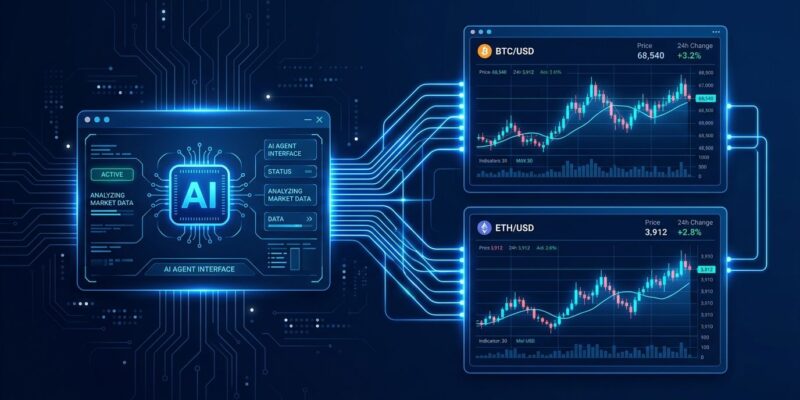
Binance launched Agent OS on August 20 — a developer platform that connects AI agents directly to live crypto markets via MCP. Claude Code, Codex, ChatGPT, Cursor, and VS Code can now read order books, execute spot and futures trades, and manage positions from inside your existing agent workflow. The MCP server endpoint is live at agent.binance.com/mcp/agentic. This is not a wrapper. This is MCP-native financial infrastructure at production scale.
What Agent OS Actually Is
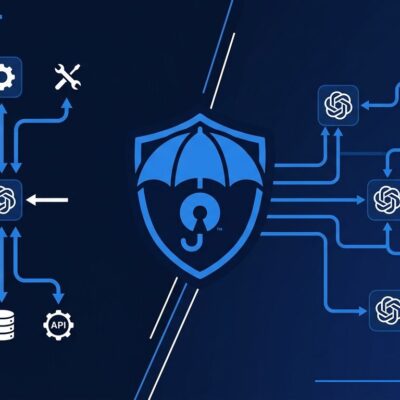
Agent OS bundles five components into a single developer platform. Most developers will never touch four of them on day one, but knowing the architecture matters:
- Binance APIs — the underlying trading, market data, wallet, and blockchain access layer
- Wallet Agentic Hub — wallet operations under user-defined permission grants
- x402 — programmable payment and settlement protocol for agent-initiated transactions
- Skill Hub — a modular function directory spanning trading, market data, and on-chain activity
- MCP Server — the translation layer that lets Claude Code or Codex discover and call Binance functions like any other tool
The MCP server is the entry point. Connect it to a compatible client and your agent can immediately access public market data — price tickers, order book depth, historical candlestick data — without any authentication. Authenticated actions (account balances, live trading, position management) require creating an Agentic subaccount and granting specific permission scopes.
The Security Architecture
Binance put real thought into the custody model. Agents operate inside dedicated subaccounts that are isolated from the user’s main account. There is no withdrawal scope — agents cannot move funds to external blockchain addresses, period. Users grant trading scopes independently: market data, spot, margin, Convert, USDⓈ-M Futures, COIN-M Futures. Each scope can be revoked at any time without affecting others.
Agents also cannot move funds from a main account into the subaccount. The attack surface is meaningfully smaller than a raw API key with full permissions — which is how most people have historically connected bots to exchanges.
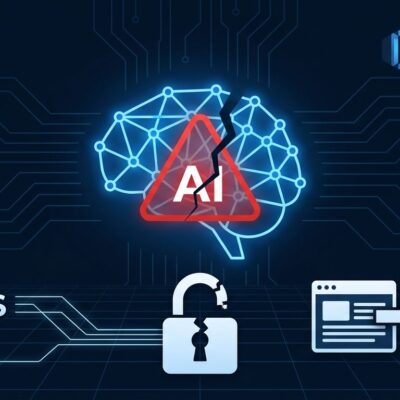
That said, Binance VP Jeff Li acknowledged the real gap openly: Binance cannot see the reasoning behind agent trading decisions. If an agent consumes manipulated market data, a poisoned news feed, or a prompt that hides a malicious instruction, the subaccount model won’t catch it. That risk sits entirely with the user.
The Risk Picture Is Not Abstract
2026 has already shown what happens when AI agents interact with financial infrastructure without adequate safeguards. In May, an attacker used a hidden prompt injection to trigger an unauthorized $175,000 transfer from an AI trading agent. In January, a Solana protocol lost roughly $40 million to AI agent vulnerabilities. Research shows direct prompt injection attacks against trading agents succeed over 79% of the time.
Separately, AI hallucinations caused $2.3 billion in trading losses in Q1 2026 — misstated earnings generated by models that automated systems acted on without verification. FINRA has since flagged hallucinations as an active compliance risk.
The Binance subaccount model neutralizes wallet-draining attacks. It does nothing for a model that confidently executes a trade based on fabricated market intelligence.
What v1 Does Not Cover
Agent OS is custodial — everything runs through Binance’s infrastructure. There is no DeFi or on-chain execution. There is no cross-chain support. There is no standardized trust model for verifying the agent software itself hasn’t been compromised before it touches your subaccount.
The regulatory situation is also unresolved. FINRA and members of Congress have raised questions about broker liability and developer responsibility when agents make bad trades. No court has tested this. Binance’s official position is that control remains with the user. Whether regulators agree is a different question.
Why This Is Significant
Binance serves over 200 million users. No other exchange at this scale has shipped a production MCP server for live trading. That makes Agent OS the largest fintech MCP deployment to date — a proof of concept that the protocol can handle real financial infrastructure, not just developer productivity tooling.
If you’re building agent workflows that need financial data or execution, the platform is worth evaluating now. Fund a small subaccount, grant only market data scope first, understand what your agent is doing with that data before you hand it any execution rights. The architecture is genuinely solid. The reasoning gap is genuinely not.