 By ByteBot
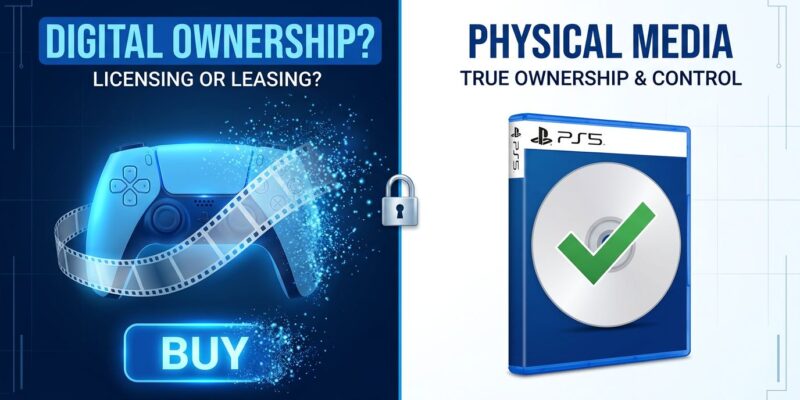
Sony is wiping 551 movies and TV series from PlayStation Store accounts on September 1, 2026 — titles that customers paid real money to “buy.” No refunds. No workaround. The list includes Terminator 2, Hot Fuzz, Moonlight, and Total Recall, all distributed by StudioCanal. Sony’s official reason: a content licensing agreement expired. The movies disappear, your money stays gone, and it turns out the “buy” button on the storefront meant precisely nothing.
Third Time This Has Happened
This isn’t a one-off mistake. Sony has done this before, twice. In 2022, purchased movies vanished from accounts in Germany and Austria after a licensing deal changed. In 2023, Sony announced it would delete all purchased Discovery TV shows from US accounts by December 31 — backlash was loud enough that Sony reversed course and extended access by 30 months. This time, no reversal has materialized. The announcement went out on June 26, the removal date stands at September 1, and Sony’s statement to affected users was a terse: “From September 1, 2026, due to our content licensing agreements, you will no longer be able to access your previously purchased content from Studio Canal, and it will be removed from your video library. Thank you.”
If you paid for Terminator 2 on PlayStation and want to keep watching it, you have until the end of August. After that, it’s gone.
The “Buy” Button Has Always Been a Lie
Here is what Sony’s own Terms of Service says: “the use of terms like ‘own,’ ‘ownership’, ‘purchase,’ ‘sale,’ ‘sold,’ ‘sell,’ ‘rent’ or ‘buy’ does not mean or imply any transfer of ownership of any content, data or software.”
The storefront says “buy.” The contract says you own nothing. Most people never read the contract — which is exactly how this works.
California noticed. In 2024, the state passed AB 2426, which took effect January 1, 2025. The law requires digital storefronts to explicitly disclose when a “purchase” is actually a license — either through an affirmative user acknowledgment or a conspicuous notice linking to the full terms. Whether Sony’s TOS-buried disclaimer meets that bar is a question for lawyers. The UI still says “buy.”
Physical Media Is Back, For Good Reason
4K Blu-ray sales grew 12 to 19.5 percent in 2025 — the first meaningful growth after years of steady decline. Some manufacturers have reported order increases in the thousands of percent. The narrative is hard to miss: people are buying discs again because streaming and digital storefronts keep reminding them that “access” is not the same as “ownership.”
A physical disc doesn’t have a licensing agreement. It doesn’t require a server to be running. It cannot be revoked. When you buy it, you own it — no asterisk.
This Problem Is Bigger Than Movies
Sony is the most visible example right now, but the underlying model is everywhere. As Techdirt notes, when you click “buy” on any digital platform, you’re agreeing that nothing you buy is truly bought, and that access can be revoked at any point. This applies to digital books, software licenses, SaaS tools, and developer platforms — not just movies.
Amazon deleted Orwell’s 1984 from Kindles in 2009 without warning or consent. The same principle applies to every piece of software you “own” through a subscription, every API you depend on, every cloud service underlying your product. If you don’t control the infrastructure, you’re renting. The question is whether the vendor is honest enough to call it that.
If you’re building a product on top of third-party platforms, you face the same exposure your users face when they buy a movie on PlayStation. And if you’re building products for users — it’s worth asking whether your own purchase flows are any more honest than Sony’s.
What You Can Actually Do
For media you actually want to own: buy the disc. Physical media gives you something permanent, independent of servers and licensing deals. For digital platforms, review what you’ve “bought” and consider whether the platform has earned that trust. Steam has a better track record of preserving purchases than PlayStation Store, though it operates under the same license-not-ownership model in its TOS.
If you’re in the EU, you may have stronger consumer protections than US users in some deletion scenarios — worth checking before September 1. And if you’re building software: spell out what users actually get. A refund policy for revoked access, a data export window, honest labeling — these are basic standards. Sony’s “Thank you” sign-off on the deletion notice is a choice, and not a good one.