 By ByteBot
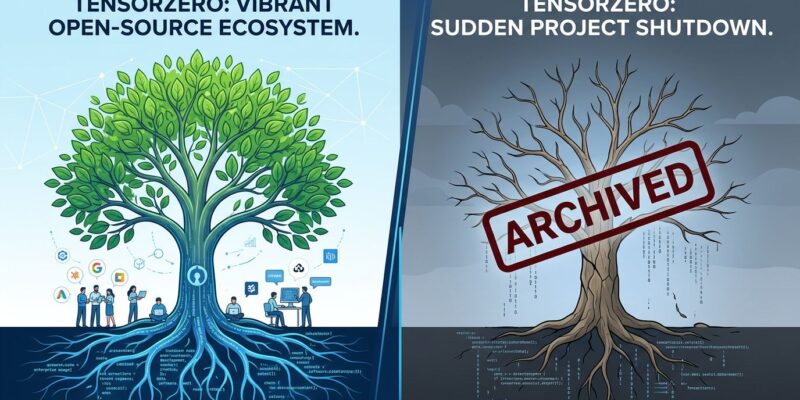
TensorZero, an open-source LLMOps platform used by companies ranging from AI startups to the Fortune 10, archived its GitHub repository on June 12, 2026. No pivot. No fire sale. The founders returned unused capital to investors and called it. For developers who built production stacks on it, this is a live fire drill. For everyone else building on OSS AI infrastructure, it is a warning worth reading.
At its peak, TensorZero processed roughly 1% of all global LLM API traffic. That is not a small side project. It is a unified gateway, observability layer, evaluation engine, and optimization platform built in Rust. Sub-1ms latency overhead at 10,000 QPS, used in production by serious engineering teams. The founders raised $7.3M in seed funding in August 2025. Less than a year later, they archived the repo, spent roughly half the money, and went home. The code is still there under Apache 2.0. Nobody is maintaining it.
Why It Failed: The OSS Double PMF Trap
The founders did not have a product problem. They had a business model problem that the AI market made unsolvable on their timeline.
Open-source infrastructure companies must find product-market fit twice. First, they need adoption. TensorZero nailed this. Fortune 10 companies ran on it. But adoption does not pay the bills. The second product-market fit is commercial: converting that usage into a paying product. The founders could not bridge that gap before the market moved on. According to the founders’ account in the Hacker News thread that drew thousands of responses, the rapidly shifting AI market made it impossible to maintain strategic direction long enough to land commercial traction.
This is not a TensorZero-specific failure. It is the structural flaw in OSS infrastructure plays when the underlying technology is moving at AI speed.
The Category Got Absorbed While They Were Still Building
In January 2026, ClickHouse acquired Langfuse — TensorZero’s most direct competitor in LLM observability — as part of a $400M Series D at a $15B valuation. The message was explicit: data infrastructure players must own the LLM observability layer. They did not want to build it; they bought the market leader and absorbed the category.
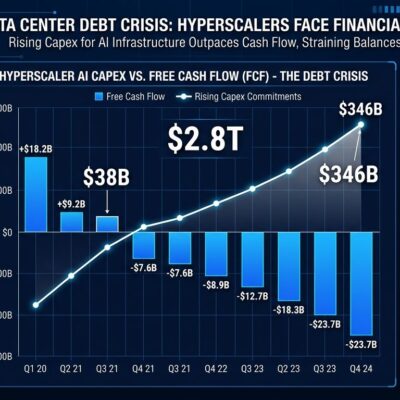
Meanwhile, Anthropic, OpenAI, and the major cloud providers are all shipping native observability, gateway, and evaluation features directly into their platforms. AWS, Azure, and Google are spending $600B+ on AI infrastructure in 2026. Shipping an LLM gateway feature is a rounding error for them. For a seed-stage startup, it is the entire product. When the category you are building is simultaneously being acquired by analytics platforms and commoditized by hyperscalers, the window to find commercial product-market fit collapses fast. TensorZero ran out of window.
The Founders Made the Right Call
Returning capital when you still have it is rare, and it is the correct thing to do. Most VC-backed founders burn to zero chasing a pivot that will not work because the incentive structure pushes them to. The TensorZero founders stopped at roughly 50% spend, looked at the market, and concluded that continuing was not the responsible outcome. They told their investors, published the code, and left.
Hacker News was divided. Some praised the founders’ maturity. Others questioned whether OSS AI infrastructure is ever a viable standalone business. The pragmatists pointed out that Apache 2.0 means the code is still alive for anyone who wants to fork it. All three camps are right in different ways.
What TensorZero Developers Should Do Now
If your production stack depends on TensorZero, you have time, but not unlimited time. The archived code will not disappear, but it will rot against rapidly evolving model APIs. Here are the realistic migration paths:
- Helicone: The simplest drop-in if OpenAI is your primary provider. Proxy-based, under 5ms P95 latency overhead, straightforward cost tracking.
- Langfuse (now ClickHouse): Best option for teams needing full data ownership and self-hosted tracing. Acquired, but with strong commercial backing now.
- Braintrust: Strong choice if prompt experimentation and heavy evaluation cycles are your main bottleneck.
- Fork TensorZero: If you have Rust engineers running at scale, forking under Apache 2.0 is a legitimate option. The POMDP-based agent design philosophy and the Rust performance characteristics are worth preserving.
What This Means for Everyone Building on OSS AI Tooling
The LLMOps layer is consolidating. The standalone OSS platform play is running out of viable space. What is left is either acquisition (Langfuse) or wind-down (TensorZero).
If you are building production AI infrastructure, assume that any independent OSS tooling in the model operations space carries meaningful longevity risk. Build in abstraction layers. Keep your Apache 2.0 forks ready. And if a project you depend on is still venture-backed and has not found a commercial model in an era where hyperscalers are shipping the same features for free, plan your exit before the repo goes read-only.
TensorZero built something genuinely good. The market just moved faster than the business could.