 By ByteBot
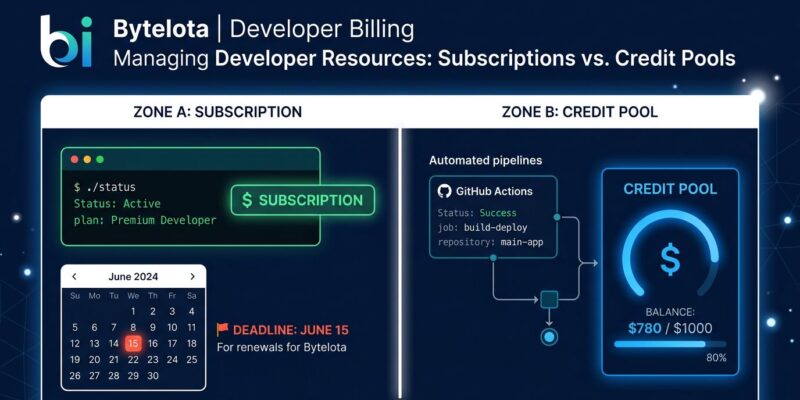
Starting June 15, Anthropic is separating programmatic Claude usage from your subscription’s rate limit. The Agent SDK, claude -p headless mode, Claude Code GitHub Actions, and third-party harnesses all move to a new monthly credit pool metered at full API prices: $20 for Pro, $100 for Max 5x, $200 for Max 20x — no rollover. If you have automated workflows, overnight agents, or CI pipelines calling Claude, this change is live in under three weeks and requires action now.
What Moves to the Credit Pool
The dividing line is simple: if Claude is running without a human at the keyboard, it is now metered. What changes after June 15:
- Claude Agent SDK calls (any programmatic integration)
claude -p— headless, non-interactive mode- Claude Code inside GitHub Actions (the
anthropic/claude-code@v1action) - Third-party orchestration harnesses: OpenClaw, Hermes, and anything built on the Agent SDK
What stays on your regular subscription limits:
- Claude Code when you are interactively at a terminal
- Claude.ai web, desktop, and mobile chat
- Claude Cowork
If you use Claude Code conversationally — you at a keyboard, working through a problem — the June 15 change does not touch your day-to-day experience.
What Those Credits Actually Buy
The dollar amounts sound reasonable until you run the numbers. Claude Sonnet 4.6 costs $3.00 per million input tokens and $15.00 per million output tokens. Here is what each plan tier gets you per month:
| Plan | Monthly Credit | Input Tokens (Sonnet 4.6) | Output Tokens (Sonnet 4.6) |
|---|---|---|---|
| Pro | $20 | ~6.6 million | ~1.3 million |
| Max 5x | $100 | ~33 million | ~6.7 million |
| Max 20x | $200 | ~67 million | ~13 million |
A heavy agentic session with large context can burn 100,000 to 200,000 tokens per run. That puts a Pro plan at roughly 33 to 66 heavy agent sessions per month before the credit runs dry. Light programmatic users will be fine. Anyone running daily multi-step automation or CI pipelines with Claude at every pull request needs to model their real usage against these limits now.
The Overflow Toggle You Need to Configure
Once your monthly credit is exhausted, the outcome depends on a setting called usage credits in your Claude account dashboard:
- Usage credits ON: Programmatic requests continue, billed at standard API pay-as-you-go rates. Uptime is preserved. Spend is uncapped.
- Usage credits OFF: Requests are rejected when the credit runs out. Cost is capped. Pipelines break mid-month.
For production pipelines or client-facing automation, turn overflow on and monitor spend. For experimental or disposable workflows, turn it off and let the credit act as a hard ceiling. Do not leave this unset — a pipeline that calls Claude on every push can drain credits faster than expected.
How to Activate Before the Deadline
The credit does not apply automatically. Anthropic sends a claim email on June 8 — one week before the change goes live. You activate once through your Claude account dashboard, then the credit refreshes automatically each billing cycle.
Two things to sort out in parallel before June 15:
- Audit your programmatic usage now. Pull a month of Agent SDK,
claude -p, and GitHub Actions usage. Price it at API rates ($3/$15 per million tokens for Sonnet 4.6). Compare the total to your plan’s credit. If you are over your credit limit, upgrade or enable overflow before June 15. - Update hardcoded model IDs in your repos. Migrate
claude-sonnet-4toclaude-sonnet-4-6andclaude-opus-4toclaude-opus-4-7across your codebase and CI configuration.
Why Anthropic Made This Change
This billing split is the second attempt at solving the same problem. Some users were extracting roughly $35,000 per month in API-equivalent value from a $200 Max 20x subscription. Anthropic’s first fix was harness detection — scanning git commits and system prompts for third-party framework keywords, then silently billing those users at API rates. That approach created false positives: developers were charged extra simply because their repositories contained words like “OpenClaw” in a JSON blob. Anthropic reversed course after the backlash, refunded affected users, and landed on the credit pool approach instead.
The credit pool split is the cleaner solution. It sets a dollar cap rather than policing behavior. The subsidy era for agent automation is over — AI agents are now priced as infrastructure, not as a perk bundled into a chat subscription. Tools like Zed have already published guidance on how this affects their integrations. The only remaining question is whether your workloads justify the new cost, or whether it is time to revisit which model you are routing to those pipelines.