 By ByteBot
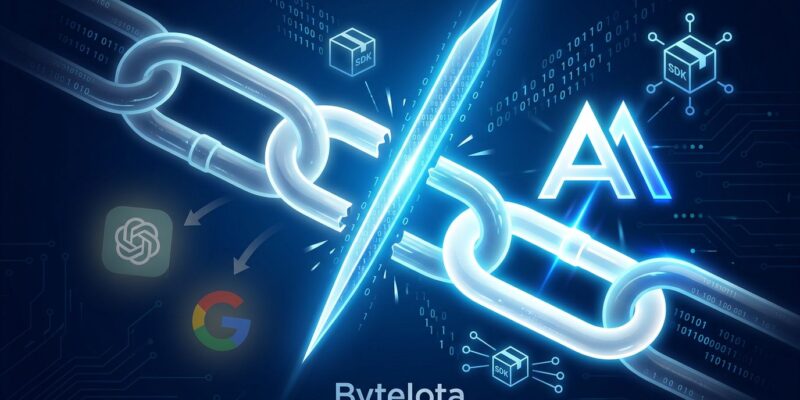
Anthropic just paid over $300 million for a startup generating roughly $1 million in annual revenue — and immediately shut down the product its rivals depended on. Stainless, the SDK generation platform quietly powering official developer libraries for OpenAI, Google, Cloudflare, Runway, and dozens of other API companies, is now Anthropic property. The hosted generator is gone. New signups are closed. The shared factory that kept competitor SDKs current has been switched off. This is not an acquihire. It is infrastructure warfare.
Most Developers Never Heard of Stainless
That is by design. Stainless operated invisibly behind the libraries you use every day. Founded in 2022 by Alex Rattray — a former Stripe engineer who built Stripe’s original SDK generation system — the startup solved a boring but brutally important problem: turning an OpenAPI specification into production-quality SDKs that feel like they were written by a native developer in each language, not generated by a script.
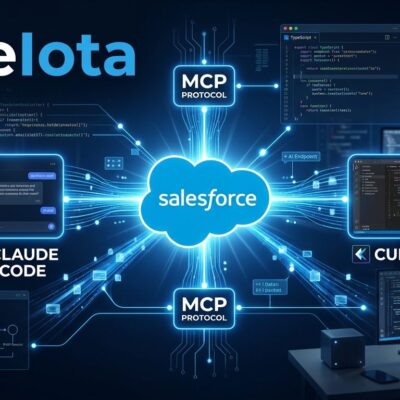
The output was not generic stubs. Stainless-generated libraries handled retry logic, streaming, authentication, and edge cases properly, across Python, TypeScript, Go, Java, and Kotlin. It also generated MCP servers, CLIs, and Terraform providers from the same spec. When OpenAI shipped a new model parameter, Stainless customers updated their entire SDK pipeline in minutes, not weeks. That automation is what made it indispensable — and what made losing it painful.
What Anthropic Is Shutting Down
The official announcement is clear: all hosted Stainless products are being wound down. New signups, new projects, and the ongoing SDK regeneration pipeline are closed. Existing customers keep ownership of SDKs already generated — Anthropic confirmed they have full rights to modify and extend them. What they lose is the service itself: future regenerations as APIs evolve, the hosted dashboard, and the maintenance pipeline that kept libraries current automatically.
For AI API companies, this is not a minor inconvenience. AI APIs change constantly. New endpoints, updated parameters, revised response schemas — each change normally triggers a regeneration pass. Without Stainless, affected companies now face three options: rebuild SDK generation in-house (months of engineering time), migrate to an alternative platform, or freeze current SDK versions and maintain them manually as APIs drift.
Who Gets Hurt
The customer list reads like a who’s-who of AI infrastructure. OpenAI’s Python and TypeScript SDKs ran through Stainless. Google’s Gemini SDK generation depended on it. Cloudflare, Runway, Replicate, Groq, and Cerebras all relied on it for their API libraries. Hundreds of smaller API companies used it for the same automation.
For teams that need to act, the main alternatives are:
- Speakeasy — Supports 10 languages, ships as a standalone binary with no cloud dependency (critical for air-gapped environments), uses OpenAPI as single source of truth. Likely the biggest immediate beneficiary of the shutdown.
- Fern — Acquired by Postman in January 2026. Generates SDKs in seven languages alongside API reference documentation. Supports REST, WebSockets, and gRPC. Uses a proprietary DSL with OpenAPI as import.
- OpenAPI Generator — Open-source, 50+ languages, free. Output quality is lower and requires more manual work, but it is the safest choice for teams that need complete control.
- APIMatic — The oldest commercial option (since 2014), seven languages, includes a developer portal product.
The 300x Multiple Is the Signal
~$1 million in ARR. $300 million acquisition price. A 300x revenue multiple is not a financial bet — it is a strategic one. Nobody pays 300x ARR to earn returns on $1M in revenue. The New Stack framed it correctly: Anthropic did not buy Stainless to scale Stainless; it bought it to remove it from the market.
This is the same logic as buying a bridge to charge tolls — except Anthropic bought the bridge and closed it for everyone else. The competitors who leaned on this shared infrastructure now have to build their own crossings.
The Stack Is the Strategy Now
This acquisition fits a clear pattern. Fern was acquired by Postman in January 2026. Anthropic acquired Vercept (computer-use tooling) earlier this year. Now Stainless. AI labs are no longer competing only at the model layer — they are competing for control of the developer tooling that sits beneath the models.
SDK generation and MCP server generation are the connective tissue of the agent economy. Every SDK download is a developer choosing an ecosystem. Every MCP server integration locks a workflow to a platform. Whoever owns the generation layer influences what gets built and how developers reach it. Anthropic is betting that infrastructure ownership compounds — that every SDK download becomes a pull toward Claude, and every MCP integration deepens lock-in with enterprises building agentic systems.
Expect more acquisitions in this space. The model wars are maturing. The tooling wars are just starting.