 By ByteBot
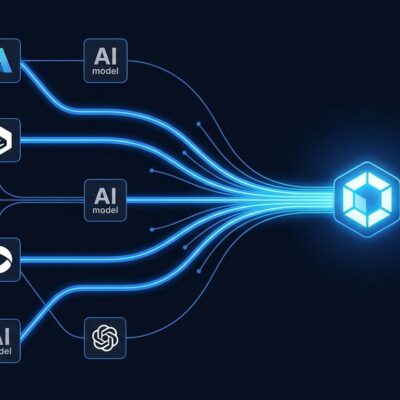
The IDE you use to write code probably doesn’t pull extensions from Microsoft’s store. Cursor can’t. Windsurf can’t. AWS Kiro can’t. Google Antigravity can’t. Microsoft’s marketplace terms of service explicitly prohibit non-Microsoft products from accessing it. Instead, your extensions come from a piece of open source infrastructure most developers have never heard of: the Open VSX Registry, managed by the Eclipse Foundation. On April 21, the Foundation made that infrastructure commercial, launching the Open VSX Managed Registry with enterprise SLAs, tiered pricing, and AWS, Google, and Cursor as its first paying customers.
Why Microsoft’s Marketplace Locked Everyone Out
Microsoft’s Visual Studio Marketplace is off-limits for anything that isn’t Visual Studio, VS Code, GitHub Codespaces, or Azure DevOps. That restriction is in the terms of service. It isn’t a bug — it’s a deliberate design. And it inadvertently handed the entire AI IDE ecosystem to an open source alternative.
When Cursor forked VS Code and built an AI-first editor, it couldn’t use Microsoft’s extension store. Same for Windsurf, Kiro, Antigravity, IBM Bob, and VSCodium. Every VS Code fork that isn’t made by Microsoft relies on Open VSX by necessity. The project started at TypeFox in 2019, moved to the Eclipse Foundation in 2021, and now powers extension delivery for most of the AI IDEs developers actually use in 2026.
Microsoft locked the door. The ecosystem built another one. That new door now serves 300 million extension downloads a month.
AI Agents Changed the Traffic Math
Open VSX wasn’t designed for 300 million monthly downloads. It was designed for a world where humans install extensions manually, occasionally. That world is gone.
AI coding agents — running inside Cursor, Kiro, and Windsurf — install, configure, and query extensions at machine speed. A developer running an agent-assisted workflow generates extension registry traffic equivalent to dozens of traditional users. Multiply that across the millions of developers now running agentic workflows, and you get an infrastructure problem that free-tier hosting can’t absorb.
The Eclipse Foundation saw this coming. The 300 million monthly download milestone hit in March 2026 — driven not just by more developers, but by agents that install extensions at machine speed on behalf of each one. The Managed Registry is the response: a commercial tier that gives the companies most dependent on Open VSX something they couldn’t get from a volunteer-operated registry — contractual uptime guarantees.
What the Managed Registry Actually Offers
The Open VSX Managed Registry launched April 21, 2026, with three tiers:
- Professional ($100K/year): Up to 15 RPS sustained, 99.95% availability target, defined incident response. Designed for internal tooling and mid-scale developer platforms.
- Enterprise ($500K/year): Up to 50 RPS sustained, SLA-backed uptime with service credits, priority support. For cloud IDEs and AI tooling platforms at scale.
- Premium (custom): For hyperscale platforms with requirements that don’t fit a fixed tier.
AWS signed up for Kiro. Google signed up for Antigravity. Cursor is on board. None of this changes anything for individual developers — the free tier is unchanged, extensions still publish the same way, and nothing about the daily developer experience shifts. The commercial SLA is invisible to end users. It only matters when the registry goes down and a company’s entire product stops delivering extensions.
What This Means Depending on Who You Are
If you’re a developer using Cursor, Kiro, or Windsurf: Nothing changes. Your extensions still come from Open VSX. You’ve been a user of this infrastructure for months or years without knowing it.
If you’re building a developer tool or AI platform: The Managed Registry now exists for you. If your product depends on extension resolution at scale, the professional tier at $100K/year is the minimum for a production dependency with contractual guarantees. A two-hour outage is now someone else’s SLA problem, not yours.
If you publish VS Code extensions: Open VSX is how you reach the AI IDE audience. Cursor users, Kiro users, Windsurf users — they all pull from Open VSX. Publishing there isn’t optional if you want to reach the AI development ecosystem. Microsoft’s Marketplace won’t deliver to them.
The Tension Worth Watching
The companies funding Open VSX’s commercial tier — AWS, Google, Cursor — are the same companies the open source movement was partly built to give developers independence from. The irony isn’t lost on anyone who follows this space. Open VSX’s neutrality is exactly why competing AI IDEs trust it. And now that neutrality is being funded by the companies competing hardest against each other.
This is the pattern open source infrastructure follows when it reaches critical scale: community builds it, enterprises depend on it, the foundation commercializes the operations, and the independence that made it viable becomes the product. It happened with Linux. It happened with Kubernetes. Open VSX is the latest example, applied specifically to the developer tooling layer that AI made critical.