 By
By Vercel Labs shipped Zero this week — a systems programming language with one explicit design goal: make AI agents the primary consumers of compiler output. Not a plugin. Not an integration layer. A language where diagnostics, toolchain, and memory model were engineered from day one to be read by machines. It hit 900 GitHub stars in its first 24 hours. Whether that enthusiasm is warranted depends on whether you buy the core premise.
Why Existing Languages Fail Agents
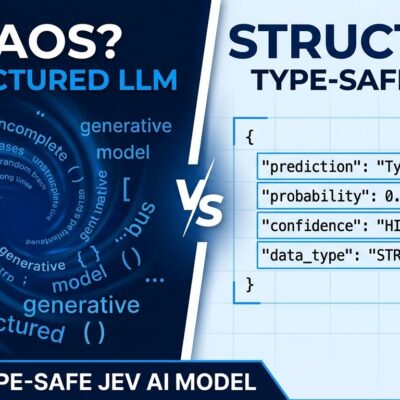
Most compiler errors were designed for human eyes. Rust tells you “cannot borrow x as mutable because it is also borrowed as immutable” — rich, contextual, and hard for an agent to act on directly. Go’s error messages are terser but equally unstructured. The result: agents parsing human-readable errors rely on LLM inference rather than deterministic structure to generate fixes.
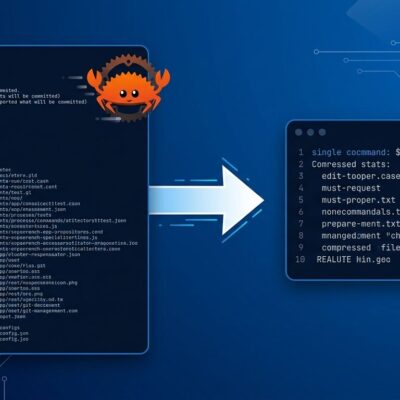
Zero’s compiler takes a different approach. Every diagnostic emits a JSON object with a stable error code (like NAM003) and typed repair metadata. Agents don’t interpret — they consume. Two CLI commands complete the loop:
zero explain <code>— returns a structured explanation of any diagnosticzero fix --plan --json <file>— emits a machine-readable fix plan: what to change, and where
That’s the difference between an agent guessing a fix and an agent executing a fix plan the compiler already derived. The initial announcement frames this as the foundational design decision: structured output for machines, not prose for humans.
Effects You Can Read Without Running the Code
Zero uses a capability-based I\/O system that makes every side effect visible in the function signature. A function that writes to stdout must accept a This matters for agents more than for humans. When an agent is reading Zero code to understand a codebase, it can determine what any function can and cannot do — filesystem access, network calls, failure modes — without executing it. The information is in the signature. Compare that to Go or Python, where you need to trace call graphs to understand side effects at runtime. Zero has no garbage collector, no hidden allocator, no implicit async, and no magic globals. Its memory model is closer to Zig than Rust — explicit management without lifetime annotation complexity. Binaries compile to under 10 KiB and rebuild in milliseconds. There's no LLVM backend, which trades optimization ceiling for build speed — a reasonable trade for the small native tools Zero targets. The entire toolchain lives in one binary. Here's the skeptic's case, and it deserves a fair hearing: modern LLMs already handle Rust, Go, and Python errors reasonably well. Agents working in those languages don't fail catastrophically because error messages are prose — they fail for other reasons: context limits, flawed planning, poor tool use. Does a new language actually improve agent performance, or does it shift the bottleneck without moving the needle? Developer Mehul Mohan, who tried Zero shortly after release, noted it looks and feels like Rust with a basic (not Rust-grade) borrow checker. The Hacker News thread raised the same question: is designing a language around agent consumption a genuine improvement, or does it make human developers learn new syntax to achieve something current tooling can approximate? Zero's creators are making a long-horizon bet: as AI agents become primary code authors — not assistants, but primary authors — the entire toolchain should be rearchitected around that reality. In 2026, with agent-native coding workflows increasingly standard, that bet isn't obviously wrong. It might just be early. Zero is v0.1.1, Apache-2.0, and explicitly experimental. The GitHub repository includes the native compiler, examples, and validation fixtures. The documentation site covers getting started, and Vercel's community is running a "Zero to Agent" hackathon alongside the launch. This is a working experiment worth watching for developers building agent-native systems — not a production dependency. The JSON diagnostics and explicit effects system are good engineering regardless of whether Zero succeeds as a language. If nothing else, they're a concrete argument for what other language ecosystems should consider building.World capability. A function that might fail must declare raises. A pure function has neither — and the compiler enforces that.
fun answer() -> i32 {
return 40 + 2
}
pub fun main(world: World) -> Void raises {
let value = answer()
check world.out.write("math works\n")
}Tiny Binaries, No Hidden Runtime
zero check, zero run, zero build, zero graph --json, zero size --json, zero doctor --json, zero skills — all subcommands. Agents don't need to reason about which tool does what. Running zero skills get zero --full returns version-matched guidance covering syntax, diagnostics, builds, and agent edit loops directly from the CLI.The Question Worth Asking
Where Things Stand